Summer action camp against Shell

Come to Mayo on the 21st of June

This year it is planned to have a shorter camp, but to attract a large number of people.

Come to Mayo on the 21st of June

This year it is planned to have a shorter camp, but to attract a large number of people.

Basically we’ll be building the camp from the start of June to be ready for Mid-June.

  • Build camp 1st – 15thJune
  • Solidarity camp from Friday the 21st to Sunday the 30th June


The G8 is to take place 17th-19th June in Co. Fermanagh. The camp in Mayo takes place after the G8, for those who would like to have an active month in June!

We are also encouraging groups to come and engage in actions at this time, but if you can only come once this summer, then the last week of June (21st-30th) is the time to be here – get organising.

New posters, leaflets, youtube videos and speaking tours are being organised/made to promote the campaign and summer camp. Contact us if you can help organising or promoting the events this summer.

Hasta la victoria siempre,

RSC


Please print out the full update and help spread the word! http://www.rossportsolidaritycamp.org/?p=1651

rossportsolidaritycamp@gmail.com
www.rossportsolidaritycamp.org / www.shelltosea.com

Panama: Ngöbe-Buglé Murdered After Anti-dam Protest 2nd April

Onésimo Rodríguez, a leader in Panama’s Ngöbe-Buglé indigenous group, was killed by a group of masked men in Cerro Punta, in western Chiriquí department, the evening of March 22 following a protest against construction of the Barro Blanco hydroelectric dam. Carlos Miranda, another protester who was attacked along with Rodríguez, said the assailants beat both men with metal bars. Miranda lost consciousness but survived; Rodríguez’s body was found in a stream the next day. Miranda said he was unable to identify the attackers because it was dark and their faces were covered. Manolo Miranda and other leaders of the April 10 Movement, which organizes protests against the dam, charged that “the ones that mistreated the Ngöbes were disguised police agents.”

The Ngöbe-Buglé stepped up their demonstrations against the Barro Blanco project in January, when construction continued at the site despite a United Nations (UN) report that largely substantiated indigenous claims that the dam would flood three villages, cut the residents off from food sources and destroy important cultural monuments. As of March 26 an independent study mandated by the UN report and agreed to by the government had still not started.


In addition to protesting the Honduran-owned company building the dam, Generadora del Istmo, S.A. (GENISA), indigenous activists blame two European banks for funding the project: Germany’s private Deutsche Investitions- und

Entwicklungsgesellschaft (DEG) and the Nederlandse Financierings-Maatschappij voor Ontwikkelingslanden N.V. (FMO), in which the Dutch government holds a controlling interest. Dam opponents say GENISA also sought funding from the European Investment Bank (EIB) but withdrew the application after learning that bank officials planned to visit the affected communities themselves. (Mongabay.com, March 25; La Estrella, Panama, March 26)

In other news, as of March 19 the National Coordinating Committee of the Indigenous Peoples of Panama (COONAPIP) had decided to withdraw from the United Nations Reducing Emissions from Deforestation and Degradation (UN-REDD+) program, which focuses on environmental problems in developing nations. The indigenous group charged in a statement that the UN and the Panamanian government “have appeared to marginalize the collective participation of the seven indigenous peoples and 12 traditional structures that make up COONAPIP” and have put “legal and administrative obstacles in the way” of indigenous participation. The Mesoamerican Alliance of People and Forests (AMPB), a coalition of Central American and Mexican indigenous and environmental groups, is backing COONAPIP’s decision. (Mongabay.com, March 19; Adital, Brazil, March 21)

Hundreds Resume Letpadaung Mine Protest 1st April

More than 300 farmers in northern Burma’s Sagaing Division have resumed their protests against a controversial Chinese-backed copper mine, saying they will refuse compensation and continue to push for the mine’s complete closure.

More than 300 farmers in northern Burma’s Sagaing Division have resumed their protests against a controversial Chinese-backed copper mine, saying they will refuse compensation and continue to push for the mine’s complete closure.

“No matter how much compensation they give, we won’t accept it, because all we want is for the mine to be shut down completely,” said one of the farmers from the Letpadaung area near Monywa.

The protesters are also demanding that the government take action against those responsible for a Nov. 29, 2012, crackdown that left around 100 protesters injured, some of them severely. They say they also want an emergency order banning protests lifted.

The farmers say that the mine, jointly owned by the Union of Myanmar Economic Holdings Ltd, a Burmese military-owned conglomeration, and Wanbao, a subsidiary of Chinese state-owned arms manufacturer Norinco, has been dumping waste on land owned by farmers who have refused compensation.

Some of the farmers said that they have attempted to obstruct the efforts of mine employees to take over their land. “When we attempted to halt their work, they called the police to drive us back. Later some farmers used big stone slabs to fence in their confiscated lands to prevent the bulldozers,” said one farmer.

“They are even trying to get us to give up our lands forever, using some of the former protest leaders to convince us. They say we will get electricity and water. But we won’t accept it. We just want to stop the mining for the sake of our future generations,” said another.

The protests against the mine began last year, and attracted support from activists around the country. However, farmers in the affected area have been divided over whether to continue their protests since a government-formed commission led by opposition leader Aung San Suu Kyi released a report earlier this month saying the project should go ahead.

Those still pushing for the mine’s closure say they will not give up.

“The reason we don’t accept the result of the commission is because it doesn’t assure our future, our land and our environment, and makes no commitment to bringing the culprit behind the crackdown to justice. We will continue to protest—with permission from the authorities—until the mining stops,” said one protester.

“Court Documents Prove I was Sent to Communication Management Units for my Political Speech”


by Daniel McGowan


by Daniel McGowan

I currently reside at a halfway house in Brooklyn, serving out the last few months of a seven-year sentence for my role in arsons credited to the Earth Liberation Front (ELF) at two lumber companies in Oregon in 2001.  My case, and the federal government’s rush to prosecute environmental activism as a form of terrorism, were recently explored in the Oscar-nominated documentary, If a Tree Falls: A Story of the Earth Liberation Front

if a tree falls 10499656-largeWhat has received less attention, though, is what happened to me while in federal prison.  I was a low security prisoner with a spotless disciplinary record, and my sentencing judge recommended that I be held at a prison close to home.  But one year into my sentence, I was abruptly transferred to an experimental segregation unit, opened under the Bush Administration, that is euphemistically called a “Communication Management Unit” (CMU) Since August 2008, when I first arrived at the CMU, I have been trying to get answers as to why I was singled out to be sent there.  Only now — three years after I filed a federal lawsuit to get to the truth — have I learned why the Federal Bureau of Prisons (BOP) sent me to the CMU: they simply did not like what I had to say in my published writing and personal letters.  In short, based on its disagreement with my political views, the government sent me to a prison unit from which it would be harder for me to be heard, serving as a punishment for my beliefs.

The first of the two CMUs was opened quietly, without the public scrutiny required by law, in 2006 in Terre Haute, Indiana; the Marion, Illinois CMU followed in 2008.  In fact, at a hearing in my case before I was sentenced, my attorneys argued that giving me the “terrorism enhancement” could result in my designation to a CMU.  How right they were! The units are designed to isolate prisoners from the rest of the prisoner population, and more importantly, from the rest of the world.  They impose strict limitations on your phone calls home and visits from family and friends — you have far less access to calls and visits than in general population.  The communications restrictions at the CMUs are, in some respects, harsher than those at ADX, the notorious federal “Supermax” prison in Colorado.  Also, unlike ADX, they are not based on a prisoners’  disciplinary violations. When my wife and loved ones visited me at the CMUs, we were banned from any physical contact whatsoever.  All interactions where conducted over a telephone, with Plexiglas  and bars between us.  Until they were threatened with legal action, CMU prisoners were only allowed one single 15-minute phone call per week.

T-shirt design from Daniel's support campaign. These can still be ordered here.

T-shirt design from Daniel’s support campaign. These can still be ordered here.

This is very different from most prisons.  I started my sentence at FCI Sandstone — a low security facility in Minnesota.  I never received a single incident report the whole time I was there and stayed in touch with my family by phone and through visits.  The importance of maintaining these family connections cannot be overstated.  My calls home were, for example, the only way I could build a relationship with my then two-and-a-half year old niece.   When my family would visit, it was incredibly important to all of us to be able to hug and hold hands in a brief moment of semi-normalcy and intimacy. It was these visits that allowed us to maintain our close contact with each other through a time of physical disconnection, trauma and distress.

What’s also notable about the CMUs is who is sent there. It became quickly obvious to me that many CMU prisoners were there because of their religion or in retaliation for their speech. By my count, around two-thirds of the men are Muslim, many of whom have been caught up in the so-called “war on terror,” others who just spoke out for their rights or allegedly took leadership positions in the Muslim community at other facilities. Some, like me, were prisoners who have political views and perspectives that are not shared by the Department of Justice.

While serving my time I was eager to stay involved in the social justice movements I care about, so I continued to write political pieces, some of which were published on this website [the Huffington Post].  No one in the BOP ever told me to stop, or warned me that I was violating any rules.  But then, without a word of warning, I was called to the discharge area one afternoon in May 2008 and sent to the CMU at Marion.  Ten days after I arrived, still confused about where I was and why, I was given a single sheet of paper called a “Notice of Transfer.”  It included a few sentences about my conviction, much of which was incorrect, by way of explanation for my CMU designation.  I was provided no other information about why the BOP believed I needed to be sent to this isolation unit.  Frustrated, I filed administrative grievances to try to get the information corrected, and find out how this decision had been made.  When that did not work, I filed a request for documents under the Freedom of Information Act.  I got nowhere.  The BOP would not fix the information, and wouldn’t explain why they thought I belonged in a CMU.

So I decided to contact lawyers at the Center for Constitutional Rights, having known their history of strong advocacy on these issues. We brought a federal lawsuit on behalf of myself and other CMU prisoners to challenge policies, practices and our designation to the CMUs. The lawsuit, Aref v. Holder, was filed in April 2010, and challenges the constitutionality of various polices and practices at the CMUs, including the lack of meaningful process associated with designation to the units, and the lack of any meaningful way to “step down” from the units.  The lawsuit contends that this lack of transparency and process has allowed people to be sent to the CMUs based on, for example, their protected speech.  Through discovery in the case, the federal government has finally been forced to hand over previously-unseen memoranda  explaining why I was picked out to be sent a CMU.  Authored by Leslie Smith, the Chief of the BOP’s so-called “Counter Terrorism Unit,” and cataloging in detail some of the things I have said in the past years, they make one thing clear: I was sent to the CMU on the basis of speech that the BOP just disagrees with.

The following speech is listed in these memos to justify my designation to these ultra-restrictive units:

My attempts to “unite” environmental and animal liberation movements, and to “educate” new members of the movement about errors of the past; my writings about “whether militancy is truly effective in all situations”; a letter I wrote discussing bringing unity to the environmental movement by focusing on global issues; the fact that I was “publishing [my] points of view on the internet in an attempt to act as a spokesperson for the movement”; and the BOP’s belief that, through my writing, I have “continued to demonstrate [my] support for anarchist and radical environmental terrorist groups.”

The federal government may not agree with or like what I have to say about the environmental movement, or other social justice issues. I do not particularly care as the role of an activist is not to tailor one’s views to those in power. But as Aref v. Holder contends, everything I have written is core political speech that is protected by the First Amendment.  It may be true that courts have held that a prisoner’s freedom of speech is more restricted than that of other members of the public.  But no court has ever said that means that a prisoner is not free to express political views and beliefs that pose no danger to prison security and do not involve criminal acts.  In fact, decades of First Amendment jurisprudence has refused to tolerate restrictions that are content-based and motivated by the suppression of expression.  And courts have recognized that when a prisoner is writing to an audience in the outside world, as I was, it’s not just the prisoner’s First Amendment rights that are at stake: the entire public’s freedom of speech is implicated.

I do not know what is happening with the men I got to know in the CMUs but I know they are still dealing with everything I had to deal with — isolation from the outside world, strained relationships, always being on eggshells about the constant surveillance and never knowing when they will get out of the CMU. 

It is becoming increasingly clear that the BOP is using these units to silence people, and to crack down on unpopular political speech. They have become units where the BOP can dump prisoners they have issues with or whose political beliefs they find anathema. In the months that come, with CCR’s help, I hope to prove that in court and show what is happening at the CMUs. This needs to be dragged into the sunlight.

Follow Daniel McGowan on Twitter: www.twitter.com/@thetinyraccoon

Stop Tar Sands Profiteers Week of Action a Huge Success

Mosiac_bigger-590x1024

Mosiac_bigger-590x1024

Over 50 grassroots organizations across the US and Canada held 50 actions from March 16th to March 23rd to demonstrate that TransCanada’s Keystone XL tar sands pipeline is a toxic investment.

Here’s an overview of what happened every day along with details at the bottom of this post:

March 16, 17: Week of Action Kicks Off With Creativity Across The Country
March 18: Blockades and Bikes From Coast to Coast
March 19: TD Bank Slammed as Tar Sands Profiteer
March 20: TransCanada Office Shut Down – Big Banks Called Out For Bankrolling Coal & KXL
March 21: Twenty Arrested at Two Separate KXL Protests in DC – Hundreds March with Idle No More in Seattle
March 22: Asheville Protesters Shut Down TD Bank, Four Arrested. Two arrested at TC office in Westborough
March 23: Over 60 People Blockade Chevron Tar Sands Refinery in Utah — NYC and DC Call Out TD Bank

Over 50 actions and events happened this week to directly confront the corporate profiteers bankrolling the Keystone XL pipeline and the broader tar sands industry. These actions come at a critical time as investor confidence in Alberta’s tar sands is waning due to major delays and resistance to Keystone XL’s construction timeline.

The Keystone XL project has become a flagship issue for the U.S. climate movement and has spurred dozens of acts of civil disobedience and the largest climate rally in U.S. history. But while 45,000 marched on the White House President Obama was golfing with oil executives and the southern segment of KXL in Texas and Oklahoma was still being built.

It’s becoming increasingly clear that we cannot rely on corporation-funded politicians to oppose corporate excess; we must engage this destructive industry directly. That’s what we’ve done in Texas, and it’s working: in February, TransCanada reported lower fourth-quarter earnings and admitted that the southern portion of Keystone XL (the Gulf Coast Project) was way behind schedule and only 45 percent completed. By showing up at their offices and putting a stop to “business as usual,” we can show tar sands investors that their lives would be easier and their businesses more secure if they invested in projects that don’t endanger our communities’ health and the chance for a livable climate.

We’ll be posting links and updates here throughout the Stop Tar Sands Profiteers Week of Action as actions happen!

Grassroots activists from over 50 organizations are uniting to send a strong message to the industry that TransCanada and its financial backers must rethink their investments in tar sands, the dirtiest fuel on the planet. We will demonstrate to companies bankrolling KXL that their investments are as toxic as the tar sands they want to pump through the pipeline. Activists are marching, holding rallies, giving trainings, and physically disrupting “business-as-usual” for those who seek to profit from the exploitation of marginalized people and the destruction of our collective future.

Some of the top tar sands profiteers facing protest this week: TransCanada, TD Bank, Valero Corp., and John Hancock Life Insurance Co., to name a few.

Week of Action Updates:

Saturday and Sunday, March 16 & 17 – Week of Action Kicks Off With Creativity Across the Country

  • Activists in New Orleans blockade two bus-loads of oil executives including BP, Shell, Valero, and other investors in tar sands and extraction industries.
  • Stunning tar sands banner drop in Grand County, Utah
  • Over 100 people hold “Funeral for Our Future” in TransCanada’s Westborough office – 25 arrested
  • Overpass light brigade in Wisconsin sends a bright message with lights: “Block Keystone XL!”
  • Organizers hold “Stop the Pipeline” banners and march in the traditional St. Patty’s Day Parade in Boston
  • Trainings and presentations on tar sands in Salt Lake City, Utah
  • Musicians sang #NoKXL themed songs in the Boston subway and passed out literature

Monday, March 18th – Day 3: Blockades and Bikes From Coast to Coast

  • Direct action training camp in Oklahoma to stop KXL hosted by Great Plains Tar Sands Resistance
  • Twelve people arrested for blockading a fracking pipeline in upstate New York
  • Portland, Oregon takes bike tour of the city’s worst polluters
  • Dozens rally outside National Geographic building where Secretary Kerry was speaking in Washington, DC
  • Over 40 rallied outside Michels Corporate office in death costumes in Kirkland, WA

Tuesday, March 19th – Day 4: TD Bank Slammed As Tar Sands Profiteer

  • Three people lock themselves inside a TD Bank in Washington, DC
  • Over three dozen rally at TD Bank in Upstate New York this last weekend
  • Banner drop promoting the Week of Action appears in Oklahoma City
  • Dallas-Fort Worth community teach-in hosted by local Unitarian Universalists
  • Concerned citizens in Houston pressure the City Council to sue Valero for pollution violations
  • Organizers rally next to rail line transporting tar sands in Newark, Delaware for refining
  • Community teach-in and film screening in Houston’s toxic East End

Wednesday, March 20th – Day 5: TransCanada Office Shutdown. Big Banks Called Out For Bankrolling Coal and KXL

  • Activists shut down work at TransCanada office in Omaha, Nebraska
  • Dozens of climate justice activists in Montpelier, Vermont rally at TD Bank and close their accounts
  • Rainforest Action Network Boston Fights BAC (Bank of America Corporation)!
  • Hudson Valley Earth First and the Green Team TD Bank Action in White Plains, New York

Thursday, March 21st – Day 6: Twenty Arrested for #NoKXL Actions in Washington, DC – Hundreds March with Idle No More in Seattle

  • About 15 interfaith leaders arrested for civil disobedience at the White House
  • Five arrested for occupying the lobby of Valero in Washington, DC
  • Creative solidarity banner drop in Vancouver
  • Overpass light brigades in Gainesville and Tampa Bay, Florida display messages “No Keystone XL”
  • Hundreds march with Idle No More Seattle against coal export terminals
  • Banner drop in Cushing, Oklahoma at the iconic “Pipeline Crossroads of the World” sign
  • Houston rallies at the courthouse to put Valero and TransCanada on trail alongside polluters like BP
  • North Texas Light Brigade lights up an overpass with a message against tar sands
  • Idle No More Portland drops banner at ESCO headquarters

Friday, March 22nd – Day 7:  Six Arrested for Actions At TransCanada, TD Bank, John Hancock Life Insurance Offices

  • Over 60 people shut down a TD Bank branch in Asheville, NC
  • Veterans For Peace and others enter TransCanada’s Westborough Office – Two arrested
  • Dozens rally at John Hancock Life Insurance in Los Angeles
  • Protestors outside Dallas, Texas call out John Hancock Life Insurance for funding a deadly pipeline
  • Newark, Delaware rallies to “Move Your Money” from TD Bank
  • Activists in Boulder, Colorado did a banner hang over an overpass
  • Bike brigade in Portland, Oregon tours the city’s worst polluters
  • Activists in Denver rallied outside the Governor’s mansion and held a nonviolent direct action training
  • Gathering for World Water Day in Portland, Oregon to protect it the Sacred Water from tar sands
  • Valero Corporate HQ in San Antonio taken over by the community

Saturday, March 23rd – Day 8: Over 60 People Blockade Chevron Tar Sands Refinery in Utah — NYC and DC Call Out TD Bank

  • Over 60 Salt Lake City residents blockaded the entrance to a Chevron tar sands refinery and turned away six trucks
  • Dozens in New York City hold a “Divest from TD Bank Day of Action!”
  • Activists in Washington, DC close off another TD Bank branch
  • Organizers with Red Lake Blockade of Enbridge in Northern Minnesota observe solidarity
  • Memphis, Tennessee residents rally outside a Valero refinery that exploded several months ago
  • New Haven, Connecticut Takes Action at Their Local TD Bank
  • Banner drops in New Orleans
  • Idle No More and other organizations hold a big nonviolent direct action training in San Francisco


The Penan Blockade Against a New Gas Pipeline in Borneo – 22nd March

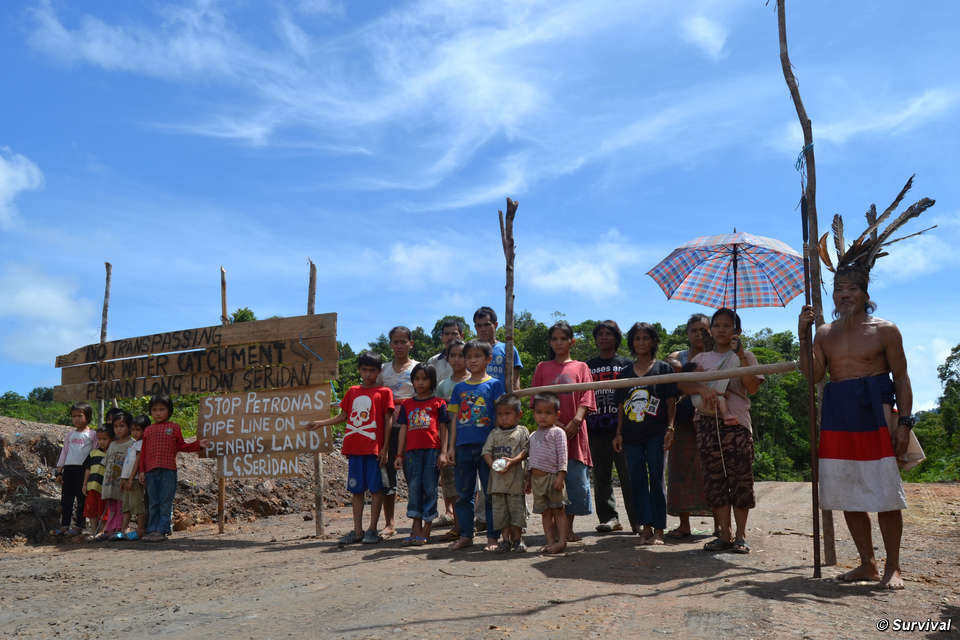
The Penan in Long Seridan are protesting against the building of a gas pipeline which is cutting through their ancestral land.© Survival

The Penan in Long Seridan are protesting against the building of a gas pipeline which is cutting through their ancestral land.© Survival

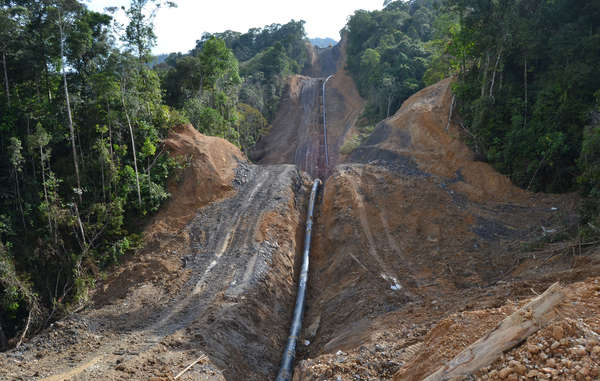
Penan from the Long Seridan region have mounted a blockade to protest against the building of a gas pipeline which is cutting through their ancestral land and destroying their source of drinking water.

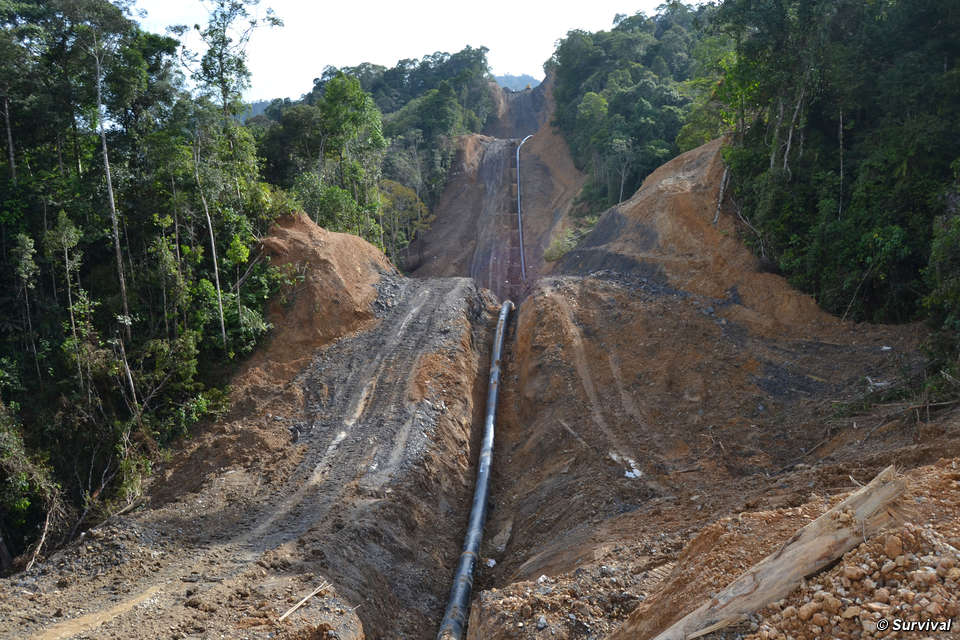
The 500km pipeline is being built by the Malaysian national oil company Petronas and is nearing completion. It will transport natural gas from the Malaysian state of Sabah, south to the coast of Sarawak.

The pipeline cuts through the forest of many Penan communities. It will make hunting and gathering even more difficult for the tribe, which is already facing grave hardship after years of logging have devastated their land.

The construction of the gas pipeline has affected many communities. One Penan man told Survival, ‘If they build this pipeline through our land it is a way of killing us. How are we to survive if they build this pipeline and we’re not able to move freely in our area – from one side to another?’

The 500km pipeline, built by the Malaysian national oil company Petronas, is cutting through the Penan's forest, making hunting difficult.© Survival

The Penan in Long Seridan began their blockade against the pipeline almost three weeks ago and have vowed to continue until their concerns are met.

At the same time, another group of Penan from Long Daloh, more than 60 km away, have also been protesting against logging on their land and the Baram dam which threatens to flood their homes and the forest they rely on for their survival.

If it goes ahead, the Baram dam will displace approximately 20,000 tribal people. Many Penan, and other indigenous communities, have already protested against the Baram dam and called for it to be cancelled.

Penan protest against pipeline, logging and dam

22 March 2013

22 March 2013

The Penan in Long Seridan are protesting against the building of a gas pipeline which is cutting through their ancestral land.

Penan from the Long Seridan region have mounted a blockade to protest against the building of a gas pipeline which is cutting through their ancestral land and destroying their source of drinking water.

The 500km pipeline is being built by the Malaysian national oil company Petronas and is nearing completion. It will transport natural gas from the Malaysian state of Sabah, south to the coast of Sarawak.

The pipeline cuts through the forest of many Penan communities. It will make hunting and gathering even more difficult for the tribe, which is already facing grave hardship after years of logging have devastated their land.

The construction of the gas pipeline has affected many communities. One Penan man told Survival, ‘If they build this pipeline through our land it is a way of killing us. How are we to survive if they build this pipeline and we’re not able to move freely in our area – from one side to another?’

The 500km pipeline, built by the Malaysian national oil company Petronas, is cutting through the Penan's forest, making hunting difficult.

The 500km pipeline, built by the Malaysian national oil company Petronas, is cutting through the Penan's forest, making hunting difficult.

The Penan in Long Seridan began their blockade against the pipeline almost three weeks ago and have vowed to continue until their concerns are met.

At the same time, another group of Penan from Long Daloh, more than 60 km away, have also been protesting against logging on their land and the Baram dam which threatens to flood their homes and the forest they rely on for their survival.

If it goes ahead, the Baram dam will displace approximately 20,000 tribal people. Many Penan, and other indigenous communities, have already protested against the Baram dam and called for it to be cancelled.


Katuah Earth First! Shuts Down TD Bank in Protest Against Kesytone XL

22nd March 2013taking over the lobby

Four arrested at lively protest against fossil fuel infrastructure

22nd March 2013taking over the lobby

Four arrested at lively protest against fossil fuel infrastructure

More pictures here

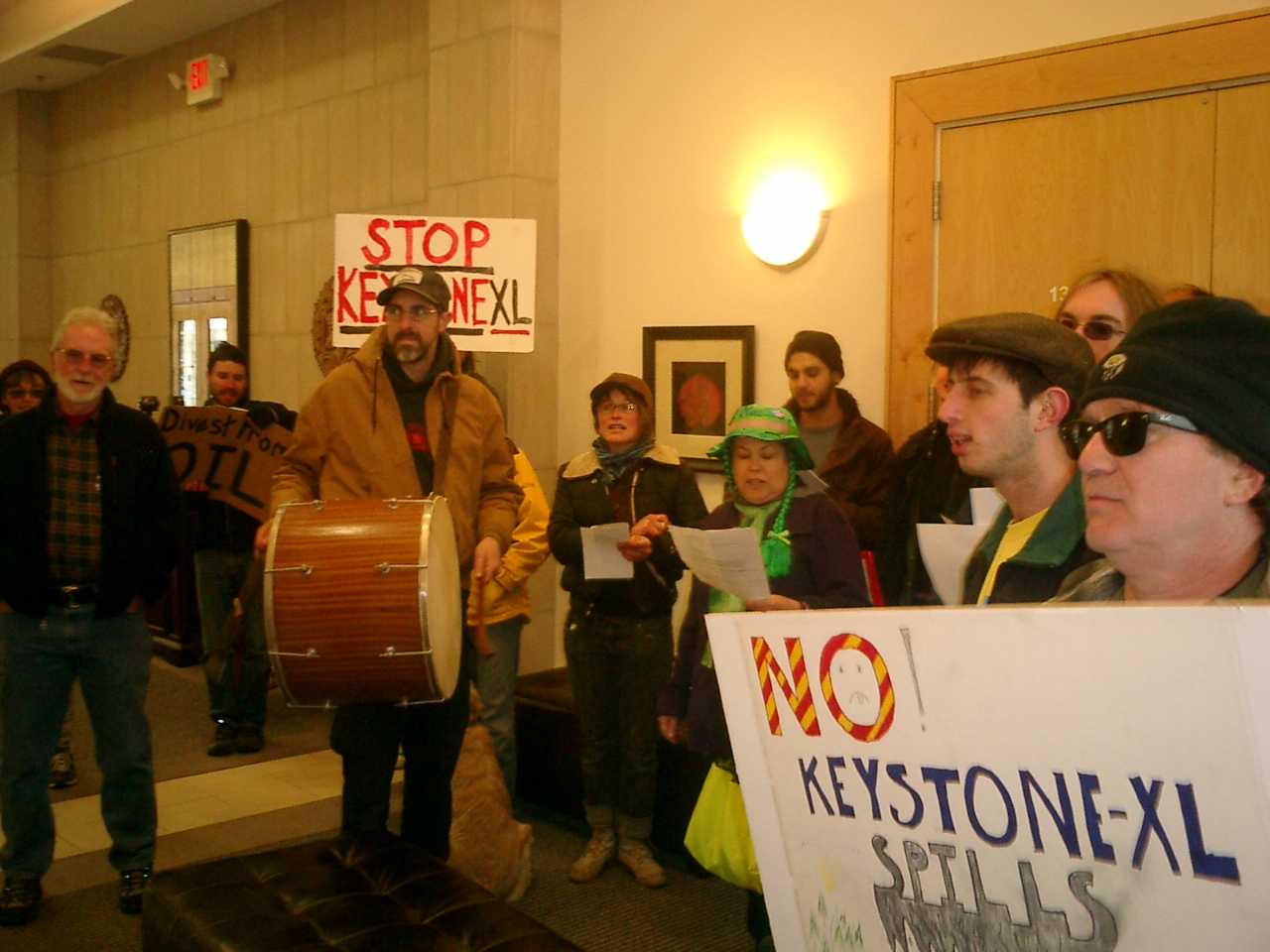
Asheville, NC –  60 people took to the streets today to protest the Keystone XL pipeline in downtown Asheville. After a rally in Pritchard Park, the march made its way to TD Bank, a major investor in the Keystone XL pipeline and occupied the lobby, forcing the bank to close for the rest of the day. Protestors carried banners reading, “Obama, Your Pipedream is a Nightmare” and “TD Bank, divest from dirty oil.” Police arrested four protesters who refused to leave until TD Bank agreed to divest from the tar sands industry.

The action was organized by Asheville based Katuah Earth First! and is part of a week of nationwide protests called for by Tar Sands Blockade  a coalition of Texas landowners and environmentalists fighting the southern leg of the pipeline.

“We are going to hold accountable the companies that threaten our future with their dirty investments. With every dollar TD Bank invests in the Keystone XL pipeline we can feel the noose tightening around our necks,” said Patty Petroluse, a student in Asheville. TD Bank holds over 13 million shares in Transcanada, the company building the Keystone XL pipeline.

“In a time of escalating drought, wildfires, and super-storms fueled by climate change it is suicidal to invest billions of dollars in new fossil fuel infrastructure. The Keystone XL pipeline would be delivering the dirtiest fossil fuel imaginable, tar sands oil”, said Henry Lowry.

If built, the pipeline would tear through thousands of miles of sensitive ecosystems, farmland, and Native American tribal lands in order to deliver Canadian tar sands oil to Gulf Coast refineries. Contrary to industry claims, the vast majority of the oil would be destined for export, not for US consumption. Canada’s tar sands oil has been labeled by environmental groups as the “dirtiest project on earth.” Extraction of tar sands requires massive strip mines that have already destroyed hundreds of square miles of Canada’s boreal forest. Tar sands oil production is extremely energy intensive and produces far more greenhouse gas emissions than conventional oil.

The week of protest has seen protests in over 30 cities around the country and over 40 arrests as activists express their opposition to the Keystone XL Pipeline. Katuah Earth First! is proud to contribute to the nationwide movement against new fossil fuels infrastructure.

Deutsche Bags, the Keylime XL Pipeline and a Week of Eco-Action to Remember

16th March 2013

16th March 2013

“…It was later learned that the group’s actions relate to their protest against the construction of the Keylime XL pipeline and finances for the project emanating from Deutsche Bank.”

—Officer Rodriguez, Palm Beach Police Probable Cause Affidavit

What a bunch a Deutsche Bags

No Officer, that ain’t Keylime emanating from Deutsche Bank.

Today kicks off a Week of Action to Stop Tar Sands Profiteers. As you may have heard, the good folks on the front lines of the tar sands resistance have called for solidarity with their ongoing effort of blockades along the route of Keystone XL construction.

What we have below are some lessons learned from an action in Florida last November, where amidst a call for solidarity with Tar Sands Blockaders fighting the Keystone XL pipeline, four people were arrested at Deutsche Bank (one of KXL’s many financiers). The protest took place on Palm Beach Island, a bastion of obscene wealth and elitism in south Florida.

No Officer, that ain't Keylime emanating from Deutsche Bank...

What a buncha Deutsche Bags! Click here to read document

About two weeks ago, the final case of the four folks who got popped on “the Island” was resolved, resulting in a handful of community service hours and a few measly months of probation. More importantly though, arrestees gained access to police records from the action during the pre-trial process (available to you by clicking the images on the right) and they have the freedom to talk more easily now that a few sketchy charges are no longer hanging over their heads. 

We hope some of these seven lessons may come in handy for the folks, both newbies and well-seasoned, who are planning to have an action-packed week: 

Lesson #1. Press Releases: Its a good idea to wait ’till after the action is in place before you send a press release out far and wide. Especially if a local newspaper shares an office building with a bank you’re targeting. (The paper in this case being the Palm Beach Daily News, known around here as “The Shiny Sheet” because they pride themselves on using glossy un-recyclable paper for their front page. Every day.) Otherwise, kiss your element of surprise good-bye, and say hello to that beefy mustached undercover cop wandering the park at your deployment site.

Closed due to dirty investments KXL

Click here to read the Document.      Extra Credit Lesson, SEO 101: Did you know that the more times we write corporate names like Deutsche Bank, TransCanada or Michels in a news post, the higher a story like this ranks in online searches for them, helping expose them, cast doubt from their shareholders and clients and possibly drive up the cost of their PR firm contracts and insurance policies? For extra fun let’s add an individual’s name, like James Zahringer of Deutsche Bank, so this will come up in searches for him as well. “Tagging” them helps do this too.

Lesson #2. Masks: Wearing a bandana around your face can be helpful at times functional for both its theatrical and security qualities—cool-looking even. But there are additional elements to take into consideration here. For example, like an ostrich hiding its head in sand, sometimes wearing a mask in small group makes you stand out more than, say, a shave and some penny-loafers might. And then there’s the whole being-accused-of-trying-to-rob-a-bank thing (Yes, even if that bank deals only in managing investments.) While this charge got thrown out of court, we found it hard convincing news outlets to retract their false allegations. On that note…

Lesson #3. Media: Don’t expect fair or accurate coverage, especially from a newspaper sharing an office with a bank your protesting. Even if you write up a good solid press release (as we thought we had done.) A potentially-thwarted bank robbery probably trumps an eco-radical office occupation in the corporate news pretty much every time.

Lesson #4. Criminal charges: If, in assessing your action plan and potential criminals charges you could be accused of, you realize they are most likely to be some overly-broad hokey non-sense like “disorderly conduct” or “breach of the peace,” then plan to make them count. For example, u-locking front doors (where there is still an available fire exit), defacing windows with stickers saying “Closed Due to Dirty Investments” and dumping a messy, sticky substance that looks like tar sands oil (but smells like brownie batter)… Those all fall under a single charge, so why skimp? On a side note related to legal strategy, one of the ways in which bogus charges were beaten was in preparing for trial by subpoenaing evidence and witnesses which would further expose and inconvenience our target business establishments, thus sweetening the plea deals offered.

Lesson #5. Pictures: If you end up with a camera which has photos that could be used against someone in court, its a good idea to take precautions that avoid them being confiscated or subpoenaed as evidence. Its a bad idea to hide them so well that you no longer have any pictures from the action to show what happened, leaving you using a message-less picture of someone getting arrested from that stupid corporate newspaper which you will be complaining about, possibly for months to come, instead of the funny-ass pictures of your friends getting tackled in front of a Deutsche Bank looking like 1920s-era bandits.

Lesson #6. Stories: We have to tell our own. While it might be easier to let the police documents do it for us, its not always as reliable as it has been here. And if you can’t publish your story in a timely manor due to pending legal obstacles or other hurdles, then come up with a timeless way, or a new-timelyness, or some other original and/or funny way to present it (like this… Yes. This that you’re reading right now. Click here to start again from the top.) After all, the world changes according to the stories we tell about our actions. Good actions are vehicles for good stories; good stories are a path to all-out-revolution. Conversely, good actions accompanied by boring overly-ideological stories are paths to Joe Stalin’s dinner party (like the one that prompted his wife Nadya to kill herself). Brutal, and totally b-o-o-o-o-r-r-r-i-n-g.

Lesson #7. Winning: We are winning. If you don’t believe the hyperbolic rhetoric on your favorite overzealous anarchist social media webpages, then check out the financial sector’s news on occasion, like Bloomberg’s take last month on Deutsche Bank “re-trenching” on oil and gas investments (“The bank posted a fourth-quarter loss of $2.9 billion… due to “reduced client activity,” according to a Jan. 31 earnings statement”) or Platts’ report a few years back on Deutsche’s doubt that KXL could meet its deadlines. Our enemies feel pressure.

The last take-home messages

This fight is growing. Here’s one small example: When this article was started, Credo—that strange activist-phone company combo deal—had just announced a well-crafted, ambitious “pledge of resistance” for mass civil disobedience against the KXL tar sands pipeline coinciding with the State Department’s release of a pathetic environmental assessment which moved it one big step closer to full approval. By the time we hit “publish,” Credo has already gotten well over 50,000 commitments from people looking to plug in… possibly on your plans for next week—plans that will become a part of the victory story.

Let's see if

The picture of this neo-nazi was taken by a Tar Sands Blockader along the KXL route in east Texas recently. Alright, now let’s see if we can get the words “Nazi,” “Michels” and the CEO’s name, “Richard Kinder” to come up together in a search engine. Woo! Isn’t this exciting!?

Oh, wait. A few more things. In case you missed it, there are some great lists of action targets where you can show your solidarity with folks fighting the pipeline, including addresses for all the Michels offices in the US. Michels is the contractor constructing the KXL pipeline (not to mention the Tennessee fracked gas pipeline being fought in Pennsylvania right now). Michels’ CEO is Richard Kinder. He lives at 2929 Lazy Lane Boulevard, Houston, TX 77019-1301. Add to the repulsion, he apparently has no problem hiring nazis.

Red Lake Chippewa Blockade Enbridge Tar Sands Pipelines

16 March 2013

16 March 2013

For over two weeks now, Nizhawendaamin Inaakiminaan (We Love Our Land) has been occupying land directly above four pipelines across an easement that Enbridge has claimed since 1949 when the company, then called Lakehead Pipe Line Company, installed the first of four pipelines across land owned by the Red Lake Band of Chippewa despite not having an easement from the Red Lake Chippewa Nation. These pipes carry toxic tar sands, Bakken oil, as well as Canadian crude. By threatening the local lakes, these pipes endanger the lives and economic livelihood of Red Lake Band members.

http://www.youtube.com/watch?feature=player_embedded&v=3JXYe88sREc

The grassroots group of Red Lake Chippewa and Anishinaabe Indians is joined by blockaders and solidarity activists determined to shut down the pipelines, hold Enbridge to account for stealing land, and protest Enbridge’s proposed expansion of the nearby Alberta Clipper toxic tar sands pipeline.

Located in Northern Minnesota near the town of Leonard, the occupation of the Red Lake land began Thursday, February 28. Requests to Enbridge regarding internal safety regulations related to above-ground activity over their pipelines resulted in a spokesperson claiming that activity such as fires and the construction of permanent structures like fences and houses would result in a pipeline needing to be shut down.

Similar encampments, like the Unist’ot’en Camp, have been springing up across the continent to fight the fossil fuel industry and stop the destruction of sacred lands in the pursuit of ever-more dangerous and destructive fossil fuel resources. Indeed, the pipeline industry would be hard pressed to imagine a tougher time in which to be doing business.

Indigenous resistance to tar sands pipelines in the region dates back to 2009 when Enbridge’s Alberta Clipper tar sands line was run through Leech Lake and Fond du Lac Anishinaabe reservations. The pipeline was only saved by technicalities in tribal law that led a judge to dismiss the case against the decision by elected officials to contract with Enbridge.

Enbridge is currently in the process of seeking approval to nearly double the capacity of the nearby Alberta Clipper toxic tar sands pipeline from its current 440,000 barrels per day up to 800,000 bpd. Not only will the Red Lake action take four pipelines offline, it is also setting precedent that pipeline expansion will not be tolerated! Not only that, but shutting down the illegal Enbridge pipelines may prevent millions of barrels of dirty tar sands from reaching market.

Now, with a decisively bold move and the backing of large constituencies of Red Lake Band members due to years of local community self-education, Nizhawendaamin Inaakiminaan might well set the first example of a tar sands line being forced to shut down permanently due to protest after it has been operational!

“When I was informed about the illegal trespassing of the company Enbridge on my homeland, I knew there was something I could do. I started calling as many Red Lakers as I could to try and make them aware,” said Angie Palacio who initiated the encampment with the support of the Indigenous Environmental Network.

Support for their efforts has been pouring in from many nations and groups:

Tom Poorbear, vice president of the Ogalala Sioux Nation declared, “We fully support the Red Lake Nation and its members who are opposing the Enbridge pipeline to stop the flow and remove the illegal pipeline from their land.”

Bill McKibben, founder of 350.org has stated, “I imagine everyone involved in the planet-wide resistance to fossil fuel is watching them with thanks.”

Chief Bill Erasmus of the Dene First Nation stated, “We fully support and are inspired by the Red Lake members and their resistance as it is stated in the Mother Earth Accord; affirming our responsibility to protect and preserve for our descendents, the inherent sovereign rights of our indigenous nations, the rights of property owners, and all inherent human rights.”

Enbridge, of course, is a major player in the toxic tar sands pipeline saga being responsible for the costliest onshore petrochemical spill in US history. On July 25, 2010 a tar sands/diluted bitumen spill from Enbridge’s 6B pipeline near Marshall, Michigan that resulted in the release of over a million gallons of toxic tar sands/diluted bitumen and a permanently contaminated 40-mile stretch of the Kalamazoo River along well as several tributaries. There have been hundreds of health problems associated with exposure to the tar sands chemicals and since the spill several deaths have been attributed to the sudden exposure. These chemicals immediately begin evaporating upon release and are heavier than air, forming a toxic cloud at ground-level that is practically inescapable.

Clear after the spill was the complete lack of understanding Enbridge and US Federal oil spill response teams had in how to clean up a tar sands/diluted bitumen spill. Diluted bitumen is not crude oil and therefore does not behave like crude oil upon release. There are still no established cleanup protocols and emergency first responders in regions like Texas and Oklahoma, where the 750,000 barrels per day Keystone XL pipeline is proposed to traverse by the end of 2013, have never been informed or warned as to how to manage the extremely toxic diluted bitumen spills common to the tar sands industry.

Communities in the immediate vicinity of the devastating spill are still reeling and are showing little to no signs of recovery – biological or economic.

Nizhawendaamin Inaakiminaan is well aware of these happenings and has taken one of the most exciting steps to rid their territory of the threat to community health and safety that tar sands pipelines pose.

They are accepting donations to assist in the purchase of building and life-sustaining materials here:
https://www.wepay.com/donations/enbridgeblockade. Please donate if you can!