
 8th November Indigenous protesters m
arch against Minas Conga mine in defense of their water and lands
8th November Indigenous protesters m
8th November Indigenous protesters march against Minas Conga mine in defense of their water and landsCajamarca: Conga occupation not moved
Campesinos from some 40 pueblos across Celendín province, in Peru’s northern region of Cajamarca, held a meeting at Huasmín village Oct. 23 to announce a cross-country march that would arrive in mid-November at the planned site of the Conga gold mine, where marchers would join the encampment that has been established there [for almost two years]. … (Servindi, Oct. 25; Celendin Libre, Oct. 23)
Comuneros (communal peasants) in Celendín’s Yagén pueblo, Cortegana district, weeks earlier announced their readiness to resist the Chadín II hydro-electric project, to be built by Brazilian firm Odebrecht in the headwaters of the Río Marañón, a major tributary of the Amazon—with much of of the energy generated slated for local mining operations. In a statement, the Defense Front for the Interests of Pueblo Yagén said they would reject the “canon” of funds offered to local communities for development of the project in their area. The statement also rejected offers of new roads for local communities, saying they would only facilitate the despoiling of their lands by Odebrecht’s heavy equipment. … The statement closed with the slogan: “Neither Conga nor Chadín! Respect the people!” (Celendin Libre, Sept. 30)
Read the full story.
Cuzco: unrest over water mega-diversion
In a popular assembly Nov. 6, residents of Espinar village in Peru’s Cuzco region declared themselves on a “war footing,” pledigng to resist imminent construction of the Majes Siguas II irrigation mega-project, which would divert water from indigenous communities in the highlands to agribusiness interests on the coast. … Later that day, Espinar’s mayor Oscar Mollohuanca announced that some 100 police troops had attacked local villagers at Urinsaya in Coporaque district, beating five. The whereabouts of one villager has been unknown since the attack. … (Radio Universal, RPP, Nov. 6)
Read the full story.
Peru: government ultimatum to illegal miners
Peru’s government has issued an “ultimatum” to small-scale artisanal miners in southern Puno region, saying that if they do not remove their dredges and other equipment from the watersheds of the Ramis and Suches rivers (which both flow into Lake Titicaca), they will be dynamited. …
The statement follows weeks of protests by informal miners in several regions of the country, demanding “formalization” of their claims. A clash with National Police troops was reported Oct. 2 from a miner roadblock at Huamachuco, La Libertad region. The Regional Federation of Artisanal Miners and Small Producers of La Liberatd (FREMARLIB) said two miners were killed in the confrontation, and several wounded and detained.
Read the full story.
Mi’kmaq Warrior Society Members Beaten in Jail
 1st November
 1st November
Two members of the Mi’kmaq Warrior Society say they were roughed up and beaten by RCMP officers and jail guards after they were arrested following a heavily-armed raid on a Mi’kmaq led anti-fracking camp in New Brunswick earlier this month.
Jason Augustine, Warrior Society district chief, said he was kicked in the head by an RCMP officer after he was cuffed and arrested during the Oct. 17 raid.
Augustine said he was later diagnosed with a concussion at the hospital in Moncton, NB.
“I was kicked in the head three times when I was taken down,” said Augustine. “I wasn’t resisting arrest, I had my hands behind my back, and this one RCMP started bashing my head in.”
Augustine said he was nodding-off while he was held in one of the cells with other warriors at the Codiac RCMP detachment in Moncton. He claimed his head was hit against the wall as he was being taken to the ambulance.
“One of the guys called the guards up and said I needed an ambulance,” said Augustine. “The RCMP picked me up, they roughed me up and hit my head against the wall when they were taking me to the hospital.”
David Mazerolle, another Warrior Society member, claimed in a YouTube video that Aaron Francis was beaten while handcuffed as he was being taken to a cell at the South East Regional Correction Centre in Shediac, NB.
Augustine and Mazerolle, who were released from custody last Friday, both said they were denied use of the telephone.
Augustine said all six of the warriors kept in custody following the raid were put into solitary confinement.
An official at the correction centre referred queries on the allegations to New Brunswick’s Public Safety department. The department did not return telephoned and emailed requests for comment.
RCMP spokesperson Const. Jullie Rogers-Marsh said she would look into the issue before providing a response.
A total of 40 people were arrested the day of the raid which spiralled into chaos after members of the Elsipogtog First Nation clashed with police.
The RCMP raid, which included tactical unit members wearing camouflage and wielding assault weapons, freed several vehicles owned by a Houston-based company doing shale gas exploration work in the region. The anti-fracking camp was blocking SWN Resources Canada’s trucks from leaving a compound in Rexton, NB.
Augustine and Mazerolle face several charges including forcible confinement, mischief, assaulting a peace officer and escaping lawful custody.
Augustine also denied RCMP allegations that the warriors forcibly confined security guards employed by Industrial Securities Ltd in the compound holding SWN’s vehicles.
Augustine said the security guards were escorted by the RCMP at the beginning and end of their shifts.
“They were not held unlawfully,” he said. “They stayed there until their shift changes.”
Augustine also denied RCMP allegations that the warriors uttered death threats or brandished weapons at the security guards.
“There were no death threats, we had nobody in confinement and we had no weapons,” he said.
The RCMP held a press conference following the raid where they displayed three rifles and ammunition seized during the raid. The RCMP said officers also found crude explosive devices.
Augustine claimed the guns and explosives were planted after the raid.
“I do believe they were planted, they knew we wanted peace,” said Augustine. “They had a one track mind to hurt the warrior society.”
Augustine said the warriors were prepared to negotiate the release of SWN’s vehicles.
“They kept telling me, ‘we just want the trucks out’ and I said I was going to our War Chief to tell him to get the trucks out,” said Augustine.
Augustine said he was shot four times by RCMP officers using bean-bag rounds.
He said two RCMP officers presented the warriors with tobacco bundles the night before the raid.
Augustine said his main defence against the charges will be to demand a hearing before an international court.
“Under our treaty laws we have to go to international court,” said Augustine. “We can’t be under the Crown because we are not under the Indian Act, we are treaty people.”
Since spring 2013, RCMP in New Brunswick arrested 82 people in connection with anti-fracking related protests
Rising Tide Protests TD Bank in Seattle
 31st October Our friends with Rising Tide Seattle and South Soun
 31st October Our friends with Rising Tide Seattle and South Sound Rising Tide arrived at a TD Bank office with a 35-foot-long mock pipeline and a funeral procession to demand they stop bankrolling the Keystone XL and tar sands extraction.
TD Bank is one of the largest shareholders in the Alberta Tar Sands, and was also protested by Rising Tide Philly earlier this year.
After the TD Bank office, they marched to the federal building to put President Obama on notice; they have pledged to resist along with over 80,000 people organized by The Other 98%,CREDO Mobile and Rainforest Action Network.
Unist’ot’en Camp Site of Late Night Bombing

29th October
29th October
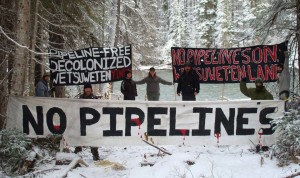
An attempt to destroy the main Unist’ot’en sign with a home-made explosive accelerant occurred last night at approximately 10:20 p.m.
The Unist’ot’en camp located around 70 kilometres south of Houston has been in place since 2010 in response to proposed pipelines such as Enbridge’s Northern Gateway and Pacific Trails’ liquid natural gas line.
Last night individuals living at the camp heard what sounded like a gunshot and they immediately took steps to make sure they were protecting themselves.
“We were in the main cabin and a soon as we heard the bang we shut off our lights, grabbed firearms, went outside and fired a warning shot,” Toghestiy (Warner Naziel) said.
Toghestiy investigated the scene on the north side of the bridge where he could see fire burning. He found a few canisters of ‘accelerant’ bound together with bright green surveyor tape and a long trail of ‘accelerant’ leading north along the road away from the bridge, which was used to reach the canisters, he said.
“When I was approaching the site I could see headlights heading away from the bridge,” Toghestiy said.
The Unist’ot’en have renewed the traditional protocol of free, prior and informed consent in regards to accessing Unist’ot’en territory for any reason.
To accomplish the protocol a soft blockade has been employed on a bridge crossing the Morice River, where every person wishing to enter Unist’ot’en land has to answer questions. One such question is: How will your visit benefit the Unist’ot’en? Failure to give satisfactory answers gives the Unist’ot’en grounds to prevent access for whatever purpose sought.
One group of young men from the Houston area have reportedly taken issue with the Unist’ot’en protocol, Freda Huson, Unist’ot’en member and resident of the camp, said.
“A group complained to the RCMP about our protocol,” Huson said, but she’s not sure if it’s the same group responsible for last night’s event.
RCMP have yet to investigate the scene.
A hunter from the Tumbler Ridge area, who answered the protocol questions properly, shared that he heard a group of young men were angrily talking about the Unist’ot’en and the group claimed they were going to ‘do something about it’, Huson said.
“It may have been the people who honked at the bridge but didn’t wait for us to come ask the protocol questions,” Huson said. “I believe it’s the same group that destroyed our sign at the 44 kilometre mark.”
The Unist’ot’en are asking anyone with information about who is responsible for last nights events to please contact the Houston RCMP at 250-845-2204.
Mi’kmaq Anti-Fracking Update: Two Warriors Released on Bail, Four Others Remain in Jail

One of some 40 people arrested b

One of some 40 people arrested by RCMP on Oct 17, 2013. CBC News,Oct 25, 2013
Bail hearings for 3 others continue; 1 denied bail Thursday
Two of six protesters who were held in custody following the shale-gas protest confrontation near Rexton, N.B., last week have been released on bail.
Jason Augustine and David Mazerolle were released on a number of conditions and will be back in court next month to enter a plea. The pair face various charges, including mischief, unlawful confinement, escaping lawful custody, obstructing a peace officer and assaulting a peace officer.
Thursday another protester, Coady Stevens, was denied bail. He remains in custody and is to enter a plea on November 1.
The six men — Stevens, Augustine, Mazerolle, Aaron Francis, Germain Junior Breau, and James Sylvester Pictou — face 37 charges in all.
Bail hearings are continuing for the other three jailed protesters. They’ve been in custody since their arrest eight days ago.
The six were among 40 people arrested when RCMP broke up a weeks-long protest against shale gas exploration on Route 134 in Rexton. The protesters were preventing SWN from accessing seismic-testing vehicles and equipment in its compound in the area. The exploration company had obtained a court injunction ordering that it be allowed access to its vehicles and be allowed to carry out exploration work without harassment.
‘No means no’
After being released, Augustine hugged his wife and mother outside the Moncton Law Courts.
“It’s good to be out,” he said. “It’s not good to see my bros that are still in there be incarcerated for something that we believe is right to save.”
Augustine said he and his fellow warriors were arrested trying to save the province from the dangers of shale gas development.
“We are there for our Mother Earth. We’re not there to uphold politics. Politics this, politics that. No way. Just say no, and no means no.”
Aboriginal leaders have not said they are absolutely against shale gas development, however.
“They’re not saying no to all resource development,” Assembly of First Nations National Chief Shawn Atleo said during a visit to Elsipogtog First Nation on Thursday. “Just saying not yes at all costs.”
Meanwhile, Elispogtog Chief Aaron Sock said the issue of resource development should be dealt with after going to court to deal with aboriginal land claims.
Augustine said his opinion hasn’t changed.
“Shawn Atleo and Aaron Sock have to understand — this is a Mi’kmaq territory land. You can’t destroy our Mi’kmaq territory land, no matter how much people are trying.”
Malaysia: Sarawak Dam Protest Intensifies with Blockades, Confrontations
 26th October Anti-dam protestors, who on Wednesday put up blockades at two roads leading to Sarawak’s next hydroelectric dam near Long Lama in Baram, have warned sta
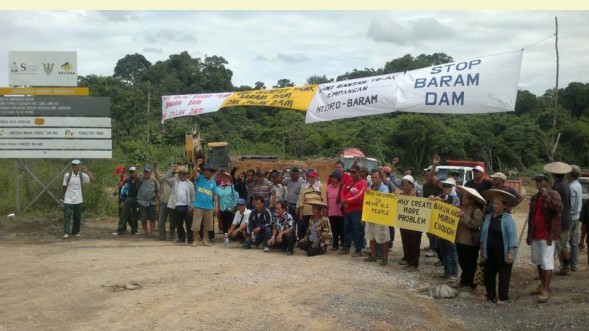 26th October Anti-dam protestors, who on Wednesday put up blockades at two roads leading to Sarawak’s next hydroelectric dam near Long Lama in Baram, have warned state electricity provider Sarawak Energy Bhd (SEB) to remove its construction machinery from nearby Long Naah within three days.
The protestors claimed that the proposed site for the dam was on their native customary rights (NCR) land.
The machinery had been transported to the area to prepare the construction of a 1200 megawatt (MW) dam that would displace up to 20,000 indigenous Kenyah, Kayan and Penans. The dam will also flood a rainforest area of 400sq km.
Environmental group Save Rivers Network and protestors confronted a group of 30 workers who were conducting rock testing activities at Long Naah.
The group said the workers were told to pack up and leave the native land immediately.
“The workers tried to negotiate but were told in no uncertain terms that there was no need for further negotiations as the communities rejected the dam project.”
Save also said that a group of villagers had set up camp at the proposed dam site to monitor the withdrawal of the workers.
The latest blockades added pressure on the government ahead of a key UN meeting in Geneva on Malaysia’s human rights record where UN member states urged Putrajaya to respect the rights of the natives.
The UPR process provides the opportunity for all UN member states to state what action they have taken to improve the human rights situations in their countries and to fulfil their human rights obligations. Yesterday’s session represented the second review of Malaysia, the first being in 2009.
Sarawak deputy state secretary Datuk Ose Murang was in the Malaysian delegation to Geneva, Switzerland.
Meanwhile, SEB chief executive officer Datuk Torstein Dale Sjotveit, has said he would now like to hear from the “very vocal NGOs and action groups currently in Geneva, and the organisation that nominated Sarawak Energy for the Public Eye award”.
The NGO that nominated SEB for the Public Eye award is the Swiss environmental group, the Bruno Manser Fund (BMF).
The award honours the most despicable and shameful company of the year – companies with a track record of human rights violations, environmental destruction and exploitation of their workers or involvement in corruption.
BMF said they nominated SEB due to its gross disregard for the environment, the indigenous people and massive corruption linked to the project.
The winner would be picked during the 2014 World Economic Forum (WEF) in Davos, Switzerland in January.
“We would love to hear from the NGOs on how they propose the state deploy transformational projects that can elevate all Sarawakians and lift per capita income across the board if not through hydroelectric projects,” Sjotveit said. – October 25, 2013.
New Protest Camp at Wisborough Green and Kirdford Proposed Drill Site
 26th October A small band of anti-fracking campaigners who wished to be known as ‘protectors’ have set up camp on land adjacent to Celtique Energie’s proposed drill site.
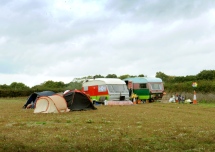 26th October A small band of anti-fracking campaigners who wished to be known as ‘protectors’ have set up camp on land adjacent to Celtique Energie’s proposed drill site.
Many of them have spent time in Balcombe, protesting against Cuadrilla’s drilling activities.
Talking from their camp, where they have permission from the land owner to temporarily reside, one of the group said: “I’m here because the country is on the brink of what could possibly be the most intense environmental catastrophe that we have ever known, and that its sneaked in under the radar of good sense, under the radar of democracy, and people aren’t aware just how dangerous fracking can be, particularly in this country where we are riddled with fault lines.”
Tim, who preferred not to give his surname and age, added: “It is a matter of great urgency that every body stands up and gets active now.
“We’re all activists now and that is how it is – one way or another the country is being industrialised, and it is time for everybody to stand up.”
Fellow ‘protector’ Prajna spoke of one of our ‘existential rights’ – water, saying it is under threat by the process of hydraulic fracturing which uses high pressure water laced with chemicals to stimulate oil and gas reserves trapped in rock beneath the ground.
The 53 year old, who travels with his 46 year partner Kali, spent two months at Balcombe before arriving in Kirdford about two weeks ago.
“If fracking were to take place in Wisborough Green and Kirdford it would be disastrous for this local environment,” said Kali. “But equally it is going to be disastrous for the whole island – poisoned water supplies.
“It is going to affect absolutely every individual and if the water is contaminated than we shall be dependent on corporations who bring it in from elsewhere.”
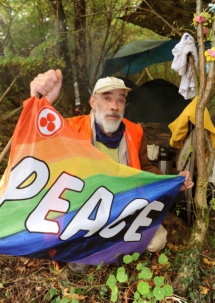
A 27 year old called Dominic added: “I’ve come here to raise awareness among local people about fracking – it is an attack on the natural ecosystems of the area.”
Kris, sporting an impressive ginger moustache, said he had been brought up in the oil industry and had lived all around the world, but was now totally disillusioned with the sector for many reasons.
But chief amongst these, he said: “There is a very substantial risk of contaminating the water table.”
Asked why those we spoke to were reticent to give their full names, they said it could give the authorities and corporations a hold over them, and raised concerns about the might of the organisations against which they are campaigning.
———————————————————————————–
One of the most colourful characters we spoke to at the Kirdford camp called himself Bro Rainbow. What follows is a direct transcript of the interview with Bro.
How old are you Bro?
Eternal
Where’s home?
Where the heart is.
Is that right here now?
Always, hope so, otherwise get an ambulance.
Why here right now?
Why right here and now, it’s the only place you can be – here and now – they call it the present – it’s a gift, make the most of it.
Why have you come here?
Because it really actually matters. We are one nation, one tribe, living on a very beautiful space-ship – they call it Earth, but I call it Planet Heart which is just a respelling of Earth.
But actually it is not earth, it is two thirds water and so it is planet Heart, and she is spinning 1,800 mph – can you feel it?
The most amazing life support system that I am aware of in the moment, and what’s going on? Just delusion, truly, and madness. And the future generations are going to look back and they will just be incredulous at what has been happening up until this point.
Basically, do we truly need it? This gas, this fracking, this desecration of the Mother, this ruination of our water, our air, our soil – is it needed?
Yes, because we need to change our consciousness and we need to rise above, that’s from my heart to yours, that we all might live true.
And here’s a poem:
“Listen’t to the mustn’ts child
Listen to the don’ts
Listen to the wouldn’ts, couldn’ts, shouldn’ts and the won’ts,
Listen very closely,
Then listen close to me,
Anything can happen,
And anything can be,
And in the potential reality that I want to exist in, this is not happening – ok.
They say that an English woman’s home is her castle, I say women because we’re women and man, we’re two sided,
We’re not all right, we’re half right, half left.”
That’s the truth of it, otherwise we’d fall over, and hopefully, straight up the middle,
Straight up, fracking is wrong and that is why I am here because I feel it intensely within me, and I am voting with my feet and my whole being, to be here to say please, let’s go in a different direction.
Bless
Remove Your Machinery Within Three Days, Baram Natives Warn Dam Builders
 25th October Native communities from Malaysia’s remote Baram district on the island of Borneo have warned state-owned electricity provider Sarawak Energy t
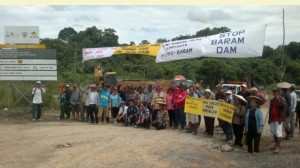 25th October Native communities from Malaysia’s remote Baram district on the island of Borneo have warned state-owned electricity provider Sarawak Energy today to remove its construction machinery from their lands within three days. The machinery had been transported to the Baram region in order to prepare the construction of a 1200 MW dam that would displace up to 20’000 natives and flood a rainforest area of 400km2.
According to Sarawak’s Save Rivers network, a group of 30 workers had been found to conduct rock testing activities at the planned dam site at Long Naah. The workers were told to pack up and leave the native lands immediately. “The workers tried to negotiate but were told in no uncertain terms that there was no need for further negotiations as the communities rejected the dam project.”
Sarawak Energy was given a three-day ultimatum to remove its machinery from the native lands. A group of villagers set up a camp at the planned dam site to monitor the implementation of their demands.
Villagers upholding a second road blockade site near Long Lama today informed that their blockade was successful and no new construction equipment had been transported into the interior.
Further information on the dam protest would be released by Radio Free Sarawak (www.radiofreesarawak.org) on SW 15420 KHZ between 7 pm and 8.30 pm local time.
The Bruno Manser Fund calls on the Malaysian government and on Sarawak Energy to halt all works on the planned Baram dam and to create full transparency on the costs and contracts related to the construction of the Murum dam.
Nigeria: Coordinated Mass Protests Shut Down ExxonMobil
 24th October The people of Eket federal constituency in Akwa Ibom State yesterday embarked on a mass protest shutting
24th October The people of Eket federal constituency in Akwa Ibom State yesterday embarked on a mass protest shutting down the operations of Mobil Producing Nigeria Unlimited, a subsidiary of ExxonMobil in Ibeno and Eket, in the state
The mass protest was staged simultaneously around Mobil facilities, the Airstrip in Eket, Mobil Terminal in Ibeno and Mobil Housing Estate in Eket.
The protest was in respect of the sum of N26.5 billion oil spill fund reportedly released by ExxonMobil through the state government to the four oil producing local government areas.
The protesters who chanted slogans with placards and trumpets, barricaded the oil company’s access gates, while a coffin with the inscription ‘RIP Mark Ward’ was kept at the gates of Mobil Terminal in Ibeno, amidst other banners and placards.

At the Mobil airstrip in Eket, plantain suckers where planted at the gates while the youths locked the gate with padlock in the full glare of a detachment of policemen who watched to prevent a degeneration of the crises.
Also seen at one of the deserted gates of the Mobil Terminal was a canoe, wrapped with traditional palm leaves and a white fowl, which the Ibeno protesters claimed found itself to the gate of the terminal from the river on its own, and dared authorities of the oil firm to remove the canoe if they had the guts.
The communities lamented that Mobil was insensitive to their plight, as evident by its refusal to pay the compensation for the 2012 oil spill incident that resulted in the discharge of more than 300 barrels of crude oil into the aquatic environment of the oil producing areas.

During the protest march, some prominent youth leaders under the aegis of Eket Federal Constituency Vanguard led by Mr. Isaiah Abia and Mr. William Mkpa, strongly scolded ExxonMobil for being insensitive to their plight of its host communities.
ExxonMobil, they said, lacked employment opportunities for the people of the community, operate on a deplorable condition of social infrastructure in the host communities, as well as hazards resulting from the exploitation by the oil firm.
They warned that failure of Mobil to address the ugly trend would leave them with no option than to put finality on their operation in their land.
The demonstrators also called for the immediate redeployment of the Managing Director of ExxonMobil, Mr. Mark Ward, over his persistent snub of all the overtures from the communities.
Addressing the protest at the company’s terminal in Ibeno, Mr. Isaiah Abia said there was no going back in calling Mobil to order.
He said the protest march came at the expiration of the seven-day ultimatum earlier issued to the authorities of the company last week.
Abia said the people of the areas where totally against the notion that ExxonMobil wanted to use the oil spill compensation fund to execute projects in the communities, maintaining that such a notion was an attestation to the nonchalant attitude of Mobil.
Burma: Village Protests Shut Down Coal Mine
 24th October The Karen National Union (KNU) in Southern Burma has suspended a coalmine from operating in the Pawklo area, east of Dawei.
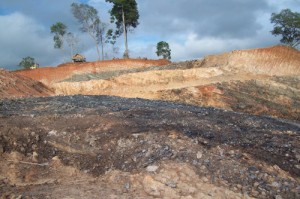 24th October The Karen National Union (KNU) in Southern Burma has suspended a coalmine from operating in the Pawklo area, east of Dawei.
The KNU stopped the mine after listening to the demands local villagers made to the political organisations district leaders.
The KNU Mergui-Tavoy District 16th Congress that finished on the 19 October decided that the coal mine in Tha Nay Kler village area should stop operating after KNU township representatives pushed for its closure.
P’doh Saw Beeler, chairman of KNU Mergui-Tavoy District told Karen News.
“We consider the villagers demands requesting the suspension of coal mining in the Paw Klo area. We will time to investigate the issue and talk and listen to local people about their concerns.”
The KNU permit granted to a Thai company East Star has been suspended, but sources claim the company still has a grant issued by the Myanmar government.
East Star is a joint venture with May Flower, a Burmese owned company, that was granted a 25-year concession by the government to mine for coal in the Paw Klo area.
Until the recent ceasefire between the Burma Army and the KNU, the Paw Klo area was a conflict zone – it is still under the control of the KNU. The company received permission from the KNU to mine in 2011. The KNU agreement states the company must renew its permit every year.
The KNU permit limits large-scale coal mining to a 60-acre area and states that the company is only allowed to mine outside village areas to avoid damage to farmland, waterways and the environment.
Villagers in the Paw Klo area protested against the company and alleged that the mining has destroyed their land and has had adverse impacts on village water sources. Villagers claim that they fear the polluted drinking water could have a negative impact on their future health.
Villagers in Paw Klo, submitted a letter of complaint on September 2 urging the KNU to stop coal mining in Tha Nay Kler village.
The letter submitted on September 2 to the KNU Mergui-Tavoy district office states that, “The East Star Company has failed to follow the agreement made between the KNU and villagers that it [company] will protect against damage of the environment and would not harm local lands and peoples’ livelihoods.”