Mexican Guerillas Promise Armed La Parota Resistance

Members of the guerilla group FAR-LP, photographed at a hidden location in Guerrero, Mexico. 4th Dec

Members of the guerilla group FAR-LP, photographed at a hidden location in Guerrero, Mexico. 4th Dec

A new gueril­la group in the Mex­i­can state of Guer­rero has promised armed sup­port for social move­ments, includ­ing the strug­gle against La Paro­ta Dam.

Two days after announc­ing its for­ma­tion via online media, the Rev­o­lu­tion­ary Armed Forces-People’s Lib­er­a­tion (Fuerzas Armadas Rev­olu­cionar­ias-Lib­eración del Pueblo, FAR-LP) released a video of one of its lead­ers, “Coman­dante Cami­lo,” warn­ing that the group will launch armed reprisals against the gov­ern­ment if it con­tin­ues repress­ing social move­ments.

“If the fed­er­al and state gov­ern­ments con­tin­ue the repres­sion of activists and NGOs, we will make them pay,” he says, read­ing from a com­mu­niqué.

“From these lands, for­got­ten by all those gov­ern­ments, we say to you, Mr. Gov­er­nor and Mr. Pres­i­dent Peña Nieto, that the harass­ment, the deaths, the threats against the peo­ple must end.

“From this moment, if there is anoth­er who dies or is impris­oned from our peo­ple, we will exact pay­ment, not in the same place. If there has to be blood, we should spill more than they.”

The FAR-LP explic­it­ly men­tions its sup­port for the Coun­cil of Eji­dos and Com­mu­ni­ties in Oppo­si­tion to La Paro­ta Dam (CECOP), an unre­lat­ed non-gueril­la group that has spear­head­ed oppo­si­tion to the dam.

“They are not alone. They have an army at their dis­po­si­tion. You [the gov­ern­ment] are the ones who decide what we will do,” the group states.

Victory for Elsipogtog on the Highway, While Battle Continues in Court

RCMP cars burn in retaliation for a violent raid on a First Nations blockade of pre-fracking testing equipment in Elsipogtog, New Brunswick, Oct 17, 2013Novem­ber 15th, Mi’kmaq demon­stra­tors declared “vic­to­ry

RCMP cars burn in retaliation for a violent raid on a First Nations blockade of pre-fracking testing equipment in Elsipogtog, New Brunswick, Oct 17, 2013Novem­ber 15th, Mi’kmaq demon­stra­tors declared “vic­to­ry” Thurs­day after stop­ping thumper trucks belong­ing to a Hous­ton-based ener­gy com­pa­ny from con­duct­ing shale gas explo­ration north of Elsi­pog­tog First Nation.

While about 100 Mi’kmaq and sup­port­ers faced a line of RCMP offi­cers as SWN Resources Canada’s thumper trucks idled in the back­ground, the Elsi­pog­tog band coun­cil was 200 kilo­me­tres away in a Fred­er­ic­ton court­room seek­ing an ex parteinjunc­tion to stop SWN from con­tin­u­ing the explo­ration work. A hear­ing on the injunc­tion is set for Fri­day.

On Hwy 11 ten­sions ran high as Mi’kmaq demon­stra­tors from Elsi­pog­tog and oth­er com­mu­ni­ties along with non-First Nations sup­port­ers tried to block SWN from oper­at­ing their thumper trucks while the RCMP tried to inter­vene. SWN even­tu­al­ly decid­ed to turn the trucks around with plans for anoth­er attempt expect­ed Fri­day.

A well-known Elsi­pog­tog frack­ing oppo­nent Lor­raine Clair was arrest­ed dur­ing the protest for mis­chief, assault a police offi­cer and resist­ing arrest, accord­ing to New Brunswick RCMP.


Still, spir­its were high among peo­ple from Elsi­pog­tog who watched SWN’s trucks roll away as dusk began to set.

“It is a small vic­to­ry, but a vic­to­ry nonethe­less,” said Bren­nan Sock, from Elsi­pog­tog. “We will take any­thing right now. We got the trucks to leave, we man­aged to slow them down as much as we can.”

T’uma Bernard, a Mi’kmaq War­rior from Prince Edward Island, said he saw renewed uni­ty among the demon­stra­tors.

“It was a great vic­to­ry, it was a great day,” said Bernard.

RCMP spokesper­son Con­st. Jul­lie Rogers-Marsh said there were acts of van­dal­ism through­out the day that are under inves­ti­ga­tion.

“A truck belong­ing to a pri­vate com­pa­ny work­ing in the area and sev­er­al pieces of equip­ment were dam­aged,” said Rogers-Marsh.

She said the RCMP had video of “some­body wear­ing a mask” pulling up geo­phones along Hwy 11. Rogers-Marsh there “also threats of ille­gal acts.”

Rogers-Marsh said the police offi­cers are there to main­tain pub­lic safe­ty.

“Being safe and peace­ful and law­ful is very impor­tant and we are in the area con­tin­u­ing to mon­i­tor the sit­u­a­tion,” said Rogers-Marsh. “Our role is pub­lic safe­ty and we are there to pro­tect every­one.”

Thumper trucks inter­act with geo­phones, which are strung along the ground, to cre­ate imagery of shale gas deposits under­ground.

In Fred­er­ic­ton, the Elsi­pog­tog band was seek­ing an injunc­tion to stop SWN argu­ing “out­side rad­i­cal ele­ments” were con­verg­ing “in sig­nif­i­cant num­bers” as a result of the company’s con­tin­u­ing shale gas explo­ration.

The band’s fil­ing said mil­i­tary forces are at play on the police side of the oper­a­tion and warned a repeat of the Oct. 17 raid in Rex­ton, NB., by RCMP tac­ti­cal units is loom­ing.

“The cir­cum­stances com­bine to cre­ate a very real dan­ger that, as active seis­mic explo­ration is recom­menced in the com­ing hours and days, out­side rad­i­cal ele­ments, the respon­dent SWN and the RCMP, oth­er police and even mil­i­tary forces, all inter­act so as to cause a repeat esca­la­tion of the unac­cept­able and dan­ger­ous events that took place in Rex­ton,” said the fil­ing.

The fil­ing also names provin­cial Ener­gy Min­is­ter Craig Leonard and the Assem­bly of First Nations Chiefs in New Brunswick (AFNCNB).

The fil­ing argues that the province failed in its duty to con­sult and that the AFNCNB, which Elsi­pog­tog gave author­i­ty to con­sult on its behalf, failed in its respon­si­bil­i­ty by “inac­tion and inad­e­quate engage­ment.”

AFNCNB’s lawyer Mike Scul­ly has told APTN Nation­al News that the province set the terms of the con­sul­ta­tion and the AFNCNB had to act with­in those lim­it­ed para­me­ters.

While the band lead­er­ship will con­tin­ue its legal bat­tle in the court­room Fri­day, the grass­roots are vow­ing to be back on the pave­ment with their bod­ies to stop the thumpers.

“Nobody is going nowhere, they can’t bul­ly us and use force tac­tics against the peo­ple of the land,” said Bernard.

Sock said peo­ple would be out all night keep­ing a watch­ful eye.

“We have a lot of peo­ple who are ded­i­cat­ed and will be out there all night to make sure they don’t come back,” said Sock.

War Game Shows US & Canada Fear Eco-Attacks on Infrastructure

sabotagedpylonCyber-Eco-Ter­ror­ist Wargames Sug­gest New Lev­el of Domes­tic Coun­terin­sur­gency

sabotagedpylonCyber-Eco-Ter­ror­ist Wargames Sug­gest New Lev­el of Domes­tic Coun­terin­sur­gency

by Sasha / EF! Newswire

Last night [Nov. 13], the FBI and DHS linked up with 10,000 engi­neers and an inter­con­ti­nen­tal web of util­i­ty com­pa­ny exec­u­tives in a cross-coun­try war game. The tar­get: ecoter­ror­ists tar­get­ing crit­i­cal elec­tri­cal infra­struc­ture points. Their tac­tics: com­put­er virus­es, bombs, and guer­ril­la war­fare.

The coor­di­nat­ed attacks on the US pow­er grid took place across hun­dreds of trans­mis­sion lines and trans­form­ers through­out the US, throw­ing tens of mil­lions of cit­i­zens into dark­ness. As police, fire­fight­ers, and util­i­ty work­ers rushed to repair the dam­aged or destroyed infra­struc­ture, the ene­my sprang their traps, killing sev­en and wound­ing 150.

While the sim­u­la­tion was almost entire­ly vir­tu­al, some com­pa­nies actu­al­ly sent trucks with line­men to prac­tice inves­ti­gat­ing crit­i­cal equip­ment iso­lat­ed from the sys­tem by com­put­er virus­es.


In today’s New York Times, Matthew L. Wald reports, “Drill par­tic­i­pants said they would not talk about the spe­cif­ic loca­tions of the sim­u­lat­ed attacks, for two rea­sons: The loca­tions were cho­sen at points that the insid­ers knew were vul­ner­a­ble, and the com­pa­nies involved were promised that if they par­tic­i­pat­ed, their per­for­mance would not be held up to pub­lic crit­i­cism. The pur­pose, orga­niz­ers said, was to pose prob­lems that were hard to solve, to expose areas that need­ed improve­ment.” Those involved were mon­i­tored and record­ed by atten­tive agents with Washington’s Depart­ment of Home­land Secu­ri­ty Nation­al Cyber­se­cu­ri­ty and Com­mu­ni­ca­tions Inte­gra­tion Cen­ter in order to assess how the “fog of war” sce­nario would play out.

The GridEx Wargame is the sec­ond in an estab­lished tra­di­tion of “Grid Exer­cis­es,” which test the reli­a­bil­i­ty of elec­tri­cal infra­struc­ture response and cyber­se­cu­ri­ty. The first GridEx took place two years ago, and involved a much small­er group of peo­ple. Accord­ing to the NYT, 210 util­i­ty com­pa­nies played this year’s GridEx II, as well as Canada’s RCMP. Since the RCMP are involved, and they have spent a ton of mon­ey study­ing coun­terin­sur­gency against indige­nous peo­ples, it would not be sur­pris­ing if First Nations are also in the cross-hairs of GridEx.

The mod­el attacks were mod­eled after infra­struc­tur­al sab­o­tage that has actu­al­ly tak­en place across the world. For instance, one sim­u­la­tion regard­ing South­west­ern Elec­tric Pow­er Com­pa­ny in Louisiana, Arkansas and east­ern Texas, had attack­ers using guns and bombs against a pow­er plant and a trans­former, and 108,000 of the company’s 520,000 cus­tomers lost pow­er. This drill was like­ly mod­eled after the destruc­tion of a 100 foot elec­tri­cal tow­er in August, where­in a sabo­teur used a mov­ing train to catch a cable that was hooked up to the tow­er.

Judg­ing by the huge dif­fer­ence between the vio­lence of the drill and the crafty tech­nique of the actu­al inci­dent, it is appar­ent that state agen­cies are, as usu­al, squan­der­ing enor­mous bud­gets on child-like enact­ments of their clos­est fan­tasies.

The effects of the intense and high-pres­sure wargames are obvi­ous on the employ­ees who are meant to par­tic­i­pate in them. Accord­ing to one SEPC work­er, “It was more severe than any­thing we’ve drilled. By the end of the exer­cise, 20,000 cus­tomers were still in the dark. The par­ent com­pa­ny got hit hard­er: Pow­er was knocked out for an addi­tion­al 162,000 cus­tomers, and one employ­ee was killed.”

Nadya Bar­tol, the senior cyber­se­cu­ri­ty strate­gist at the Util­i­ties Tele­com Coun­cil, explained re-enforced the impor­tance of the wargame, how­ev­er, stat­ing, “It’s a good idea, just like it’s a good idea for a stu­dent to take a train­ing test for the SAT.” Appar­ent­ly Bar­tol believes that train­ing tests for the SAT involve “school shoot­er” drills.

The bizarrely asym­met­ri­cal nature of the drill to the actu­al threat of elec­tri­cal sab­o­tage is rem­i­nis­cent of the noto­ri­ous Lake­land coun­terin­sur­gency exer­cis­es. In Lake­land, troops were briefed that a sep­a­ratist town had aban­doned the US for the Sier­ra Club, and the ELF had ignit­ed an eco-war amidst the anar­chy.

Coun­terin­sur­gency is already deployed through­out the US by local police fight­ing gangs (read: ter­ror­iz­ing peo­ple of col­or), the Bor­der Patrol ter­ri­fy­ing migrants, and the DHS mon­i­tor­ing huge por­tions of the pop­u­la­tion in order to alien­ate anti-frack­ing activists. The goal of coun­terin­sur­gency is to ensure that basic infra­struc­ture and gov­ern­men­tal ser­vices are secured in order to win the “hearts and minds” of the pop­u­la­tion.

What we are wit­ness­ing is Coun­terin­sur­gency 2.0—an indus­tri­al secu­ri­ty state that orga­nizes itself under the cloak of wargames, which are kept secret from the pub­lic due to the high prob­a­bil­i­ty of pop­u­lar out­cry against para­noia and wastage of resources. Accord­ing to coun­terin­sur­gency, hearts and minds are secured by an “oper­a­tional envi­ron­ment” that ensures elec­tri­cal pow­er and infra­struc­tur­al secu­ri­ty, so the state must secure those things (even if the pop­u­la­tion does not like their meth­ods) to retain pop­u­lar approval.

Thus we see a vague map­ping of where the State believes that the most sen­si­tive posi­tions lie. It is not the gen­er­al method of state repres­sion that coun­terin­sur­gency takes into con­sid­er­a­tion, but the sim­ple, brute pow­er of “secu­ri­ty” for dai­ly life.

Check out Sasha’s arti­cle on Coun­terin­sur­gency in the Mar­cel­lus Shale in Life Dur­ing Wartime: Resist­ing Coun­terin­sur­gency (AK Press 2013)


Rising Tide Takes on Fossil Fuel Transport

tar sands megaload 13th Novem­ber

tar sands megaload 13th Novem­ber

Rising Tide Disrupts Coal Luncheon

On the heels of shut­ting down the Port of Van­cou­ver to protest the ille­gal approval of a mas­sive oil ter­mi­nal, today Port­land Ris­ing Tide dis­rupt­ed a Mil­len­ni­um Bulk Ter­mi­nals pre­sen­ta­tion and lun­cheon with Portland’s Mar­itime Com­merce Club.

40 activists with Port­land Ris­ing Tide entered the Dou­ble­tree Hotel in the Lloyd Dis­trict and dis­rupt­ed a Mil­len­ni­um Bulk Ter­mi­nals pre­sen­ta­tion on their pro­posed 50-mil­lion ton coal export facil­i­ty in Longview, WA. Mil­len­ni­um Bulk Ter­mi­nals, owned by Ambre Ener­gy and Arch Coal, was pre­sent­ing to the Mar­itime Com­merce Club.

Rising Tide Monitors and Protests US-95’s Largest OmegaLoad

On Sun­day night, Novem­ber 10 … Wild Ida­ho Ris­ing Tide (WIRT) mon­i­tored and protest­ed the heav­i­est and longest mega­load of tar sands extrac­tion equip­ment to recent­ly tra­verse U.S. High­way 95 and Inter­state 90 in Ida­ho …. anoth­er mega­load builder of the largest indus­tri­al project on Earth!

Indigenous Petro-Struggles

stop fracking indigenous 12th Novem­ber

stop fracking indigenous 12th Novem­ber

Another Elsipogtog Showdown Brewing

SWN Resources Cana­da is plan­ning to resume its con­tro­ver­sial shale gas seis­mic explo­ration work on Wednes­day, accord­ing to Elsi­pog­tog War Chief John Levi. …

Levi said Con­nors told the peo­ple that SWN would with­draw a law­suit against sev­er­al com­mu­ni­ty mem­bers if the Hous­ton-based firm was allowed to fin­ish its explo­ration work unim­ped­ed.

“We said no, we are going to be there,” said Levi, in an inter­view with APTN Nation­al News. “What we told him was we are going to be there Wednes­day.”

Ponca Families Challenge TransCanada

Key­stone XL pipeline oppo­nents took to a Neligh rancher’s land Sat­ur­day, protest­ing the pro­pos­al they say cuts through the his­toric Pon­ca Trail of Tears and pos­es a steep envi­ron­men­tal risk. Pon­ca trib­al fam­i­lies, Oceti Sakowin tribes, Brave Heart Soci­ety, Bold Nebras­ka, and oth­ers — host­ed the Pon­ca Trail of Tears Spir­i­tu­al Camp, the first in a series of trib­al events aimed at show­cas­ing sol­i­dar­i­ty among ranch­ers and Native Amer­i­cans against TransCanada’s project.

Mining Resistance Stories

Anti-fracking protesters on the Seaway International Bridge at Akwesasne, Mohawk territory, Nov 9, 2013.

Anti

Anti-fracking protesters on the Seaway International Bridge at Akwesasne, Mohawk territory, Nov 9, 2013.

Anti-frack­ing pro­test­ers on the Sea­way Inter­na­tion­al Bridge at Akwe­sasne, Mohawk ter­ri­to­ry, Nov 9, 2013.

Akwesasne Anti-fracking Protest Briefly Closes Seaway International Bridge

OTTAWA — The Sea­way Inter­na­tion­al Bridge between Corn­wall and the U.S. was closed for about an hour Sat­ur­day as First Nations pro­test­ers staged an “infor­ma­tion march” in oppo­si­tion to hydraulic frack­ing gas extrac­tion process­es.

First Nations Granted Delay On Shell’s Tar Sands Project

Ear­li­er this week  the Cana­di­an Envi­ron­men­tal Assess­ment Agency (CEAA) announced that a fed­er­al deci­sion on Shell Oil’s Jack­pine Mine Expan­sion, a 100,000 bar­rel per day open pit tar sands mine expan­sion, would be delayed an addi­tion­al 35 days.  At the heart of this deci­sion is the Athabas­ca Chipewyan First Nation who has been speak­ing out against the project since day one cit­ing a vari­ety of con­cerns relat­ing to treaty and abo­rig­i­nal rights as well as  direct and cumu­la­tive envi­ron­men­tal impacts.

Colombia: Mine Opponents Assassinated

Cesar Gar­cía, a campesino leader who opposed the min­ing oper­a­tions of Angl­o­Gold Ashan­ti at La Colosa in the cen­tral Colom­bian depart­ment of Toli­ma, was assas­si­nat­ed Nov. 2 by an unknown gun­man as he worked his small farm at the vere­da (ham­let) of Cajón la Leona. Sup­port­ers said he had been tar­get­ed for his work with the Envi­ron­men­tal Campesino Com­mit­tee of Caja­mar­ca, the local munic­i­pal­i­ty. In a state­ment, the Net­work of Toli­ma Envi­ron­men­tal and Campesino Com­mit­tees said the Caja­mar­ca group had been “stig­ma­tized as ene­mies of progress in the region,” and false­ly linked to the gueril­la move­ment.


Pipeline Solidarity: Informal Anarchist Front Attacks Bank of Canada, Chevron

a random smashed window11th Novem­ber

a random smashed window11th Novem­ber

Ear­ly morn­ing, on Wednes­day Novem­ber 6th a Roy­al Bank Of Cana­da had all 2 of their ATMs smashed and 4 of their win­dows. This was an easy tar­get as it was far on East Hast­ings in Burn­a­by. The RBC was attacked because they help fund the most destruc­tive project on earth, the Alber­ta Tar Sands.

The next ear­ly morn­ing, a Chevron on 1st and Nanaimo had 9 of its 12 pumps smashed, effec­tive­ly shut­ting it the fuck down. This has no doubt cost Chevron tens of thou­sands of dol­lars due to dam­ages and lost rev­enue. It was eas­i­ly done with a ham­mer and took about 1–3 swings each pump. Chevron was attacked because it is a major­i­ty share­hold­er of the Pacif­ic Trail Pipeline. The Pacif­ic Trail Pipeline (PTP) is an already approved Nat­ur­al Gas pipeline but the Unist’ot’en have built a block­ade right on the path of this pipeline. As anar­chists we have noth­ing but sol­i­dar­i­ty for the Unist‘oten and will do every­thing we can to assist them in their strug­gle against all cor­po­ra­tions who wish to destroy their land and the colo­nial gov­ern­ments who wish to assist the cor­po­ra­tions as it runs par­al­lel with the anar­chist strug­gle.

To oth­er activists and envi­ron­men­tal groups[:] this anti-pipelines move­ment will either be anti-cap­i­tal­ist or noth­ing. It will either be a mix of vio­lent tac­tics and peace­ful ones or it will be inef­fec­tive. It will either be against this colo­nial gov­ern­ment or unsuc­cess­ful. We under­stand the mis­ery and despair of this soci­ety and cap­i­tal­ism can be very unin­spir­ing and depress­ing but there is noth­ing more lib­er­at­ing, while this soci­ety exists, than to smash, burn, loot and bomb some­thing that is smash­ing your life everyday.We hope these actions inspires you to take some risks. Find your com­fort zone and then chal­lenge it.

We under­stand that it can be scary to com­mit ille­gal acts so its best to start small and gain your con­fi­dence and skills. Try pos­tur­ing around your city and move on to paint bomb­ing to tar­get­ed graf­fi­ti. So on and so forth. The best way to break a win­dow is on the cor­ner where there is less flex. An ATM takes one or two strikes with an hard object. Be care­ful with ATMs through they usu­al have high def­i­n­i­tion cam­eras so cov­er your whole face. Glass­es or snow gog­gles would work great. Dress is loose black cloth­ing bear­ing no log[o]s. If you use oth­er cloth­ing ditch it right after. Black shoes work great. You can also wear dif­fer­ent colour shoes and wear socks over them and ditch the socks after you caused some hav­oc.

FUCK PACIFIC TRAIL PIPELINE! FUCK THE NORTHERN GATEWAY PROJECT!

DESTROY WHAT DESTROYS YOU!

NO PIPELINES ON STOLEN NATIVE LAND!

FAI – Infor­mal Anar­chist Front

LONG LIVE ANARCHY!
SOLIDARITY FROM OCCUPIED COAST SALISH TERRITORY TO COMRADES WORLDWIDE


La Parota Opponent Charged With Terrorism

The Land is Not for Sale! A community in resistance to La Parota dam.

The Land is Not for Sale!

The Land is Not for Sale! A community in resistance to La Parota dam.

The Land is Not for Sale! A com­mu­ni­ty in resis­tance to La Paro­ta dam.

11th Novem­ber

In line with recent state­ments indi­cat­ing a resump­tion of efforts to force through the con­struc­tion of La Paro­ta Dam, the Mex­i­can gov­ern­ment has also launched a new cam­paign of repres­sion against the dam’s oppo­nents.

First, dam oppo­nents warned of increas­ing para­mil­i­tary activ­i­ty in the region. Then came word that the fed­er­al gov­ern­ment is seek­ing to relo­cate entire vil­lages to ham­string the oppo­si­tion to the dam. Now Mar­co Anto­nio Suástegui Muñoz, spokesper­son for the Coun­cil of Eji­dos and Com­mu­ni­ties in Oppo­si­tion to La Paro­ta Dam (CECOP), said the state gov­ern­ment of Guer­rero has issued a war­rant for his arrest on false charges of ter­ror­ism, kid­nap­ping and “attacks on fed­er­al roads.” He denounced these as bla­tant acts of repres­sion relat­ed to his orga­niz­ing work against La Paro­ta.

Suástegui told a CECOP assem­bly that police set up three sep­a­rate road­blocks in an attempt to detain him, with orders to imme­di­ate­ly trans­port him to the max­i­mum secu­ri­ty prison in Tepic, Nayarit. Suástegui was forced to change vehi­cles to evade the road­blocks and reach the assem­bly.

In recent months, Suástegui said, he has been threat­ened by rank­ing state offi­cial Hum­ber­to Sal­ga­do Gómez. “Sal­ga­do Gómez told me: calm your­self, or we’ll put you in jail. Bad peo­ple are watch­ing you. Either we put you in jail, or your life ends,” he said.

Suástegui accused Guer­rero Gov­er­nor Ángel Aguirre Rivero of vio­lat­ing the 2012 Cac­ahu­ate­pec Agree­ment, which com­mit­ted him to cease crim­i­nal­iz­ing or using force against oppo­nents of La Paro­ta dam, and to seek a meet­ing with Mex­i­can Pres­i­dent Enrique Peña Nieto and inform him that La Paro­ta dam will not be approved.

Suástegui also said that in spite of the war­rant, he will remain in his home vil­lage. “If the gov­ern­ment wants to come for me, I will not leave my pueblo [village/community/people]. We will wait for them, ladies and gen­tle­men.”


Fierce Infrastructure Battles in Peru

 Indigenous protesters march against Minas Conga mine in defense of their water and lands8th Novem­ber Indige­nous pro­test­ers m
 Indigenous protesters march against Minas Conga mine in defense of their water and lands8th Novem­ber Indige­nous pro­test­ers march against Minas Con­ga mine in defense of their water and lands

Cajamarca: Conga occupation not moved

Campesinos from some 40 pueb­los across Celendín province, in Peru’s north­ern region of Caja­mar­ca, held a meet­ing at Huas­mín vil­lage Oct. 23 to announce a cross-coun­try march that would arrive in mid-Novem­ber at the planned site of the Con­ga gold mine, where marchers would join the encamp­ment that has been estab­lished there [for almost two years]. … (Servin­di, Oct. 25; Celendin Libre, Oct. 23)

Comuneros (com­mu­nal peas­ants) in Celendín’s Yagén pueblo, Corte­gana dis­trict, weeks ear­li­er announced their readi­ness to resist the Chadín II hydro-elec­tric project, to be built by Brazil­ian firm Ode­brecht in the head­wa­ters of the Río Marañón, a major trib­u­tary of the Amazon—with much of of the ener­gy gen­er­at­ed slat­ed for local min­ing oper­a­tions. In a state­ment, the Defense Front for the Inter­ests of Pueblo Yagén said they would reject thecanonof funds offered to local com­mu­ni­ties for devel­op­ment of the project in their area. The state­ment also reject­ed offers of new roads for local com­mu­ni­ties, say­ing they would only facil­i­tate  the despoil­ing of their lands by Odebrecht’s heavy equip­ment. … The state­ment closed with the slo­gan: “Nei­ther Con­ga nor Chadín! Respect the peo­ple!” (Celendin Libre, Sept. 30)

Read the full sto­ry.

Cuzco: unrest over water mega-diversion

In a pop­u­lar assem­bly Nov. 6, res­i­dents of Espinar vil­lage in Peru’s Cuz­co region declared them­selves on a “war foot­ing,” pledigng to resist immi­nent con­struc­tion of the Majes Siguas II irri­ga­tion mega-project, which would divert water from indige­nous com­mu­ni­ties in the high­lands to agribusi­ness inter­ests on the coast. … Lat­er that day, Espinar’s may­or Oscar Mol­lo­huan­ca announced that some 100 police troops had attacked local vil­lagers at Urin­saya in Copo­raque dis­trict, beat­ing five. The where­abouts of one vil­lager has been unknown since the attack. … (Radio Uni­ver­sal, RPP, Nov. 6)

Read the full sto­ry.

Peru: government ultimatum to illegal miners

Peru’s gov­ern­ment has issued an “ulti­ma­tum” to small-scale arti­sanal min­ers in south­ern Puno region, say­ing that if they do not remove their dredges and oth­er equip­ment from the water­sheds of the Ramis and Such­es rivers (which both flow into Lake Tit­i­ca­ca), they will be dyna­mit­ed. …

The state­ment fol­lows weeks of protests by infor­mal min­ers in sev­er­al regions of the coun­try, demand­ing “for­mal­iza­tion” of their claims. A clash with Nation­al Police troops was report­ed Oct. 2 from a min­er road­block at Hua­machu­co, La Lib­er­tad region. The Region­al Fed­er­a­tion of Arti­sanal Min­ers and Small Pro­duc­ers of La Lib­er­atd (FREMARLIB) said two min­ers were killed in the con­fronta­tion, and sev­er­al wound­ed and detained.

Read the full sto­ry.


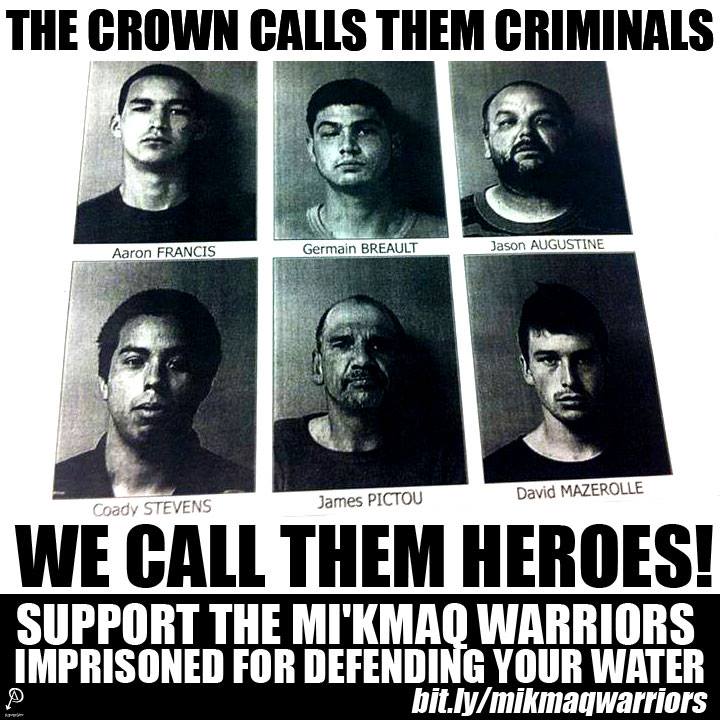
Mi’kmaq Warrior Society Members Beaten in Jail

1378041_10151948903995923_196279515_n1st Novem­ber

1378041_10151948903995923_196279515_n1st Novem­ber

Two mem­bers of the Mi’kmaq War­rior Soci­ety say they were roughed up and beat­en by RCMP offi­cers and jail guards after they were arrest­ed fol­low­ing a heav­i­ly-armed raid on a Mi’kmaq led anti-frack­ing camp in New Brunswick ear­li­er this month.

Jason Augus­tine, War­rior Soci­ety dis­trict chief, said he was kicked in the head by an RCMP offi­cer after he was cuffed and arrest­ed dur­ing the Oct. 17 raid.

Augus­tine said he was lat­er diag­nosed with a con­cus­sion at the hos­pi­tal in Monc­ton, NB.

“I was kicked in the head three times when I was tak­en down,” said Augus­tine. “I wasn’t resist­ing arrest, I had my hands behind my back, and this one RCMP start­ed bash­ing my head in.”

Augus­tine said he was nod­ding-off while he was held in one of the cells with oth­er war­riors at the Codi­ac RCMP detach­ment in Monc­ton. He claimed his head was hit against the wall as he was being tak­en to the ambu­lance.

“One of the guys called the guards up and said I need­ed an ambu­lance,” said Augus­tine. “The RCMP picked me up, they roughed me up and hit my head against the wall when they were tak­ing me to the hos­pi­tal.”


David Maze­rolle, anoth­er War­rior Soci­ety mem­ber, claimed in a YouTube video that Aaron Fran­cis was beat­en while hand­cuffed as he was being tak­en to a cell at the South East Region­al Cor­rec­tion Cen­tre in She­di­ac, NB.

Augus­tine and Maze­rolle, who were released from cus­tody last Fri­day, both said they were denied use of the tele­phone.

Augus­tine said all six of the war­riors kept in cus­tody fol­low­ing the raid were put into soli­tary con­fine­ment.

An offi­cial at the cor­rec­tion cen­tre referred queries on the alle­ga­tions to New Brunswick’s Pub­lic Safe­ty depart­ment. The depart­ment did not return tele­phoned and emailed requests for com­ment.

RCMP spokesper­son Con­st. Jul­lie Rogers-Marsh said she would look into the issue before pro­vid­ing a response.

A total of 40 peo­ple were arrest­ed the day of the raid which spi­ralled into chaos after mem­bers of the Elsi­pog­tog First Nation clashed with police.

The RCMP raid, which includ­ed tac­ti­cal unit mem­bers wear­ing cam­ou­flage and wield­ing assault weapons, freed sev­er­al vehi­cles owned by a Hous­ton-based com­pa­ny doing shale gas explo­ration work in the region. The anti-frack­ing camp was block­ing SWN Resources Canada’s trucks from leav­ing a com­pound in Rex­ton, NB.

Augus­tine and Maze­rolle face sev­er­al charges includ­ing forcible con­fine­ment, mis­chief, assault­ing a peace offi­cer and escap­ing law­ful cus­tody.

Augus­tine also denied RCMP alle­ga­tions that the war­riors forcibly con­fined secu­ri­ty guards employed by Indus­tri­al Secu­ri­ties Ltd in the com­pound hold­ing SWN’s vehi­cles.

Augus­tine said the secu­ri­ty guards were escort­ed by the RCMP at the begin­ning and end of their shifts.

“They were not held unlaw­ful­ly,” he said. “They stayed there until their shift changes.”

Augus­tine also denied RCMP alle­ga­tions that the war­riors uttered death threats or bran­dished weapons at the secu­ri­ty guards.

“There were no death threats, we had nobody in con­fine­ment and we had no weapons,” he said.

The RCMP held a press con­fer­ence fol­low­ing the raid where they dis­played three rifles and ammu­ni­tion seized dur­ing the raid. The RCMP said offi­cers also found crude explo­sive devices.

Augus­tine claimed the guns and explo­sives were plant­ed after the raid.

“I do believe they were plant­ed, they knew we want­ed peace,” said Augus­tine. “They had a one track mind to hurt the war­rior soci­ety.”

Augus­tine said the war­riors were pre­pared to nego­ti­ate the release of SWN’s vehi­cles.

“They kept telling me, ‘we just want the trucks out’ and I said I was going to our War Chief to tell him to get the trucks out,” said Augus­tine.

Augus­tine said he was shot four times by RCMP offi­cers using bean-bag rounds.

He said two RCMP offi­cers pre­sent­ed the war­riors with tobac­co bun­dles the night before the raid.

Augus­tine said his main defence against the charges will be to demand a hear­ing before an inter­na­tion­al court.

“Under our treaty laws we have to go to inter­na­tion­al court,” said Augus­tine. “We can’t be under the Crown because we are not under the Indi­an Act, we are treaty peo­ple.”

Since spring 2013, RCMP in New Brunswick arrest­ed 82 peo­ple in con­nec­tion with anti-frack­ing relat­ed protests