35 Arrested in Winona Frac Sand Protests 29th April

Thir­ty-five peo­ple were arrest­ed for tres­pass­ing dur­ing a large protest against frac sand Mon­day morn­ing staged at two sep­a­rate loca­tions in Winona.

Thir­ty-five peo­ple were arrest­ed for tres­pass­ing dur­ing a large protest against frac sand Mon­day morn­ing staged at two sep­a­rate loca­tions in Winona.

The Winona Police Depart­ment arrest­ed 19 peo­ple at the city’s com­mer­cial dock, after they were asked mul­ti­ple times to leave the pri­vate prop­er­ty. Offi­cers than respond­ed to a frac sand pro­cess­ing plant on Winona’s west end, where they arrest­ed anoth­er 16 peo­ple for tres­pass­ing there.

Pro­test­ers said their goal was to halt busi­ness oper­a­tions at each site.

“I think peo­ple see that the issue of sil­i­ca sand is some­thing affect­ing the entire region,” said pro­test­er Mol­ly Green­ing. “They’ve come to stand in sol­i­dar­i­ty with this issue.”

Dan Nis­bit, the own­er of CD Corp., which leas­es the com­mer­cial dock, said the protest cre­at­ed a dis­trac­tion for work­ers and tem­porar­i­ly slowed oper­a­tions at the facil­i­ty.

“Obstruct­ing busi­ness isn’t the right way to go about things,” Nis­bit said.

Winona Catholic Work­ers orga­nized the protest, reach­ing out to area res­i­dents who oppose the frac sand indus­try, as well as oth­ers in the region’s Catholic Work­er com­mu­ni­ty.

The protest was part of an annu­al cel­e­bra­tion of the region­al Catholic Work­er com­mu­ni­ty, and vol­un­teers from Iowa, Mis­souri, Wis­con­sin, Michi­gan and oth­er states in the Mid­west trav­eled to Winona to par­tic­i­pate.

Catholic Work­ers and oth­ers in the Winona area have protest­ed the indus­try for more than a year. They have blocked a rail load­ing ter­mi­nal, demon­strat­ed at the steps of the Winona City Hall pri­or to a city coun­cil meet­ing on frac sand reg­u­la­tions, and held oth­er ral­lies.

“As Catholic Work­ers liv­ing with the poor and mar­gin­al­ize, we come to this land to pre­vent the des­e­cra­tion of this land and the health of this com­mu­ni­ty,” they wrote in a state­ment sent Sun­day evening to area media out­lets.

“We declare Mon­day to be a mora­to­ri­um of busi­ness as usu­al at the sites of pro­duc­tion of sil­i­ca sand to elim­i­nate a nec­es­sary com­po­nent of frack­ing.”

There hasn’t been a his­to­ry of cita­tions or arrests at any of the demon­stra­tions, though dur­ing one ral­ly at city hall in May 2012 a pro­test­er was cit­ed for lit­ter­ing after he threw a hand­ful of frac sand on the front steps.


Lockdown Halts Keystone XL Work in Oklahoma 29th April

Spauld­ing, OK- Mon­day, April 29th, 6:15 AM- Ear­li­er this morn­ing two Texas res­i­dents locked them­selves to machin­ery being used to con­struct TransCanada’s dan­ger­ous and con­tro­ver­sial Key­stone XL tar sands pipeline in Spauld­ing, OK through Musco­gee Creek Nation land by treaty. Ben­jamin But­ler and Eamon Tread­away Danzig took action today to pre­vent the Cross Tim­bers biore­gion from being poi­soned by this inher­ent­ly dan­ger­ous tar sands pipeline, just as the sur­round­ing wet­lands and res­i­den­tial areas have been poi­soned as a result of Exxon’s Pega­sus pipeline rup­ture near Mayflower, Arkansas.  Recent Tar Sands spills in Min­neso­ta and Arkansas, as well as an explo­sion at a Tar Sands refin­ery in Detroit have high­light­ed the urgency in stop­ping Tar Sands extrac­tion and trans­porta­tion.

But­ler and Danzig are act­ing as a part of Great Plains Tar Sands Resis­tance, a grow­ing coali­tion of groups and indi­vid­u­als ded­i­cat­ed to stop­ping the expan­sion of Tar Sands infra­struc­ture through­out the Great Plains. Their actions fol­low the esca­lat­ing num­ber of work-stop­ping actions that have occurred in Okla­homa this past month.  Both anti-extrac­tion activists cite con­cern of the effect a spill will have in the Cross Tim­bers bio-region that they call home. Their action comes in the wake of the rup­ture of Exxon-Mobile’s Pega­sus pipeline which spilled Tar Sands bitu­men in neigh­bor­ing Mayflower, Arkansas. In addi­tion to the high rates of sick­ness that the sur­round­ing com­mu­ni­ty dis­played, the spill in Arkansas has pol­lut­ed Lake Con­way and has had dev­as­tat­ing effects on local wildlife. The per­ma­nent effect on people’s liveli­hoods and the health of affect­ed ecosys­tems remains to be seen.

“This pipeline is essen­tial for con­tin­ued tar sands exploita­tion which pos­es an immi­nent threat to the health of indige­nous com­mu­ni­ties near the point of extrac­tion, fence-line com­mu­ni­ties around the tox­ic refiner­ies, and ulti­mate­ly the health of every liv­ing being along the route,” said Ben­jamin But­ler, who was born at Tin­ker Air force Base in Okla­homa. “I believe in a more beau­ti­ful world, one where the prof­its of a cor­po­ra­tion don’t out­weigh the health of the peo­ple and the plan­et.”

“These com­pa­nies come through with false promis­es and leave sick­ness and dev­as­ta­tion in their wake,” said Eamon Danzig of Den­ton, TX. “Peo­ple in Mayflower expe­ri­enced faint­ing, nau­sea, and nose­bleeds from the ben­zene gas which sep­a­rates from the dilut­ed bitu­men in a spill and hov­ers above the ground. Leaks, rup­tures, and oth­er acci­dents on tar sands pipelines are so com­mon­place and inevitable that I can’t let this pipeline be built through the Cross Tim­bers.”

The Tar Sands megapro­ject is the largest indus­tri­al project in the his­to­ry of humankind, destroy­ing an area of pris­tine bore­al for­est which, if ful­ly real­ized, will leave behind a tox­ic waste­land the size of Flori­da. The Tar Sands megapro­ject con­tin­ues to endan­ger the health and way of life of the First Nations com­mu­ni­ties that live near­by by poi­son­ing the water­ways which life in the area depends on. This pipeline promis­es to deliv­er tox­ic dilut­ed bitu­men to the nox­ious Valero Refin­ery at the front door of the fence-line com­mu­ni­ty of Man­ches­ter in Hous­ton.

Cur­rent­ly, there is staunch resis­tance to the expan­sion of Tar Sands infrastructure—Lakota and Dako­ta peo­ples in “South Dako­ta” have sworn to pro­tect their land and peo­ple from the Key­stone XL, life­long Okla­homans and Tex­ans are con­sis­tent­ly halt­ing con­struc­tion of the inher­ent­ly dan­ger­ous Key­stone XL, and the Unis’tot’en Camp has entered the third year of their block­ade of the Pacif­ic Trails Pipeline.

UPDATE: 11:27AM : Eamon and Ben are both being charged with tres­pass­ing. We need $500 to get them out of jail.

UPDATE:  Eamon has been charged with tres­pass­ing and is being held on a $250 bail in the Hugh­es Coun­ty Jail. We are still wait­ing to find out Ben’s charges.

&

UPDATE: 9:18 AM: Lock box has been cut in half with jaws of life. Ben and Eamon have been tak­en into cus­tody by the police.

UPDATE: 9:12 AM: Using jaws of life on the lock box

UPDATE: 9:08 AM: More police and firetruck has arrived

UPDATE: 8:12AM: Anoth­er sher­iff has arrived. Failed at saw­ing

UPDATE: 8:05AM: Pri­vate secu­ri­ty has giv­en the sher­iff a hack­saw. The sher­iff is saw­ing at the lock box

UPDATE: 8:02: Sher­iff talk­ing to Ben and Eamon. The sher­iff is inspect­ing the lock box

UPDATE 7:51AM: Hugh­es Coun­ty Sher­iff has arrived

UPDATE: 7:43 AM: Pri­vate secu­ri­ty try­ing to con­vince Ben and Eamon to unlock

UPDATE: 7:36 AM: More work­ers arriv­ing on site

UPDATE: 7:30 AM: Pri­vate secu­ri­ty has arrived on site. Head of secu­ri­ty has informed us that he is a retired sher­iff of Hugh­es Coun­ty.

UPDATE: 6:20 AM: Work­ers on site

Climate Activist on Day 29 of Hunger Strike

Ear­li­er this month, 350.org founder Bill McK­ibbenwrote about the new move­ment of fos­sil fuel resis­tance that was spread­ing around the world.

This resis­tance is need­ed now more than ever, as glob­al tem­per­a­tures edge towards the 400 parts per mil­lion (ppm) mark for the first time in mil­lions of years, some­thing that is seri­ous­ly wor­ry­ing sci­en­tists. “It looks like the world is going to blow through the 400 ppm lev­el with­out los­ing a beat,” argues Scripps Insti­tu­tion of Oceanog­ra­phy sci­en­tist, Ralph Keel­ing.

One per­son who is part of this resis­tance is a young Amer­i­can activist Bri­an Eis­ter, who has worked with John Kerry’s pres­i­den­tial cam­paign, League of Con­ser­va­tion Vot­ersGreen Par­tyPub­lic Cit­i­zen and was involved in the Occu­py Move­ment.

But now he has put his body on the line for cli­mate change. He is on day 29 of a planned 30 day hunger strike. For near­ly the last month, all he has con­sumed is water, salt and potas­si­um.

Eis­ter is cur­rent­ly camped out­side the Amer­i­can Petro­le­um Insti­tute (API) in Wash­ing­ton, DC, the oil industry’s most pow­er­ful lob­by group.

He is try­ing to raise aware­ness about cli­mate change. “I am on hunger strike,” Eis­ter writes, “because I can think of no action which could ade­quate­ly express the urgency of humanity’s present sit­u­a­tion. There are more than a few trends which, left unchecked, are like­ly to make life impos­si­bly dif­fi­cult for future gen­er­a­tions.”

He argues that, “Giv­en the urgency of what is com­ing, every one of our lives should, first and fore­most, be ded­i­cat­ed to pre­vent­ing this com­ing cat­a­stro­phe.”

Over the week­end, Eis­ter gave an inter­view as to why he is tak­ing what many would argue is rad­i­cal action. His anger is chan­neled towards those in pow­er: politi­cians, the press and of course the oil indus­try itself.

“There are the pol­i­cy­mak­ers, who treat this issue as though we had all the time in the world to fix it. They already know bet­ter,” he argues. “There are mem­bers of the press, who bury sto­ries about the impend­ing ruina­tion of the world’s econ­o­my by glob­al warm­ing on page 13 of the news­pa­per, while con­sis­tent­ly plac­ing sto­ries about mem­bers of con­gress wran­gling over bud­gets on front page. They already know bet­ter.”

Per­haps sad­dest of all, he says: “there are edu­cat­ed, intel­li­gent peo­ple who sure­ly love their chil­dren work­ing for groups like the Amer­i­can Petro­le­um Insti­tute and Amer­i­cans for Clean Coal Elec­tric­i­ty. They already know bet­ter.”

The lob­by­ists at the API do know bet­ter, but like the tobac­co barons before them, they are try­ing to still spin a web of denial and decep­tion over the sci­ence and urgency of cli­mate change.

As the world hur­tles towards 400 ppm, the win­dow for mean­ing­ful action on cli­mate is rapid­ly clos­ing. But, as Eis­ter says, politi­cians, the press and the oil indus­try, all know bet­ter but car­ry on as if noth­ing is the prob­lem.

If Pres­i­dent Oba­ma is to start lis­ten­ing to peo­ple like Eis­ter, one first small step would be to can­cel the Key­stone XL pipeline. But that would only be the first small step of true mean­ing­ful action.

Eis­ter argues, “In our minds, we imag­ine that some­how, some­way, this prob­lem will be solved: how, after all, could a world full of respon­si­ble adults allow all of our children’s lives, and their children’s lives, to be ruined?”

Lockdown Continues in the “Red River Showdown” 25th April

A pro­test­er with the group Great Plains Tar Sands Resis­tance has stopped con­struc­tion of the Key­stone XL pipeline by lock­ing his arm into a con­crete cap­sule buried direct­ly in the pipeline’s pro­posed path. Fitzger­ald Scott, 42, is the first African Amer­i­can to risk arrest while phys­i­cal­ly blockad­ing TransCanada’s dan­ger­ous tar sands pipeline, and the sec­ond per­son to take action this week. On Mon­day a 61 year old man locked him­self to a piece of con­struc­tion equip­ment effec­tive­ly shut­ting down anoth­er Okla­homa pipeline con­struc­tion site. This week of action, called the “Red Riv­er Show­down,” is intend­ed to pro­tect the Red Riv­er, which marks the bor­der between Okla­homa and Texas and is a major trib­u­tary of the Mis­sis­sip­pi.

The site Scott has block­ad­ed is a wet­land area where crews are attempt­ing to lay sec­tions of the Key­stone XL tar sands pipeline direct­ly into the marshy waters. An unde­tect­ed pin­hole leak at this loca­tion would cause can­cer caus­ing chem­i­cals to mix direct­ly into the local com­mu­ni­ty water table.

Scott, who has a master’s degree in urban plan­ning from the Uni­ver­si­ty of Illi­nois, Chica­go, is a long­time activist for social and envi­ron­men­tal jus­tice. While orga­niz­ing against Key­stone over the past five months, Scott has met many peo­ple strug­gling to pro­tect their homes from TransCanada’s abuse of emi­nent domain.

“I am doing this for the peo­ple who don’t have the finan­cial resources to pro­tect them­selves from a bul­ly like Tran­sCana­da,” explained Scott. “Imag­ine how much worse it is for them – like the most­ly African Amer­i­can neigh­bor­hood in Winona, TX, where pro­test­ers with the Tar Sands Block­ade found holes in welds of the pipeline sec­tion that runs right behind a children’s play­ground, and nei­ther Tran­sCana­da nor the gov­ern­ment will do any­thing about it!”

As con­struc­tion on the south­ern por­tion of Key­stone XL nears two thirds com­ple­tion, no reg­u­la­tors or politi­cians show any will­ing­ness to halt the project or even inspect those faulty welds. Accord­ing to George Daniel, spokesper­son for Great Plains Tar Sands Resis­tance, “Scott’s action sends a clear mes­sage: because every oth­er avenue has failed to stop this dead­ly project, we will block­ade – all sum­mer and on into the fall, if that’s what it takes.”

Today’s action comes just a few weeks after the dev­as­tat­ing tar sands spill in Mayflower, Arkansas, which has left com­mu­ni­ties across Okla­homa and Texas ter­ri­fied that they may be the next vic­tims of reck­less indus­try prac­tices. Sur­vivors of the spill in Mayflower have report­ed nau­sea, blurred vision, vom­it­ing, and black outs caused by the same blend of raw tar and poi­so­nous chem­i­cal sol­vents that will be trans­port­ed through Key­stone XL.

UPDATE 9:30 AM Work is still stopped on the ease­ment due to the large amount of police and emer­gency equip­ment need­ed for extrac­tion!  Show your sup­port for Fitzger­ald here!

UPDATE 9:10 AM: Fire­fight­ers have extract­ed Fitzger­ald and he’s now in police cus­tody. Please show your sup­port with a gen­er­ous dona­tion to his legal fund.

UPDATE 8:49 AM: Anoth­er fire res­cue vehi­cle on scene, offi­cer just com­mand­ed “every­one not involved in emer­gency ser­vices, back off now!” and work­ers retreat­ed slight­ly.

UPDATE 8:30 AM: Half a dozen work trucks, four police cars (3 sher­iffs and 1 state troop­er), four cops, four fire­fight­ers, 2 EMTs, one fire truck and a fire res­cue truck on scene. Spe­cial fire depart­ment equip­ment truck just arrived; large group of offi­cials crowd­ed around Fitzger­ald.

UPDATE 7:42 AM: Sher­iff on scene.

Drax AGM targeted over biomass conversion plans 25th April

50 peo­ple took part yes­ter­day in a demon­stra­tion and ral­ly out­side the annu­al gen­er­al meet­ing of Drax Plc, at the Gro­cers’ Hall in Lon­don, organ­ised by Bio­fu­el­watch and sup­port­ed by 16 oth­er groups.

50 peo­ple took part yes­ter­day in a demon­stra­tion and ral­ly out­side the annu­al gen­er­al meet­ing of Drax Plc, at the Gro­cers’ Hall in Lon­don, organ­ised by Bio­fu­el­watch and sup­port­ed by 16 oth­er groups. The protest opposed Drax pow­er station’s plans to con­vert half of its gen­er­at­ing capac­i­ty to bio­mass, and high­light­ed the impacts that this will have in terms of increased defor­esta­tion, land-grab­bing and car­bon emis­sions.

50 peo­ple took part yes­ter­day in a demon­stra­tion and ral­ly out­side the annu­al gen­er­al meet­ing of Drax Plc, at the Gro­cers’ Hall in Lon­don, organ­ised by Bio­fu­el­watch and sup­port­ed by 16 oth­er groups [1]. Demon­stra­tors chant­ed “Drax Drax, what do you say? How many trees have you killed today?” and hold­ing ban­ners read­ing “Big Bio­mass: Fuelling Defor­esta­tion, Land-grab­bing and Cli­mate Dis­as­ter”, “Big Bio­mass is Green­wash not Renew­able Ener­gy” and “Drax the Destroy­er!”. Bio­fu­el­watch called the demon­stra­tion to oppose Drax pow­er station’s plans to con­vert half of its gen­er­at­ing capac­i­ty to bio­mass, and to high­light the impacts that this will have in terms of increased defor­esta­tion, land-grab­bing and car­bon emis­sions.

The protest coin­cid­ed with the pub­li­ca­tion of an open let­ter to Drax Plc signed by 49 dif­fer­ent organ­i­sa­tions and net­works world­wide, includ­ing Friends of the Earth Inter­na­tion­al, the Glob­al For­est Coali­tion and World Rain­for­est Move­ment [2]. The let­ter con­cludes: “We oppose com­mer­cial and indus­tri­al scale bioen­er­gy, and demand that the UK halt coal con­ver­sion plans and force these coal plants to shut down. Mean­while focus must be redi­rect­ed towards a seri­ous reduc­tion of ener­gy con­sump­tion and dra­mat­ic mea­sures to pro­tect and restore forests and oth­er ecosys­tems.”

Drax’s bio­mass plans will require pel­lets made from 15.8 mil­lion tonnes of wood each year, mak­ing it the biggest bio­mass-burn­ing pow­er sta­tion in the world. By com­par­i­son, the UK’s total annu­al wood pro­duc­tion is only 10 mil­lion tonnes. Over­all, ener­gy com­pa­nies in the UK are plan­ning to burn up to 10 times as much wood as the UK pro­duces ever year. Wood burned by Drax increas­ing­ly comes from whole trees felled for this pur­pose [3].

In addi­tion to issues of defor­esta­tion and land-grab­bing, recent sci­en­tif­ic stud­ies have shown that bio­mass used for elec­tric­i­ty gen­er­a­tion is actu­al­ly more car­bon inten­sive than burn­ing coal [4]. Dun­can Law from Bio­fu­el­watch said: “Burn­ing bio­mass on the scale pro­posed will be even more car­bon inten­sive than the coal it will replace, and result in a mas­sive car­bon debt stored just where we don’t want it, in the atmos­phere. Far from being a low-car­bon fuel, it’s a total cli­mate dis­as­ter!”.

For local com­mu­ni­ties, coal to bio­mass con­ver­sions will mean decades more of high lev­els of pol­lu­tion, since the con­ver­sions allow pow­er sta­tions to con­tin­ue oper­at­ing when they may oth­er­wise have to close down [5].

Notes:

[1] The fol­low­ing organ­i­sa­tions are for­mal­ly sup­port­ing Tak­ing DRAX­tic Action: Cam­paign Against Cli­mate Change; Car­bon Trade Watch; Chris­t­ian Ecol­o­gy Link; Cli­mate Jus­tice Col­lec­tive; Coal Action Net­work; Coal Action Scot­land; Colom­bia Sol­i­dar­i­ty Cam­paign; Cor­po­rate Watch; Frack Free Som­er­set; Fuel Pover­ty Action; Gaia Foun­da­tion; Lon­don Min­ing Net­work; Lon­don Ris­ing Tide; Occu­py Lon­don Ener­gy, Equi­ty and Envi­ron­ment Group; Ris­ing Tide UK; World Devel­op­ment Move­ment.

[2] The Open Let­ter to Drax can be found at http://www.biofuelwatch.org.uk/2013/drax-signon-letter/

[3] The Dog­wood Alliance, a non­prof­it orga­ni­za­tion work­ing to pro­tect forests in the South­ern US, released a report enti­tled “The Use of Whole Trees in Wood Pel­let Man­u­fac­tur­ing,” in Novem­ber 2012 doc­u­ment­ing the fact that the top exporters of wood pel­lets in the region rely heav­i­ly on cut­ting down whole trees to sat­is­fy demand from Euro­pean pow­er sta­tions. Scot Quaran­da, Cam­paign Direc­tor for Dog­wood Alliance said “Ener­gy com­pa­nies in the UK, includ­ing Drax, RWE and E.On are con­vert­ing large, old, dirty and inef­fi­cient coal pow­er sta­tions to bio­mass all in the name of reduc­ing car­bon emis­sions, but the real­i­ty is that this shift will accel­er­ate cli­mate change while also dri­ving destruc­tive indus­tri­al log­ging in the world’s most bio­log­i­cal­ly diverse tem­per­ate forests.” Through direct inves­ti­ga­tion and research, the report doc­u­ments the use of whole trees from South­ern forests by the largest wood pel­let man­u­fac­tur­ers and exporters in the South­ern US. Pel­let man­u­fac­tur­ers such as Geor­gia Bio­mass, a whol­ly owned sub­sidiary of RWE, and Envi­va, a major sup­pli­er of Drax and E.On are high­light­ed in the report as using or if not open, plan­ning to use, whole trees. The report can be found here  http://www.dogwoodalliance.org/2012/11/new-report-discredits-uk-energy-company-claims-that-pellets-come-from-wood-waste/

[4] For a list of stud­ies into the car­bon impacts of bio­mass elec­tric­i­ty, see www.biofuelwatch.org.uk/resources-on-biomass. In addi­tion, the report “Dirt­i­er than coal?” pub­lished by RSPB, Friends of the Earth and Green­peace can be found here www.rspb.org.uk/Images/biomass_report_tcm9-326672.pdf

[5] Accord­ing to a brief­ing by Depart­ment for Ener­gy and Cli­mate for the House of Lords on 14th Feb­ru­ary 2013, “the con­ver­sion of exist­ing coal gen­er­at­ing plant to bio­mass or high­er lev­els of bio­mass co-fir­ing is a way of keep­ing open some exist­ing coal plant that would oth­er­wise close before 2016 under envi­ron­men­tal leg­is­la­tion, and there­fore improve capac­i­ty mar­gins over this decade.” ( http://www.publications.parliament.uk/pa/ld201213/ldselect/ldsecleg/123/12306.htm)

Philippine climate activists expose risks of dirty coal. 24th April

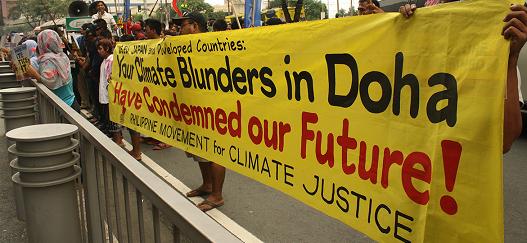
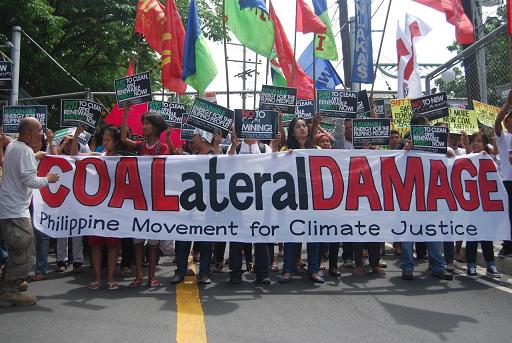
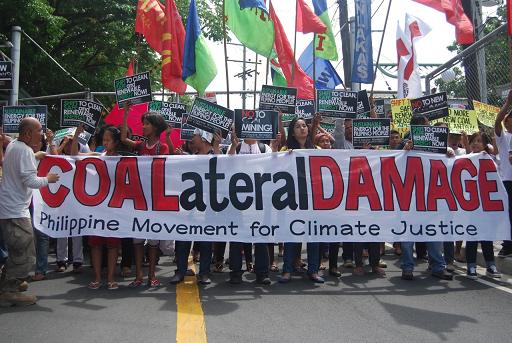
300-strong cli­mate activists and anti-coal advo­cates stormed the Depart­ment of Ener­gy to voice out their oppo­si­tion to coal mines and coal-fired pow­er plants pro­mot­ed by the gov­ern­ment and to launch the group’s Cam­paign Against Dirty Ener­gy and for People’s Access to Safe, Renew­able and Demo­c­ra­t­ic Ener­gy Alter­na­tives.

This is in cel­e­bra­tion of Earth Day and the group’s Nation­al Day of Action against Coal.

Led by the Philip­pine Move­ment for Cli­mate Jus­tice (PMCJ), the groups brought body bags, gas masks and paper-made Philip­pine Cock­a­toos wear­ing masks to avoid the pol­lu­tion from coal and high­light­ed how coal dam­ages not only the envi­ron­ment and bio­di­ver­si­ty but our lives, lit­er­al­ly tak­ing lives -, thus, the state­ment: COAL KILLS.

COAL KILLS—Why is coal dirty, tox­ic

Ger­ry Arances, nation­al coor­di­na­tor of PMCJ explained: “The pro­mo­tion of coal as a major source of ener­gy of Fil­ipino com­mu­ni­ties is not the right solu­tion to the alleged pow­er cri­sis in sev­er­al parts of the coun­try. First of all, coal emits a large amount of heavy met­als such as mer­cury and arsenic – con­t­a­m­i­nat­ing our waters; gen­er­ates 500 tons of small air­borne par­ti­cles which cause asth­ma, bron­chi­tis, and aggra­vate heart dis­ease; coal ash dis­pos­al pos­es a very high risk of caus­ing can­cer to those exposed.

Sec­ond, coal plant emis­sions in sur­round­ing areas kill the liveli­hoods of host com­mu­ni­ties as the stud­ies in coal plants in Masin­loc, Zam­bales, and Naga, Cebu, among oth­ers, have clear­ly shown.

Third, coal burn­ing is the major cause of glob­al warm­ing and fur­ther pro­mot­ing it will aggra­vate the cli­mate cri­sis that we are fac­ing now. This I believe is a greater dam­age to the present and future gen­er­a­tions who will have to suf­fer the inten­si­fied impacts of cli­mate change.“

RESIST COAL—Increasing local oppo­si­tion to coal

Two of the major pro­posed projects now include the coal plants in Cebu and Palawan.

In Cebu, ash sam­ples test­ed from a coal plants in Naga, Cebu, revealed pres­ence of heavy met­als such as mer­cury and arsenic (carcinogen),both haz­ardous sub­stances. Despite this, more projects are still under­way. Naga is home to two coal plants.

“Health records in Naga for 2009–2012 reveal can­cer as one if not the lead­ing cause of mor­tal­i­ty inci­dence in the area. Though could not be direct­ly linked to the coal plant oper­a­tions, that its inci­dence in Naga is high­er than nation­al aver­ages should be suf­fi­cient basis for alarm. While we debate as to whether or not coal is the cul­prit for the deaths, can­cer-relat­ed deaths in the area con­tin­ue to rise,” said Atty. Aaron Pedrosa of San­lakas.

“The same could be said of com­mu­ni­ties in Tole­do City, Cebu where anoth­er coal plant oper­ates. But instead of address­ing the health con­cerns and con­duct­ing a probe into the sit­u­a­tion, the gov­ern­ment intends to put up anoth­er plant in the province”, Pedrosa added.

Can­cer is among the many dis­eases that could be attrib­uted to con­tin­ued expo­sure to coal com­bus­tion wastes

Also threat­ened by coal projects is our Last Fron­tier, Palawan—where a 15MW coal-fired pow­er plant project is being pro­posed to respond to a pro­ject­ed loom­ing pow­er short­age in the province. Envi­ron­men­tal­ists and con­ser­va­tion­ists in the province are strong­ly oppos­ing as the plant is to be set up 1.5‑kilometers away from Rasa Island, home to the crit­i­cal­ly endan­gered Philip­pine Cock­a­too.

Kather­ine Leuch of Palawan Alliance for Clean Ener­gy asserts that “The super­fi­cial cheap­ness of coal should not be the only con­sid­er­a­tion for allow­ing a coal-fired pow­er plant in Palawan because the risks of such far out­weighs the ben­e­fits giv­en that Palawan is an eco­log­i­cal­ly rich and sen­si­tive province. The neg­a­tive effect of coal is as dark as it is.

What is sad­den­ing is that based on our study the pro­ject­ed pow­er short­age is unfound­ed. It is main­ly due to dis­tri­b­u­tion prob­lems and not because of the exist­ing sup­ply. Palawan can also pro­vide clean­er and safer alter­na­tives like mini hydro, and oth­er renew­able ener­gy sources.”

RE-ENERGIZE ALL—Shift to REnew­able, sus­tain­able ener­gy for all Fil­ipino com­mu­ni­ties

The Philip­pine Ener­gy Plan (PEP) 2008–2030 reveals that coal pro­duc­tion will con­tin­ue to esca­late. From 39 coal oper­at­ing con­tracts (COCs) in 2007, there are now 76 COCs—16 of which were award­ed -– last Feb­ru­ary by the gov­ern­ment.

Arances con­clud­ed: “The PEPs mas­sive pro­mo­tion of coal-based pow­er is alarm­ing and is a major cause of con­cern for our frag­ile ecosys­tem and the Philip­pine pop­u­la­tion. — Coal is far from the best or even good solu­tion to our pow­er cri­sis.

Stud­ies show that the country’s poten­tial renew­able ener­gy can pro­vide as high as more than 200,000 MW even with­out tap­ping solar pow­er. It is about time that we look at this and do away with large-scale, dirty and envi­ron­men­tal­ly-destruc­tive projects.

If the gov­ern­ment is as seri­ous about using renew­able ener­gy as it claims, it had best do away with con­tra­dic­to­ry poli­cies. Gov­ern­ment needs to revise its Philip­pine Ener­gy Plan to ensure that vul­ner­a­ble com­mu­ni­ties stop suf­fer­ing from the harm­ful effects of coal; start invest­ing in RE sources to make clean pow­er acces­si­ble and afford­able to our peo­ple.”

Local actions against coal

Anti-coal groups in host com­mu­ni­ties also led dif­fer­ent infor­ma­tion-aware­ness cam­paign activ­i­ties local­ly, includ­ing Cebu City, Davao City, Gen­er­al San­tos City, Palawan, Bataan, Leyte, and Que­zon.

In Cebu, around 100 activists dumped coal on a life-size map of the Philip­pines sym­bol­iz­ing the gov­ern­men­t’s rabid pro­mo­tion of car­bon-inten­sive tech­nol­o­gy and activ­i­ties treat­ing its adverse effects on the com­mu­ni­ty’s health, ecosys­tem and liveli­hoods as col­lat­er­al dam­age.

Last Sun­day, April 21, Supor­ta­do Move­ment and PMCJ also orga­nized a Bike Tour para sa Abot Kayang REnew­able Ener­gy in Marik­i­na, also in cel­e­bra­tion of Earth Day.

In Palawan, advo­cates from Palawan Alliance for Clean Ener­gy (PACE) installed stream­ers and COAL KILLS posters around Puer­to Prince­sa, while in Panacan, Nar­ra, Palawan sev­er­al dirty coal edu­ca­tion­al activ­i­ties were held Mem­bers of PACE also cam­paigned via local radio and a local forum the call against coal and oppo­si­tion to the pro­posed coal plant in Nar­ra, Palawan.

Anti-Mining Activist Daniel Pedro Mateo Kidnapped and Murdered in Guatemala 23rd April

Anti-mining community leader Daniel Pedro Mateo

Anti-min­ing com­mu­ni­ty leader Daniel Pedro Mateo

Anti-mining community leader Daniel Pedro Mateo

Anti-min­ing com­mu­ni­ty leader Daniel Pedro Mateo

In the midst of an ongo­ing geno­cide tri­al against a for­mer pres­i­dent of Guatemala, which is now being sus­pend­ed by the cur­rent pres­i­dent who is also impli­cat­ed in the war crimes, vio­lence against indige­nous envi­ron­men­tal activists con­tin­ues, with anoth­er per­son found dead last week in Hue­hue­te­nan­go.  

On April 16, 2013, the body of Qanjob’al com­mu­ni­ty activist Daniel Pedro Mateo was found mur­dered in San­ta Eulalia, Hue­hue­te­nan­go, Guatemala.   He had been kid­napped for 12 days and his body showed signs of tor­ture. Haz clic aquí para la ver­sión en español.

Daniel, a founder of the com­mu­ni­ty radio sta­tion Snuq Jolom Konob, dis­ap­peared on Sun­day, April 7th  in the vil­lage of El Quet­zal, Hue­hue­te­nan­go on his way to host a work­shop on Indige­nous rights in the com­mu­ni­ty of San­ta Cruz Bar­il­las. His fam­i­ly was con­tact­ed by kid­nap­pers and demand­ed a ran­som of Q150,000 in return for his safe­ty. Despite the efforts of his fam­i­ly and com­mu­ni­ty to gath­er mon­ey to pay the ran­som, Daniel’s body was found last night in his vil­lage of San­ta Eulalia.

Daniel Pedro Mateo was a painter, teacher, a founder of Radio Snuq Jolom Konob, and a leader in the com­mu­ni­ty resis­tance to min­ing and hydro­elec­tric activ­i­ties in Hue­hue­te­nan­go. Child­hood expe­ri­ences that exposed him to the grave inequal­i­ties and injus­tices con­fronting poor and indige­nous com­mu­ni­ties in Guatemala moti­vat­ed his life­long com­mit­ment to work for a more just and humane soci­ety.  After the armed con­flict end­ed, he joined with oth­er Qanjob’al Maya lead­ers in San­ta Eulalia to start a radio sta­tion that would give voice to their com­mu­ni­ty that formed the major­i­ty of the local pop­u­la­tion, but were nonethe­less mar­gin­al­ized and silenced. Daniel was no longer involved in the day-to-day work of the sta­tion, but main­tained close ties with many of the cur­rent vol­un­teer staff and lead­er­ship.

Many in the com­mu­ni­ty believe this vio­lent act to be a reper­cus­sion of Daniel’s envi­ron­men­tal activism. Loren­zo Fran­sis­co Mateo, Daniel’s cousin and fel­low mem­ber of Radio Snuq Jolom Konob stat­ed, “The only crime he was ever guilty of was fight­ing in defense of the envi­ron­ment.” Daniel was an out­spo­ken orga­niz­er against the Hydro San­ta Cruz dam in San­ta Cruz Bar­il­las, a dam in his town of San­ta Eulalia, and a log­ging com­pa­ny Maderas San Luis that had forced evic­tions of local Indige­nous peo­ples. He was a mem­ber Cul­tur­al Survival’s part­ner orga­ni­za­tion Asem­blea de Pueb­los de Hue­hue­te­nan­go, and a mem­ber of the polit­i­cal par­ty WINAQ, found­ed by Nobel prize win­ner Rigob­er­ta Menchu.

Daniel’s death comes in a series of recent mur­ders in Guatemala of Indige­nous activists. Just last year, anti-dam activist and com­mu­ni­ty leader, Andres Fran­sis­co Miguel, was shot and killed by secu­ri­ty guards of Hydro San­ta Cruz in Bar­il­las, where Daniel was head­ed to host a work­shop. In March, Exaltación Mar­cos Uce­lo, an Indige­nous Xin­ca leader active against Cana­di­an Tahoe Resources’ sil­ver mine in Jala­pa was found beat­en to death, after being abduct­ed along­side three oth­er Xin­ca lead­ers. Six months ago, sev­en Indige­nous pro­tes­tors were shot and killed by Guatemalan mil­i­tary in Totonicapan.These events reflect the dan­ger­ous state that Indige­nous lead­ers and envi­ron­men­tal activists find them­selves in Guatemala.

Com­mu­ni­ty orga­ni­za­tions in San­ta Eulalia are call­ing for con­tri­bu­tions to cov­er funer­al expens­es and to sup­port Daniel’s fam­i­ly in this dif­fi­cult time. He leaves behind an ail­ing wife and eight chil­dren.

Earth Day Action — Part Two 23rd April

San Mateo Coun­ty Res­i­dents Protest Tox­ic Jail 

In com­mem­o­ra­tion of Earth Day, com­mu­ni­ty mem­bers from around San Mateo Coun­ty gath­ered out­side of the new jail site and the Coun­ty Cen­ter wear­ing haz­ardous mate­ri­als suits and gas masks to illus­trate the tox­ic nature of the new jail. Car­ry­ing a giant ban­ner that read “Jails are Social­ly and Envi­ron­men­tal­ly Tox­ic,” they spoke about the ways a new jail will harm com­mu­ni­ties and the envi­ron­ment as well as drain­ing the county’s bud­get of des­per­ate­ly need­ed resources. The new jail project will cost $160 mil­lion to build and $30 mil­lion each year to oper­ate, and the coun­ty has not yet secured the need­ed con­struc­tion funds.

Click here for more

Quak­ers Protest Against MTR

A Quak­er group and oth­er pro­test­ers on Tues­day asked PNC Bank to stop fund­ing projects that use moun­tain­top removal to pro­duce coal and, if it doesn’t, asked investors to divest from the sixth-largest bank in Amer­i­ca.

Click here for more

Bar­ri­cades for Earth Day in the Philip­pines

After the num­ber of police swelled and a truck barred the gate at the Provin­cial Capi­tol, about 1,000 activists held a bar­ri­cade for a few hours in the main road of Mati Tues­day morn­ing. They were ear­li­er blocked sev­er­al times by the police and mil­i­tary in two sep­a­rate inci­dents.

“We were forced to set up the bar­ri­cade because they didn’t allow us to hold the ral­ly yes­ter­day.  We could just not leave with our quest for jus­tice com­pro­mised,” said Kar­los Tran­gia, spokesper­son for Barug Katawhan, a move­ment of Pablo vic­tims.

Earth Day Protests — Part One 23rd April

Meadville group protests against oil and nat­ur­al gas well frack­ing

Meadville group protests against oil and nat­ur­al gas well frack­ing

While chant­i­ng “DEP, can’t you see you’re the case of all this mis­ery?” and “No frack­ing way,” a crowd marched peace­ful­ly from Dia­mond Park down Chest­nut Street on Mon­day while car­ry­ing a cof­fin to the Penn­syl­va­nia Depart­ment of Envi­ron­men­tal Protection’s north­west region­al office in Meadville.

Check out more here


Pitts­burg envi­ron­men­tal­ists protest DEP in hon­or of Earth Day

Pro­tes­tors came by land and by sea to the Penn­syl­va­nia Depart­ment of Envi­ron­men­tal Pro­tec­tion South­west Region­al Office on Mon­day.

About 15 pro­tes­tors kayaked down the Alleghe­ny Riv­er to the DEP office, join­ing with near­ly 100 oth­er pro­tes­tors in a march to the DEP office, part of a statewide protest of the agency’s reg­u­la­to­ry actions regard­ing hydraulic frac­tur­ing — or frack­ing — activ­i­ty in the state.

Check out more here

Protest against bat­tery plant in Chi­na

SONGJIANG Dis­trict offi­cials said they are still eval­u­at­ing the envi­ron­men­tal impact of a bat­tery fac­to­ry planned for the dis­trict this year after res­i­dents con­cerned over safe­ty protest­ed its con­struc­tion.

Res­i­dents in more than 40 cars tra­versed the dis­trict on Sun­day in a protest that last­ed over two hours over the bat­tery fac­to­ry. Plans for the fac­to­ry call for it to be one of China’s biggest.

More than 10,000 res­i­dents liv­ing in the dis­trict have signed a peti­tion against the con­struc­tion, which will be sent to the local gov­ern­ment, one of the cam­paign orga­niz­ers said.

Click here for more

Utah protests get down at the governor’s man­sion

Activists fet­ed Earth Day with a part-cel­e­bra­tion, part-protest out­side the Utah Governor’s Mansion.”People want clean air, clean ener­gy, a clean future,” said the Sier­ra Club’s Tim Wag­n­er, stand­ing before a ban­ner fes­tooned with blue rib­bons bear­ing mes­sages for Gov. Gary Her­bert and oth­er state leaders.”That’s what peo­ple want. That’s what peo­ple are demand­ing.”

Click here for more

Activist Locks Himself to Keystone XL Heavy Machinery Launching a “Red River Showdown” Over KXL South 23rd April

On Earth Day 2013, to mark the close of the State Department’s pub­lic com­ment peri­od for TransCanada’s pro­posed Key­stone XL North­ern Seg­ment (KXL North) pipeline’s Envi­ron­men­tal Impact State­ment (EIS), an activist with the Great Plains Tar Sands Resis­tance has locked him­self to a piece of Key­stone XL heavy machin­ery in Okla­homa, tem­porar­i­ly halt­ing work site con­struc­tion. Alec John­son, a 61-year old cli­mate jus­tice orga­niz­er from Ames, Iowa took direct action to defend the Red Riv­er in sol­i­dar­i­ty with the Mayflower, Arkansas com­mu­ni­ty, which is cur­rent­ly reel­ing from last month’s mas­sive tar sands spill. The dis­as­ter, due to a 22-foot long gash in ExxonMobil’s rup­tured Pega­sus tar sands pipeline, has result­ed in chron­ic health prob­lems for near­by res­i­dents and has left Lake Con­way dan­ger­ous pol­lut­ed.

“This is our envi­ron­men­tal impact state­ment,” stat­ed artist/activist and Great Plains Tar Sands Resis­tance spokesper­son Richard Ray Whit­man. “Tran­sCana­da claims its tech­nol­o­gy will pre­vent spills, but that same tech­nol­o­gy was used on the Pega­sus line, too. That didn’t work, now, did it? We are tak­ing a stand to pro­tect our access to clean water. KXL South is already being con­struct­ed with or with­out the North, and the destruc­tion of our water­ways in its path is not a ques­tion of if, but when. No tox­ic pipeline is worth the gam­ble and no com­mu­ni­ties in Texas or Okla­homa deserve the fate of Mayflower, Arkansas.”

While the cur­rent fate of KXL North rests upon U.S. Pres­i­den­tial approval, KXL South’s now lies in the broad-spec­trum oppo­si­tion it has gar­nered in the form of legal cas­es as well as the grass­roots civ­il dis­obe­di­ence cam­paigns by groups like Great Plain Tar Sands Resis­tance and Tar Sands Block­ade. Should KXL North be per­mit­ted to start con­struc­tion, these groups along with grass­roots indige­nous orga­ni­za­tions, sev­er­al Lako­ta Nation trib­al coun­cils, and over 60,000 oth­ers have pledged resis­tance in the form of non-vio­lent direct action to halt pipeline con­struc­tion.

Inter­na­tion­al treaties like the Treaty to Pro­tect the Sacred and strong­ly-word­ed trib­al coun­cil res­o­lu­tions like those recent­ly passed by the Oglala and Ihank­ton­wan Oyate/Yankton Sioux Gen­er­al Coun­cils pledg­ing resis­tance to KXL North “by all means nec­es­sary” indi­cate a tremen­dous uni­ty amongst Great Plains indige­nous nations. The strong reac­tions come after years of inad­e­quate con­sul­ta­tion on the part of Tran­sCana­da with regards to impacts on the Lako­ta Nation com­mu­ni­ties by its tox­ic tar sands pipeline. In rec­og­niz­ing the dire threat to their first med­i­cine, sacred water, the com­mu­ni­ties are also embrac­ing the spir­it of inter­na­tion­al sol­i­dar­i­ty with First Nation com­mu­ni­ties down­stream from tar sands min­ing sites. After years decry­ing the chem­i­cal pol­lu­tion and result­ing destruc­tion of tra­di­tion­al life ways from tar sands exploita­tion in what some affect­ed indige­nous peo­ples refer to as a “slow indus­tri­al geno­cide,” Cree and Dene Nations are expe­ri­enc­ing an upsurge in sym­pa­thy and sol­i­dar­i­ty with their plight.

“I am per­son­al­ly amazed at how resis­tance to the Key­stone XL tar sands pipeline and edu­ca­tion as to what tar sands exploita­tion looks like con­tin­ues to grow every day,” John­son wrote in a state­ment pri­or to his action. “Because it would be irre­spon­si­ble, we’re not stop­ping until the indus­try stops poi­son­ing our futures with lies, unnec­es­sary risks, and death for their prof­it. As long as the tar sands indus­try promis­es it will kill, we will block­ade.”


UPDATE 7:30PM – Cor­rec­tion – Friends are being held on a com­bined $9,000 bail and will be spend­ing the night in jail.

Sor­ry for the con­fu­sion, as charges and asso­ci­at­ed bail change.  Our friends are in high spir­its and would like to be bailed out togeth­er.  Hope­ful­ly tomor­row!

Dona­tions have been pour­ing in and we real­ly appre­ci­ate the sup­port!  How­ev­er, we still need some help to get our friends out of jail togeth­er…

Help GPTSR get our friends out of jail here!


UPDATE 5:30PM – Four activists are cur­rent­ly being held on a com­bined $14,000 bail

Alec has been charged with crim­i­nal tres­pass for shut­ting down the KXL con­struc­tion site today and is being held on a $3,000 bail.  The charges for the 3 oth­er activists also include crim­i­nal tres­pass.

UPDATE 1:00PM – Ral­ly at the Ato­ka Coun­ty Cour­t­house – Cel­e­brate Earth Day and sup­port our brave activists

Dozens are gath­er­ing after the KXL con­struc­tion site shut­down. Come join a ral­ly hap­pen­ing right now with local indige­nous lead­ers and KXL pipeline activists @200 E Court St. Ato­ka on this beau­ti­ful Earth Day.

See more pho­tos from today’s action here.

UPDATE 11:30AM – Alec has been extract­ed and arrest­ed for shut­ting down a KXL con­struc­tion site – 4 arrests on Earth Day so far

UPDATE 11:00AM – Fire Depart­ment try­ing to remove Alec from KXL machin­ery – Con­struc­tion shut down on both sides of road

UPDATE 10:30AM – Two arrests so far at site of Key­stone XL con­struc­tion shut down – Alec still locked to heavy machin­ery 

Activists with Idle No More South­ern Okla­homa ral­ly in sol­i­dar­i­ty with Alec and Mayflower res­i­dents liv­ing with the health affects of tox­ic tar sands.

UPDATE 10:00AM – LIVE VIDEO: Alec locks him­self to Key­stone XL heavy machin­ery

Watch this live footage shot by live stream­er @jak_nlauren of Alec lock­ing him­self to Key­stone XL heavy machin­ery.  10 min­utes into the video local police show up and arrest Jak for his cov­er­age of the sto­ry.


Video stream­ing by Ustream