Plea from Turkey 1st June

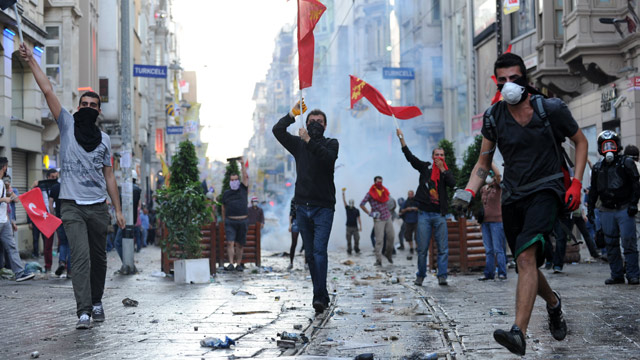
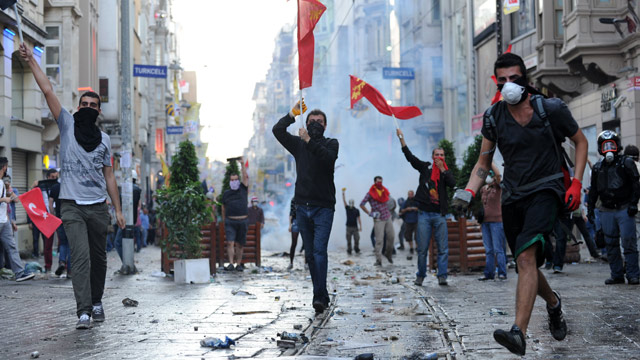
Turkey’s protests against the log­ging of trees in  Gezi Park have grown into a nation-wide upheaval. The heavy-hand­ed police response, using tear gas and pep­per spray against bystanders and pro­tes­tors, alike, has ignit­ed a pro­found response against state repres­sion in Turkey.

Envi­ron­men­tal­ism in Turkey as well as East­ern Europe/West Asia has been on the rise in the last 5–10 years, and this mas­sive demon­stra­tion ris­ing from anti-log­ging protests presents a land­mark in the his­to­ry of this region.

Thou­sands of pro­tes­tors have swelled in the streets of every major city in Turkey. More sol­i­dar­i­ty demon­stra­tions are planned from Ger­many to the US. From Athens to Lon­don, San Fran­cis­co to Boston, protests are already draw­ing thou­sands of peo­ple, and more are planned for the future.

Gezi Park is one of the small­est parks in Istan­bul, but the sym­bol­ic val­ue of replac­ing it with an Ottoman-style bar­racks aggra­vates the anti-impe­r­i­al dri­ve of the Turk­ish peo­ple. The police bru­tal­i­ty is shock­ing even to vet­er­ans of pro-democ­ra­cy strug­gles.

Here is an urgent mes­sage from an anony­mous source in Turkey right now: “I am writ­ing you all to ask that you please share any and all infor­ma­tion you can about the cur­rent sit­u­a­tion in Istan­bul. There is des­per­ate need of int‘l sup­port from what I wit­nessed last night and from the news com­ing via social net­work­ing, etc. They are get­ting no domes­tic media atten­tion, and the Prime Min­is­ter has offered no expla­na­tions for the unprece­dent­ed police vio­lence. Gov‘t sup­port­ers also went com­plete­ly unchecked by police last night, beat­ing (and as i under­stand it) killing at least one pro­test­er on their walk home.”

New Teargas Crackdown on Anti-government Protesters in Turkey 31st May

Turk­ish police fired tear gas and water can­non on Fri­day at pro­test­ers occu­py­ing a park in cen­tral Istan­bul, injur­ing scores in the lat­est vio­lent crack­down on anti-gov­ern­ment demon­stra­tions.

Turk­ish police fired tear gas and water can­non on Fri­day at pro­test­ers occu­py­ing a park in cen­tral Istan­bul, injur­ing scores in the lat­est vio­lent crack­down on anti-gov­ern­ment demon­stra­tions.

The protest at Gezi Park start­ed late on Mon­day after devel­op­ers tore up trees but has widened into a broad­er demon­stra­tion against Prime Min­is­ter Tayyip Erdogan’s Islamist-root­ed Jus­tice and Devel­op­ment Par­ty (AKP).

Riot police recent­ly clashed with tens of thou­sands of May Day pro­test­ers in Istan­bul. There have also been protests against the government’s stance on the con­flict in neigh­bor­ing Syr­ia, a recent tight­en­ing of restric­tions on alco­hol sales and warn­ings against pub­lic dis­plays of affec­tion.

Police staged a dawn raid on demon­stra­tors who had been camp­ing for days in Gezi Park in anger at plans to build a shop­ping mall, and clouds of tear gas rose around the area in Tak­sim Square that has long been a venue for polit­i­cal protest.

“We do not have a gov­ern­ment, we have Tayyip Erdogan…Even AK Par­ty sup­port­ers are say­ing they have lost their mind, they are not lis­ten­ing to us,” said Koray Caliskan, a polit­i­cal sci­en­tist at Bospho­rus Uni­ver­si­ty who attend­ed the protest. “This is the begin­ning of a sum­mer of dis­con­tent.”

The Istan­bul Med­ical Cham­ber, a doc­tors’ asso­ci­a­tion, said at least 100 peo­ple sus­tained minor injuries on Fri­day, some of them when a wall they were climb­ing col­lapsed as they tried to flee clouds of tear gas.

Amnesty Inter­na­tion­al said it was con­cerned by what it described as “the use of exces­sive force” by the police against what had start­ed out as a peace­ful protest.

Erdo­gan has over­seen a trans­for­ma­tion in Turkey dur­ing his decade in pow­er, turn­ing its econ­o­my from cri­sis-prone into Europe’s fastest-grow­ing. Per capi­ta income has tripled in nom­i­nal terms since his par­ty rose to pow­er.

He remains by far Turkey’s most pop­u­lar politi­cian, and is wide­ly viewed as its most pow­er­ful leader since Mustafa Kemal Ataturk found­ed the mod­ern sec­u­lar repub­lic on the ash­es of the Ottoman Empire 90 years ago.

The unrest has been far from the sort of mass demon­stra­tions seen in oth­er parts of the Mid­dle East or even parts of Europe in recent years, but it reflects grow­ing oppo­si­tion con­cern about Erdogan’s author­i­tar­i­an­ism.

DEFIANCE

Hun­dreds of mil­i­tary offi­cers have been jailed on charges of plot­ting a coup against Erdo­gan in recent years; oth­ers includ­ing aca­d­e­mics, jour­nal­ists and politi­cians face tri­al on sim­i­lar accu­sa­tions.

Erdo­gan has made no secret of his ambi­tion to run for the pres­i­den­cy in elec­tions next year when his term as prime min­is­ter ends, exac­er­bat­ing oppo­si­tion con­cerns.

“These peo­ple will not bow down to you” read one ban­ner at the Gezi Park protest, along­side a car­toon of Erdo­gan wear­ing an Ottoman emperor’s tur­ban.

Post­ings on social media includ­ing Twit­ter, where “Occu­py Gezi” – a ref­er­ence to protests in New York and Lon­don last year – was a top-trend­ing hash­tag, and Face­book said sim­i­lar demon­stra­tions were planned for the next few days in oth­er Turk­ish cities includ­ing Ankara, Izmir, Adana and Bur­sa.

“Kiss protests” – in which demon­stra­tors are urged to lock lips – had already been planned for Istan­bul and Ankara this week­end after sub­way offi­cials were report­ed to have admon­ished a cou­ple for kiss­ing in pub­lic a week ago.

Erdo­gan is push­ing ahead with a slew of mul­ti-bil­lion dol­lar projects which he sees as embody­ing Turkey’s emer­gence as a major pow­er. They include a ship­ping canal designed to rival Pana­ma or Suez, a giant mosque and a third Istan­bul air­port billed to be one of the world’s biggest.

Speak­ing just a few miles from Gezi Park at the launch on Wednes­day of con­struc­tion of a third bridge link­ing Istanbul’s Euro­pean and Asian shores, Erdo­gan vowed to pur­sue plans to rede­vel­op Tak­sim Square.

Archi­tects, left­ist polit­i­cal par­ties, aca­d­e­mics, city plan­ners and oth­ers have long opposed the plans, say­ing they lacked con­sul­ta­tion with civic groups and would remove one of cen­tral Istanbul’s few green spaces.

Brazil Police Shoot Indians – More Violence Feared 31st May


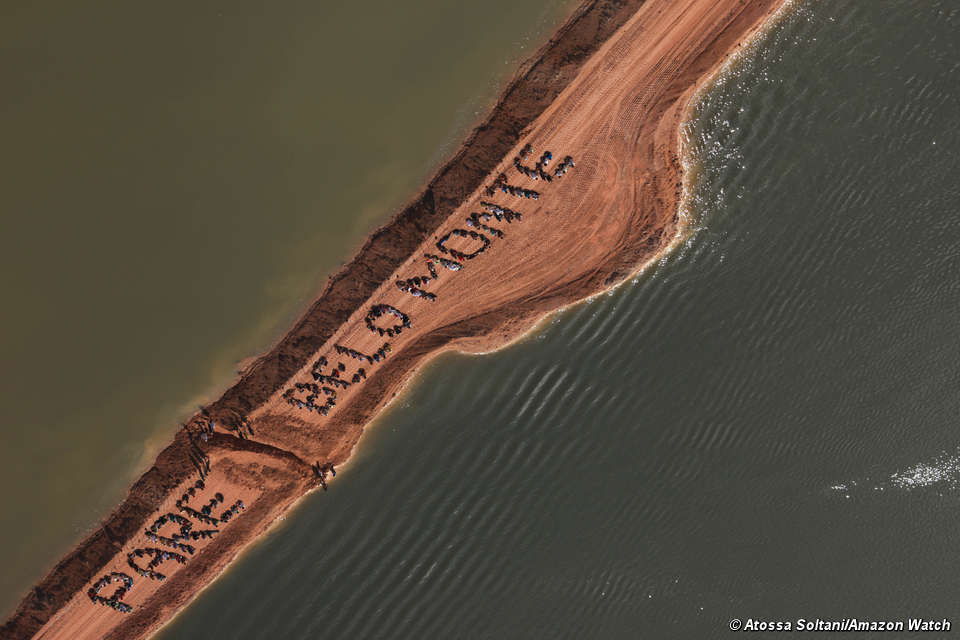
The Belo Monte occupation is the latest in a series of protests over the government’s failure to consult with the indigenous population.

Police in south­ern Brazil yes­ter­day killed a Ter­e­na Indi­an and wound­ed sev­er­al oth­ers while vio­lent­ly evict­ing them from their land. Mem­bers of the tribe had returned to live on part of their ances­tral ter­ri­to­ry cur­rent­ly occu­pied by a ranch­er who is also a local politi­cian.

Else­where in Brazil, an evic­tion order was served on Kayapó, Arara, Munduruku, Xipaya and Juruna Indi­ans occu­py­ing the con­tro­ver­sial Belo Monte dam site. Armed police have sur­round­ed the pro­test­ers and ten­sions are ris­ing amid fears that there will be sim­i­lar vio­lence.

Munduruku Indi­ans are also protest­ing con­struc­tion of a dam on the Tapa­jós riv­er. One Munduruku was shot dead when police invad­ed a com­mu­ni­ty last Novem­ber.

Pay­go­muy­at­pu Munduruku said, ‘The gov­ern­ment is prepar­ing a tragedy. We will not leave here. The gov­ern­ment has ignored us, offend­ed us, humil­i­at­ed us and assas­si­nat­ed us… They are killing us because we are against the dams.’

The Brazil­ian con­sti­tu­tion and inter­na­tion­al law enshrine the right of trib­al peo­ples to be con­sult­ed about projects on their land. Yet a raft of bills and con­sti­tu­tion­al amend­ments pro­posed by a pow­er­ful agri­cul­tur­al and min­ing lob­by threat­en to under­mine these land rights. Indi­ans are angry that, despite being in office for two and half years, Pres­i­dent Dil­ma Rouss­eff has yet to meet any Indi­ans.

The Belo Monte occu­pa­tion is the lat­est in a series of protests over the government’s fail­ure to con­sult with the indige­nous pop­u­la­tion.
© Atossa Soltani/ Ama­zon Watch

Sur­vival Inter­na­tion­al is call­ing on Pres­i­dent Rouss­eff to halt the evic­tion of indige­nous pro­test­ers, to con­sult with the Indi­ans, and to rec­og­nize the ter­ri­to­ries of Ter­e­na tribes­peo­ple imme­di­ate­ly.

Survival’s direc­tor Stephen Cor­ry said, ‘His­to­ry is repeat­ing itself. The Figueire­do report, chron­i­cling the geno­ci­dal atroc­i­ties of a past gen­er­a­tion, has been unearthed at exact­ly the same time as new attacks on the Indi­ans are unleashed. Killings of Indi­ans should not be tol­er­at­ed any­where, let alone in a coun­try plan­ning to host world sport­ing events.’

Update From the Amazon: No Consultation, No Construction! 31st May

Indige­nous pro­test­ers are once again occu­py­ing the con­struc­tion site of the Belo Monte Dam in the Brazil­ian Ama­zon to shed light on how hydro­elec­tric mega-dams cause seri­ous envi­ron­men­tal and social impacts and destroy the way of life of the region’s peo­ples and tra­di­tion­al com­mu­ni­ties. For exam­ple, the con­struc­tion of Belo Monte will cause 100 km (60 miles) of the Xin­gu to dry out on the river’s Big Bend if com­plet­ed. In the case of the hydro­elec­tric dams planned for the Tapa­jós Riv­er, the ancient river­side vil­lages of the Mundurukú peo­ple would be com­plete­ly flood­ed.

Indige­nous pro­test­ers occu­pied the Belo Monte Dam con­struc­tion site in ear­ly and late May 2013 to protest the government’s lack of con­sul­ta­tion with affect­ed com­mu­ni­ties tho­rugh out the Ama­zon.
Pho­to cour­tesy of Ruy Sposati via munduruku­de­nun­cia on Flickr

This is the sec­ond occu­pa­tion of Belo Monte’s con­struc­tion site in less than a month. On May 2nd the indige­nous pro­tes­tors occu­pied the same work camp and stayed there for eight days. They left the last occu­pa­tion peace­ful­ly because the fed­er­al gov­ern­ment ensured that there would be a nego­ti­a­tion, which did not hap­pen. In this case the pro­tes­tors guar­an­tee that they will main­tain their occu­pa­tion until rep­re­sen­ta­tives of the fed­er­al gov­ern­ment talk with them and meet their demands.

Indige­nous peo­ple also crit­i­cize the pres­ence of the military’s Nation­al Force in the region in order to ensure safe­ty of teams car­ry­ing out envi­ron­men­tal impact stud­ies for dams on the Tapa­jós Riv­er.

In addi­tion to the police offi­cers who were already housed with­in the con­struc­tion site to ensure the pro­tec­tion of Belo Monte, oth­er con­tin­gents of police have been arriv­ing at the occu­pa­tion site.

See the lat­est let­ter from the occu­pa­tion below:

Let­ter No. 7: Fed­er­al Gov­ern­ment, we have returned

We are indige­nous Munduruku, Xipaya, Kayapo, Arara and Tupinam­bá peo­ple. We live in the riv­er and the for­est and we are opposed to the destruc­tion of both. You already know us, but now we are more.

You (the Gov­ern­ment) said that if we left the con­struc­tion sites of Belo Monte, we would be heard. We left peace­ful­ly – and pre­vent­ed you from the shame of using force to take us out of here. How­ev­er we were not heard. The gov­ern­ment did not receive us. We called Min­is­ter Gilber­to Car­val­ho and he did not come.

Wait­ing and call­ing did not work for us. So we again occu­pied your con­struc­tion sites. We didn’t want to be back in your desert of holes and con­crete. We have no plea­sure in leav­ing our homes and our lands to hang our ham­mocks in your build­ings. But how not to come when that could mean we los­ing our lands?

We want the sus­pen­sion of stud­ies and the con­struc­tion of dams that flood our ter­ri­to­ries, cut the for­est down the mid­dle, kill the fish and scare the ani­mals, and open the riv­er and the land to the devour­ing min­ers. That will bring more com­pa­nies, more log­gers, more con­flicts, more pros­ti­tu­tion, more drugs, more dis­eases, more vio­lence.

We require that you con­sult us about this con­struc­tion before it begins, because it is our right guar­an­teed by the Brazil­ian Con­sti­tu­tion and inter­na­tion­al treaties. This right was dis­re­spect­ed here in Belo Monte, on the Teles Pires Riv­er, and it’s not being com­plied with on the Tapa­jós Riv­er as well. It is not pos­si­ble that all of you will con­tin­ue repeat­ing that indige­nous peo­ple were con­sult­ed. Every­one knows that this is not true.

From now on, YOU (the Gov­ern­ment) has to stop telling lies in press releas­es and inter­views. You need to stop treat­ing us like chil­dren: naive, irre­spon­si­ble, and manip­u­la­tive. We are indige­nous peo­ple and you need to deal with it. You also need to stop lying to the press that we are fight­ing with the work­ers: they are sym­pa­thet­ic to our cause! We wrote a let­ter to them yes­ter­day! Here at the con­struc­tion sites we played soc­cer togeth­er every day dur­ing the last occu­pa­tion. When we left, a work­er to whom we gave many neck­laces and bracelets told us: “I’ll miss you.”

We have the sup­port of many rel­a­tives in this fight. We have the sup­port of all the indige­nous peo­ple from the Xin­gu. We have the sup­port of the Kayapo. We have the sup­port of the Tupinam­bá;  the Gua­ja­jara; the Apina­jé; Xer­ente; Krahô, Kara­ja; Xam­bioá-Tapuia; Krahô-Kanela; Avá-Canoero; javaé Kanela from Tocan­tins and Guarani. And the list is grow­ing. We have the sup­port of the nation­al and inter­na­tion­al soci­ety even though that both­ers you – you are alone with your cam­paign donors and com­pa­nies inter­est­ed in craters and mon­ey.

We occu­pied your con­struc­tion sites again – and how many times will we need to do this until your own law is respect­ed? How many restrain­ing orders, fees, pos­s­e­sion orders will cost you until you hear us? How many rub­ber bul­lets, bombs and pep­per sprays do you plan to spend until you admit that you are wrong? Or will you kill again? How many indige­nous will you kill besides our rel­a­tive Munduruku, from the Teles Pires, sim­ply because we do not want dams?

And do not send the Nation­al Force to nego­ti­ate for you. Come your­selves. We want Dil­ma to come talk to us.

The Unist’ot’en People Maintain a “Soft Blockade” On the Morice River 30th May

The Unist’ot’en Peo­ple (a.k.a C’ilhts’ekhyu) of the Wet’suwet’en Nation main­tain a “Soft Block­ade” keep­ing pipeline work­ers and sub­con­trac­tors out of their ter­ri­to­ries. The block­ade is locat­ed 66km on the Morice West For­est Ser­vice Road south of the town of Hous­ton BC.

Hun­dreds of sup­port­ers, vol­un­teers, recre­ation­al­ists, and mush­room pick­ers have been able to cross into the guard­ed ter­ri­to­ry by show­ing respect to the ter­ri­to­ry own­ers and answer­ing some sim­ple ques­tions. The ques­tions were as fol­lows:

  1. Who are you?
  2. Where do you come from?
  3. How long to you plan to stay?
  4. Are you work­ing for gov­ern­ment or indus­try?
  5. What is your busi­ness here?
  6. How will your vis­it ben­e­fit the Unist’ot’en Peo­ple?

There were some peo­ple who have cho­sen not to answer any of the ques­tions and were not per­mit­ted into the lands. Some of the peo­ple reject­ed were out­right racist and bel­liger­ent; some peo­ple refused to rec­og­nize the author­i­ty of the ter­ri­to­ry own­ers; and some were sim­ply unable to truth­ful­ly answer any of the ques­tions until they could devel­op a rela­tion­ship with the Unist’ot’en.

The deci­sion to con­trol ter­ri­to­ry traf­fic came when work­ers for the pro­posed Apache/Chevron Frack­ing Gas Pipelines were caught in the ter­ri­to­ry last Novem­ber after being pre­vi­ous­ly warned for tres­pass­ing. The Unist’ot’en have been lead­ing a move­ment among the larg­er Wet’suwet’en pop­u­la­tion to stop ALL pro­posed Pipelines (includ­ing Frack­ing and Tar Sands) from cross­ing their ter­ri­to­ries.

In 2008, the Unist’ot’en along­side the oth­er four Clans of the Wet’suwet’en walked away from the BC Treaty Com­mis­sion nego­ti­a­tion process. They found that since the 1997 Supreme Court of Canada’s Del­ga­muukw v. Queeen Court deci­sion, gov­ern­ment and indus­try have only esca­lat­ed their activ­i­ties on their lands at an alarm­ing rate with­out mean­ing­ful con­sul­ta­tion.

Fre­da Huson, the Spokes­woman for the Unist’ot’en states, “The plain­tiffs in the land­mark Del­ga­muukw Supreme Court of Cana­da case are the Hered­i­tary Chiefs and their mem­bers. Gov­ern­ment and Indus­try are break­ing their own laws when they choose to only con­sult with Indi­an Act band coun­cils. The pro­pa­gan­da writ­ers for the Pacif­ic Trails Pipeline like to say that they have 15 First Nation People’s sup­port, when in fact they have only been talk­ing to Indi­an Act com­mu­ni­ties. That has to stop. This strug­gle to pro­tect our lands is not about hold­ing out for finan­cial gain. It is about pro­tect­ing our lands from destruc­tive prac­tices from indus­try. Our actions will not only ben­e­fit our future gen­er­a­tions but everyone’s future gen­er­a­tions.”

The log­ging road lead­ing into the ter­ri­to­ry is man­aged by the CANFOR log­ging com­pa­ny and CANFOR is tak­ing the lead to begin a mean­ing­ful process of con­sul­ta­tion. The Unist’ot’en are wel­com­ing this new rela­tion­ship with CANFOR and are hope­ful that oth­er indus­try projects will choose to begin ask­ing per­mis­sion rather than imple­ment­ing projects with­out mean­ing­ful con­sul­ta­tion.

Icelanders Protest the New Government’s Environmental Policy 30th May

At least one thou­sand peo­ple gath­er out­side of the gov­ern­ment offices yes­ter­day to deliv­er a chal­lenge to the prime min­is­ter, Sig­mundur David Gunnlaugs­son. The gov­ern­ment is chal­lenged to with­draw state­ments regard­ing chang­ing the pow­er plant pro­gram, but the gov­ern­ment wants to change it so that more areas can be used for pow­er plants. 

The pro­test­ers want to spare the envi­ron­ment and not build too many pow­er plants. The chal­lenge comes with reviews regard­ing the pow­er plant pro­gram that the pub­lic, insti­tu­tions, munic­i­pal­i­ties, orga­ni­za­tions and com­pa­nies have sent to the par­lia­ment and to the min­istries.

The new cen­ter-right gov­ern­ment is said to focus too much on pow­er plants and alu­minum fac­to­ries. The gov­ern­ment has merged the min­istry of the envi­ron­ment togeth­er with the min­istry of agri­cul­ture and fish­eries. Crit­ics say that the gov­ern­ment has in effect abol­ished the min­istry of the envi­ron­ment, and will now focus on build­ing pow­er plants and fac­to­ries and seri­ous­ly dam­age the envi­ron­ment.

Sig­mundur David was busy when the protests were held because the pres­i­dent of Fin­land was vis­it­ing. But the prime minister´s assis­tant showed up on his behalf, and he was hand­ed the chal­lenge.

Thousands of Tibetans Protest Against Mine 30th May

As many as 5,000 Tibetans have protest­ed against Chi­nese min­ing

As many as 5,000 Tibetans have protest­ed against Chi­nese min­ing

oper­a­tions at a site con­sid­ered sacred by local res­i­dents, draw­ing a large secu­ri­ty force to the area and prompt­ing fears of clash­es, accord­ing to Tibetan sources this week.

The protest last Fri­day took place at Nagl­ha Dzamb­ha moun­tain in Tibet’s Driru (in Chi­nese, Biru) coun­ty, the scene of sim­i­lar protests two years ago, sources said.

“On May 24, about 100 mem­bers a Chi­nese com­pa­ny arrived at Nagl­ha Dzamb­ha on the pre­text of putting up cable tow­ers and pow­er lines and build­ing hydro­elec­tric projects for the ben­e­fit of the peo­ple,” a res­i­dent of the area told an RFA Tibetan Ser­vice call-in show on Sat­ur­day.

“Actu­al­ly, they were there to mine min­er­als,” the source said, speak­ing on con­di­tion of anonymi­ty.

About 5,000 local Tibetans then gath­ered in Driru to protest, he said, and of that num­ber, 3,500 went to the pil­grim­age site to demand an end to the project, say­ing “Please leave our resources where they are.”

Six men cho­sen to rep­re­sent the peo­ple of Driru approached the Chi­nese com­pa­ny with a peti­tion not to fur­ther harm the local envi­ron­ment, but author­i­ties on Sat­ur­day deployed secu­ri­ty forces in about 50 trucks to the protest site, RFA’s source said.

Coun­ty author­i­ties lat­er “gave in to the pop­u­lar out­cry and made an announce­ment to that effect,” eas­ing imme­di­ate fears of a crack­down, but Tibet’s India-based exile gov­ern­ment in a sep­a­rate report described the sit­u­a­tion in Driru as “tense.”

Fre­quent stand­offs

Min­ing oper­a­tions in Tibetan regions have led to fre­quent stand­offs with Tibetans who accuse Chi­nese firms of dis­rupt­ing sites of spir­i­tu­al sig­nif­i­cance and pol­lut­ing the envi­ron­ment as they extract local wealth.

In March, oper­a­tions at the Gya­ma mine in Tibet’s Mal­dro Gongkar coun­ty near Lhasa caused a cat­a­stroph­ic land­slide that killed 83 min­ers.

And in Jan­u­ary, Tibetan sources told RFA that Chi­nese-oper­at­ed mines in Lhun­drub coun­ty, also near Lhasa, have caused “severe” dam­age to local forests, grass­lands, and drink­ing water.

Waste from the mines, in oper­a­tion since 2005, “has been dumped in the local riv­er, and min­ing activ­i­ties have pol­lut­ed the air,” one source said.

Californians Against Fracking Launch Coordinated Protests Around State 30th May


Oppo­nents of a con­tro­ver­sial method of extract­ing oil and gas will deliv­er peti­tions to law­mak­ers around Cal­i­for­nia on Thurs­day urg­ing them to lim­it or ban the con­tro­ver­sial prac­tice.


Oppo­nents of a con­tro­ver­sial method of extract­ing oil and gas will deliv­er peti­tions to law­mak­ers around Cal­i­for­nia on Thurs­day urg­ing them to lim­it or ban the con­tro­ver­sial prac­tice.

Groups against frack­ing say the method could dam­age ground­wa­ter sup­plies and harm unspoiled habi­tat for native ani­mals like the kit fox.

Orga­niz­ers say around 70 groups are involved in the coor­di­nat­ed effort. One of the largest, MoveOn.org, plans to deliv­er peti­tions to a dozen assem­bly mem­bers ask­ing for lim­its on the oil extrac­tion method. The group is also orga­niz­ing protests in Sacra­men­to, San Jose, San Diego, San Ramon, and Los Altos, among oth­er places.

Food and Water Watch and the Cen­ter for Bio­log­i­cal Diver­si­ty are plan­ning sim­i­lar march­es in San Fran­cis­co and here in Los Ange­les. Doc­u­men­tary film­mak­er Josh Fox, who direct­ed “Gasland,” will join activists as they protest out­side Gov­er­nor Brown’s Los Ange­les office on Spring Street.

The fed­er­al gov­ern­ment esti­mates that as much as 15 mil­lion bar­rels of oil and gas are trapped in a rock for­ma­tion that sprawls across south­ern and cen­tral Cal­i­for­nia called the Mon­terey Shale. Petro­le­um com­pa­nies say break­ing open that rock will unleash an eco­nom­ic boom, includ­ing fuel, jobs and tax rev­enue.

Indigenous communities oppose ‘extreme energy’ at Shell’s AGM 20th May

As the busi­ness case for tar sands extrac­tion fal­ters, Arc­tic drilling is sus­pend­ed, and the com­pa­ny is inves­ti­gat­ed for price fix­ing, Shell’s board will be under  pres­sure to defend the direc­tion it is tak­ing at its AGM in The Hague on Tues­day 21 May.photo

Eriel and Mae in the Nether­lands, prepar­ing to take on Shell tomor­row!

Two Indige­nous women, rep­re­sent­ing com­mu­ni­ties impact­ed by Shell’s oper­a­tions abroad, will attend the AGM to con­front the Chair­man and Board over the mas­sive human and eco­log­i­cal rights vio­la­tions and eco­nom­ic dev­as­ta­tion that the company’s oper­a­tions bring to Indige­nous com­mu­ni­ties. They will argue that Shell’s deci­sion to pur­sue high­ly risky ‘extreme ener­gy’ projects, like Arc­tic drilling and Cana­di­an tar sands, will have lit­tle long term ben­e­fit for the com­pa­ny, and expose it to both rep­u­ta­tion­al dam­age and polit­i­cal risk, includ­ing lit­i­ga­tion.

One of the com­mu­ni­ties rep­re­sent­ed, the Athabas­ca Chipewyan First Nation (ACFN), which resides down­stream from tar sands oper­a­tions, is cur­rent­ly suing Shell for vio­lat­ing past agree­ments that have threat­ened their treaty rights. The com­mu­ni­ty is also active­ly oppos­ing two new tar sands mines Shell is propos­ing to devel­op on their land. For more details, watch the pow­er­ful film above. Legal chal­lenges by oth­er First Nations against tar sands extrac­tion on their tra­di­tion­al ter­ri­to­ries is also increas­ing.

Eriel Deranger, com­mu­ni­ty mem­ber and spokesper­son for ACFN, states:

“Shell’s cur­rent and pro­posed tar sands projects vio­late terms of our treaty, destroy our land and con­t­a­m­i­nate waters crit­i­cal to our sur­vival. The ACFN lead­er­ship has made a com­mit­ment to pro­tect our lands, rights and peo­ple cur­rent­ly being threat­ened by tar sands devel­op­ment. We have tried explor­ing amenable agree­ments and options with Shell only to be dis­ap­point­ed by their inabil­i­ty to com­pro­mise and adjust pro­posed plans to ade­quate­ly work with us which has led and con­tin­ues to lead toward lit­i­ga­tion. Our cul­ture, lands and rights can no longer stand for unabat­ed and irre­spon­si­ble devel­op­ment of tar sands in the region by Shell or any oper­a­tor.”

Shell is also under fire for its Arc­tic oper­a­tions. The com­pa­ny has spent $4.5bn secur­ing per­mits to drill in Arc­tic waters. How­ev­er it has been proven inca­pable of oper­at­ing in the area and has had to sus­pend its plans for drilling this sum­mer.

Mae R Hank, trib­al mem­ber of the Native Vil­lage of Point Hope, Alas­ka, said:

“The Beau­fort and Chukchi Seas are crit­i­cal to the Inu­pi­aq cul­ture and tra­di­tions, and pro­vide a vital habi­tat for the endan­gered bow­head whales, bel­u­ga whales, polar bears, wal­rus­es, seals and migra­to­ry birds. If an oil spill were to occur in the Arctic’s extreme con­di­tions, there is no proven method to clean it up dur­ing Win­ter. Shell is tak­ing a dead­ly risk with Inu­pi­at and oth­er Arc­tic Indige­nous peo­ples’ cul­tures and food secu­ri­ty for short­sight­ed prof­it, while the com­mu­ni­ty faces long term con­se­quences to their sur­vival.”

polar bears by Martha de Jong-Lantink

Shell wants to drill in the Beau­fort and Chukchi Seas, which pro­vide a vital habi­tat for polar bears as well as many oth­er endan­gered species. Pho­to by Martha de Jong-Lan­tink.

In addi­tion, the UK Tar Sands Net­work is bring­ing con­cerns to Shell’s share­hold­ers over oth­er long-term risks to the company’s invest­ments in tar sands.

The tar sands are land­locked, mak­ing them dif­fi­cult and expen­sive to get to mar­ket. The pipelines that present the industry’s only viable solu­tion to this prob­lem – such as Key­stone XL and Enbridge North­ern Gate­way – are fac­ing mas­sive pub­lic oppo­si­tion, and look unlike­ly to be built soon. The price of tar sands crude has dropped as a result. Mean­while, in Europe, the Fuel Qual­i­ty Direc­tive (FQD) is like­ly to strong­ly dis­cour­age future tar sands imports into Europe. Lax stan­dards and lack of ade­quate envi­ron­men­tal reg­u­la­tion have led to sev­er­al high-pro­file leaks and spills in recent weeks, includ­ing the flood­ing of an Arkansas sub­urb with tar sands oil. Mean­while, a recent report by the Car­bon Track­er ini­tia­tive iden­ti­fied an alarm­ing ‘car­bon bub­ble’, argu­ing that 80% of oil com­pa­nies’ cur­rent fos­sil fuel reserves are ‘unburn­able car­bon’, and antic­i­pat­ing a crash in prices as cli­mate reg­u­la­tions kick in.

In March, French oil giant Total pulled out of one of its three Cana­di­an tar sands projects, cit­ing the high costs and frag­ile prof­it mar­gins that are beset­ting the whole indus­try. Total was will­ing to take a $1.65 bil­lion loss rather than press ahead with what has become a bad invest­ment.

Shell will also be crit­i­cised by UK cam­paign­ers for heav­i­ly lob­by­ing the UK gov­ern­ment against the labelling of tar sands as high­ly pol­lut­ing in the Fuel Qual­i­ty Direc­tive. Shell was revealed to have a close rela­tion­ship with its for­mer Chief Econ­o­mist, now Sec­re­tary of State for Busi­ness and Indus­try and offi­cial ‘Min­is­ter for Shell’ Vince Cable, in a let­ter pub­lished last year. The let­ter urged him to hard­en the government’s line against the FQD, a move which was revealed to have hap­pened in leaked doc­u­ments pub­lished last week.

Eriel Deranger, Robert Thompson, Ron Plain, by Ben Powless

Rep­re­sen­ta­tives from Indige­nous com­mu­ni­ties in Cana­da and the Arc­tic attend­ed Shell’s AGM last year, but did not feel their con­cerns were tak­en seri­ous­ly. Pho­to by Ben Pow­less.

Suzanne Dhali­w­al, from the UK Tar Sands Net­work, com­ment­ed:

“The risk fac­tors that recent­ly led Total to ditch a major tar sands project are increas­ing. The tar sands are land­locked and expen­sive, and oppo­si­tion to new pipelines has led the price of tar sands crude to drop. Mean­while, the industry’s high emis­sions mean that Canada’s oil is increas­ing­ly look­ing like ‘unburn­able car­bon’. Despite Shell’s fren­zied lob­by­ing, upcom­ing EU leg­is­la­tion on trans­port emis­sions could close off this key future mar­ket and set a prece­dent that oth­er coun­tries will fol­low. Shell should ditch its expan­sion plans before the car­bon bub­ble bursts, expos­ing its share­hold­ers to finan­cial dis­as­ter.”

G8 protests — cuts, climate crisis & capitalism

voltairineonestruggle

There is one com­mon strug­gle against those who have appro­pri­at­ed the earth, the mon­ey, and the machines“. Voltairine de Cleyre.

voltairineonestruggle

There is one com­mon strug­gle against those who have appro­pri­at­ed the earth, the mon­ey, and the machines“. Voltairine de Cleyre.

11 June 2013. #J11.
One Com­mon Strug­gle.
Car­ni­val Against Cap­i­tal­ism.

Pre­sent­ing the action map for the June 11 Car­ni­val Against Cap­i­tal­ism. 100 loca­tions in the West End con­nect­ed to bla­tant mur­der, oppres­sion and exploita­tion. Click on the link above to zoom in, down­load and print.

There is also an online map which will fea­ture more details and even more address­es. It is still being updat­ed. To check in for lat­est progress go to:  mappingthecorporations.org/ and select “Map­ping Cap­i­tal­ist Lon­don” in the sec­tor menu.

If you have more infor­ma­tion on any com­pa­ny, or want to add a new address, please email stopg8@riseup.net

————-

They Owe Us

12.30PM, FRIDAY 14 JUNE

We plan to appear some­where in Canary Wharf, to reclaim and trans­form a space, bring­ing beau­ty and hope to the soul­less heart of Cap­i­tal­ism.

In response to the com­bined crises of cuts and cli­mate chaos, and the call for a week of action against the G8, we have come togeth­er to organ­ise a gath­er­ing of those who want to stop the assault on peo­ple and plan­et. In the pent­house suite of glob­al cap­i­tal­ism, in front of the eyes of the finan­cial elite we will demand that They Owe Us.