Santiago, Chile: Pack of Anarchic Nihilist Shock Strikes Again

transantiago 8th June On Tuesday, June 3rd, we organized ourselves in complicity with the night to install 3 incendiary devices in 3 different buses of 3 distinct routes of the Transantiago citizen service; o

transantiago 8th June On Tuesday, June 3rd, we organized ourselves in complicity with the night to install 3 incendiary devices in 3 different buses of 3 distinct routes of the Transantiago citizen service; our goal was to burn down these transporting machines of postmodern slaves.

We vindicate the action as pack so that the political and combative sense which motivates us is not distorted, thus avoiding the mediatic speculations of Power and vigilant entities; and without going into tedious justifications, we make it clear that:

We are at war with civilization, its societies, its defenders and pseudo-critics, we are comrades and defenders of nature, the earth and all animals that suffer the sinister advance of the domesticating capitalist globalization.

Freedom for Sol, Adriano, Gianluca, Alfredo Cospito, Nicola Gai, Hans Niemeyer, Hermes González, Alfonso Alvial, and all prisoners at war around this rotten world; with Sebastián Oversluij, Mauricio Morales, Alexandros Grigoropoulos, and many more, in our memory and heart…

For human/nonhuman animal and earth liberation.

Pack of Anarchic Nihilist Shock

Original text

Tourist Chains Himself to Icelandic Whaling Ship

anti_whaling_activist_hvalur8_026th June Update:

anti_whaling_activist_hvalur8_026th June Update: After 15 Hours Activist Ends Lockdown Due to Threats

A 32-year-old unnamed activist from Berlin from the organization Hard to Port chained himself to the mast of Icelandic whaling ship Hvalur 8 this morning and has declared that he will remain there for at least 48 hours in protest of whaling.

“Workers seem irritated. Collective brainstorming how to deal with me up here. First whale watching tourists stop by to take pictures and show support,” the activist posted on Facebook this morning.

Hard to Port released a statement to the media, explaining their intention to: “…raise awareness among potential tourists of Iceland worldwide of the cruel and unethical practice [of whaling].”

Hvalur 8 is docked at the shipyard in Reykjavík in preparation for the upcoming whaling season, which begins this month. The quota for fin whales is 154 animals and their hunting will result in significant work on sea and land, Morgunblaðið reports.

Sabotage on the High Speed Railway Track Bologna-Milan

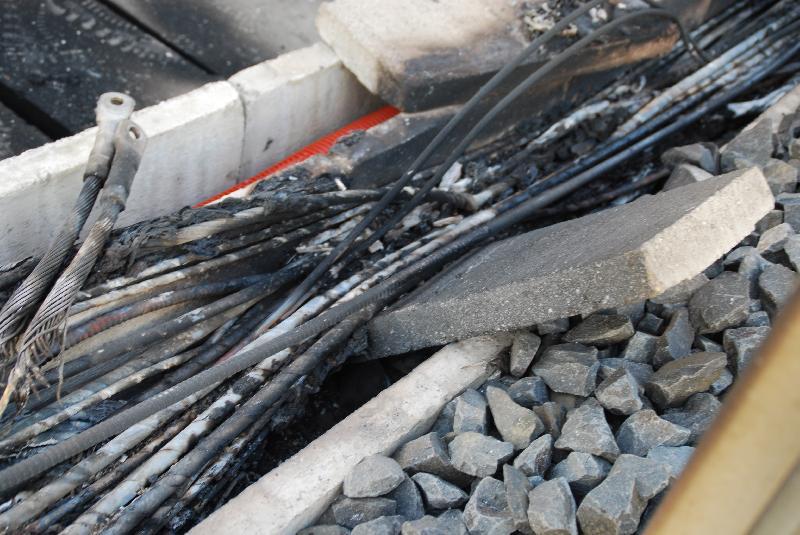
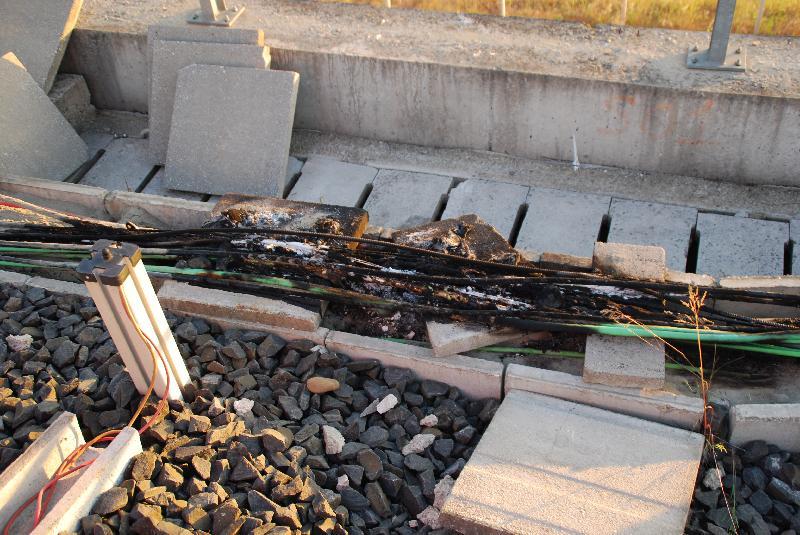
luogo_sa2 4th June From the local media we learn that in the night between 19th and 20th May, copper and fibre optic cables were cut along the high speed rail track in Bologna, and two cockpits were

luogo_sa2 4th June From the local media we learn that in the night between 19th and 20th May, copper and fibre optic cables were cut along the high speed rail track in Bologna, and two cockpits were set on fire. In the area graffiti NO TAV were left.

From the press we learn that over 40 high speed trains were delayed up to 30 minutes, and consequently also a dozen local trains were delayed.

luogo_sa3

Protest against tar sand oil shipment in the Basque country

Yesterday May 29th activists from Ekologistak Martxan and from the Coke Ez network closed one of the access gates to the Petronor (Repsol) refinery in Muskiz (near bilbao, Basque Country). The reason was the first shipment of oil from tar sands from Canada.

Yesterday May 29th activists from Ekologistak Martxan and from the Coke Ez network closed one of the access gates to the Petronor (Repsol) refinery in Muskiz (near bilbao, Basque Country). The reason was the first shipment of oil from tar sands from Canada. This cargo is linkt to the new FTA (Free Trade Agreements) between the European Union (EU) and USA and Canada, as a way of finding a market to this heavy oil. That's why, it's thought this is a first shipment previous to many more. The activists held banners with the slogang "Repsol Murderers" and "Heavy crude, more pollution". They also wore masks with Repsol's logo turned into a skull.

There are only 5 plants in the EU capable of processing the tar-sand oil, 3 of them in Spain, belonging to Repsol; one of them is this one close to the Bilbao port. The crude will be processed in the reacently built Coke Plant, which was source of great opposition among locals and a many years campaign because of the high levels of pollution, which this newly brought  tar will add to: highly cancerigenous elements like benzenes, toluenes, etc, as well as an increment on greenhouse effect gases. If this shipment means the arrival of more tar sand oil (apparently another shipment is due to enter the Bilbao port next Tuesday), this will mean the binning of the current EU's Fuel Quality Directive, which stated a 6% reduction in the greenhouse gas intensity of fuels by 2020. The newly entered crude would pump up this greenhouse gas intensity of fuels to 23% more.

The protest had present as well the serious impact which this kind of "oil" extraction has in Canada and in territories belonging to the First Nations. These impacts (destruction of forest, pollution of rivers, fires, etc) as well as those caused by the oilpipes must be added to those associated to their transportation. Yesterday's shipment came from the Freeport (Texas) port after crossing through teh entire United States by train, and then by ship through the ocean: another high bill for the Climate Change!! tar-sand oil transportattion by train has been the cause of huge accidents, due to the high inflammability of this kind of oil.
The protest has had an excellent echo in the local and national media (televisions, papers, radios, etc). In the communiqués sent by the organizing groups, solidarity messages were set to those resisting the tar-sand extraction sites and the oilpipes and trains. Also to those affected by these dreadful projects, and specially to the Original People from those areas.

no tar sands oil in Euskal Herria!!
no tar sands oil elsewhere!!

A Bloody War for Water in Mexico

Screen Shot 2014-05-29 at 9.04.52 PM30th May Filling a glass from his garden faucet, Juan Ramírez held the swirling water up to the intense Mexican sun.

Screen Shot 2014-05-29 at 9.04.52 PM30th May Filling a glass from his garden faucet, Juan Ramírez held the swirling water up to the intense Mexican sun. Satisfied with its purity, he touched his glass gently against my own. “Your health,” he toasted, before drinking it down in one gulp.

Mexico City’s reservoirs consistently rank amongst the most contaminated supplies to any world capital. Drinking from the tap here is simply not recommended. Ramírez’s water, however, comes directly from a volcanic spring in San Bartolo Ameyalco, an otherwise impoverished town on the hilly southwestern outskirts of Mexico City, in the borough called Alvaro Obregon.

“My grandfather drank from our town’s spring, and his grandfather before him,” Ramírez told me when I visited the town this weekend. “Now the government wants to pipe our town’s water directly into rich households and leave us with its contaminated filth. We are not going to let that happen.”

Ramírez is leader of a group in San Bartolo Ameyalco intent on keeping their water supply local. Last Wednesday, Ramírez along with approximately two thousand other residents of Ameyalco attacked a police force of fifteen hundred riot officers who were guarding the final construction stage of a pipeline that will connect the town’s volcanic spring to Santa Fe, one of the most affluent districts of the Mexican capital.

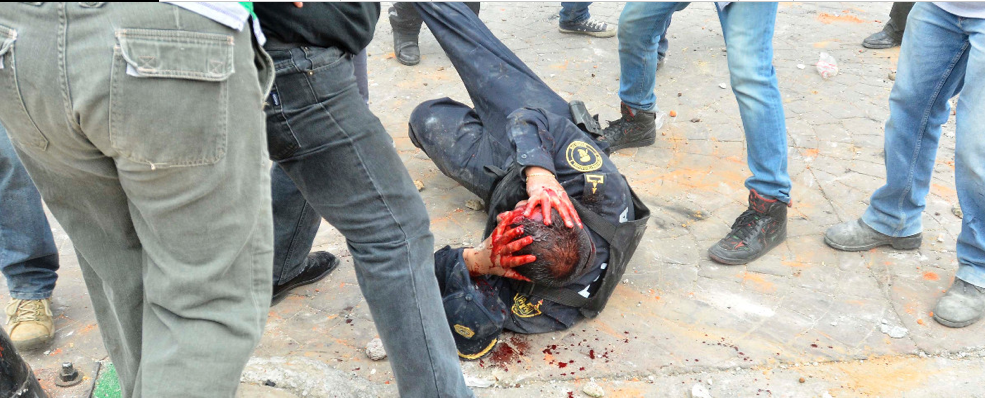
In videos posted online, San Bartolo residents are seen violently pummeling an officer in riot gear who had fallen to the ground.

The residents beat back both police and pipeline engineers, leaving at least 100 police officers injured, 20 seriously. Residents said dozens were injured on their side, and authorities arrested five people. Mexico City’s government warned that more arrests would come.

While the battle of the morning of May 21 was won by the residents of San Bartolo Ameyalco, what the locals now popularly call the ‘Water War’ is sure to be long and tense.

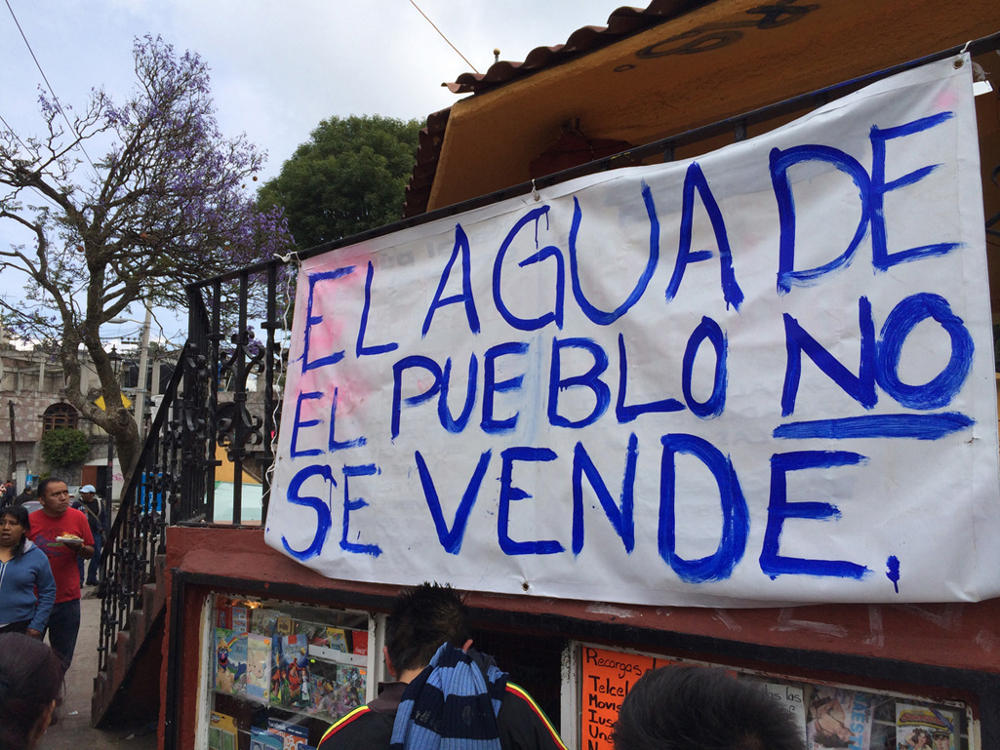
“The people are united,” said María Chávez, one of the leaders of the town’s resistance, which has based itself in the public library. The municipal building is papered with messages of support from other towns in the region. A banner proclaimed: “Our water is not for sale.”
rioting-for-water-rights-in-mexico-article-body-image-1401136919

“When the local government’s plans to extend our pipelines further afield were drawn up last year, the authorities refused to negotiate with us. Leonel Luna [the borough delegate] told us the water would be going to help other communities in the region. It’s only now that we have put up a fight that they want to talk things over.”

Mexico City’s government sees the international business-aimed satellite city of Santa Fe, a high-end urbanization zone rapidly built upon a dumping ground with no prior water infrastructure, as a pillar of the local and even national economy. Although the details of the plan remain murky, San Bartolo Ameyalco residents are rightly suspicious of any scheme to divert their pure water to the international corporate offices nearby.

Ameyalco, meaning “place where the water spouts” in Nahuatl, was engulfed by Mexico City’s urban sprawl in the 1950s. Its spring produces 60 liters of pure water every second, an amount which runs thin for the 35,000 people who depend on it.

The narrow streets still channel the smells of pine sap and cooking tortillas on the cold mountain air. Neighbors chat in the marketplace about past victories and future strategies and children kick soccer balls against the main square’s murals of the village’s prized spring.

“When I was a child the water was endless,” said Alejandra Espinosa, another town resident. Espinosa has lived her entire 54 years in San Bartolo. “Now, due to the larger population, parts of the town can go a week at a time without running water.”

Mexico City has serious problems with water shortages. One in three homes has no access to running water, forcing them to depend heavily upon water trucks called pipas, which refill homes’ water tanks at exorbitant prices. Seventy-four per cent of the capital’s water is pumped from underground, causing the city itself to sink.

Leonel Luna, delegate of the Alvaro Obregon borough, has stated the spring is to be redirected to serve other towns in the area. Luna claims opposition to the project has been funded by the same businessmen who sell water from pipas, and who don’t want to lose their customer base if more running water is made available to other towns.

Since the government’s announcement in April 2013 that the spring would be connected to a wider network covering the borough, residents of San Bartolo set up camp beside their main supply tank to defend their precious resource. The project to tap the San Bartolo spring for wider use has been in the works for almost two decades, though, authorities note.

On May 21, the town’s church bells sounded out across the hillside to announce the authorities’ arrival. The residents responded to the signal by hurling rocks in the narrow streets, launching fireworks at the police line from windows and destroying plumbing equipment.

“This water belongs to us,” says Manuel Rueda, another activist I met at the public library the movement is using as a base of operations. “We can’t end up paying for the city’s poor planning.”

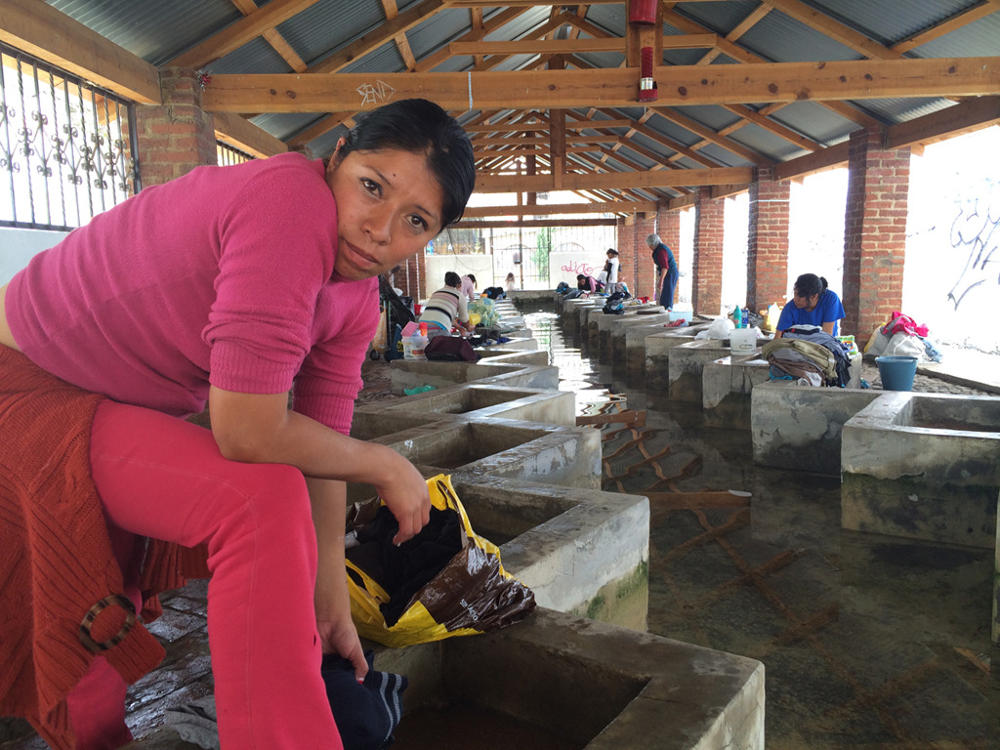
In the town’s last functioning public laundry, where a communal pool is flanked by washbasins, Laura Hernández wrung the last of the soap from her son’s soccer jersey. She had managed to wash her entire family’s clothes using the single bucket of water she had rationed herself.

“Only half of the houses on my street have running water these days, and I live at the top of town,” she said. “People at the bottom of the hill can go weeks without water. How can we sell our water elsewhere when we have so little?”
rioting-for-water-rights-in-mexico-article-body-image-1401136958

Others say San Bartolo is being selfish with its resource.

“These people don’t understand that other people in the region need their help,” said Rodrigo Pérez García, an event photographer and regular visitor to the town. “They have a free source of water yet they refuse to share it.”

“It’s pure selfishness,” Pérez continued. “At the very least there’s an opportunity to sell it by undercutting the water trucks.”

Leaders of the movement, however, said they are not budging. A series of marches are planned for the coming weeks. In recent days, members of various related or completely unrelated social movements in the Mexico City metropolitan region have sent messages of support to San Bartolo, signaling a wider fight in the public political sphere in Mexico related to the spring.

“We’re willing to negotiate,” said Juan Ramírez, the man who served me a glass of fresh spring water from his garden faucet. “We just don’t want to be treated like brutes. We know our rights like everybody else.”

The Dark Side of Brazil: Police teargas Indians at anti-World Cup protest

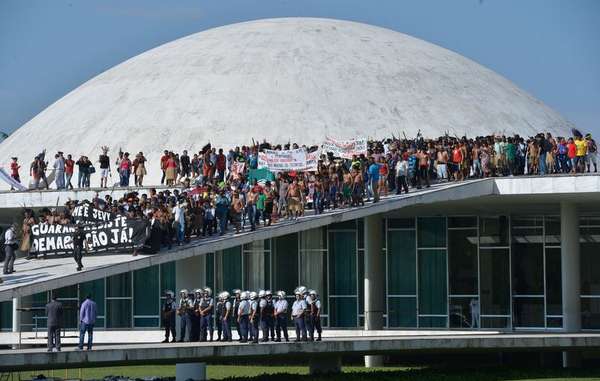
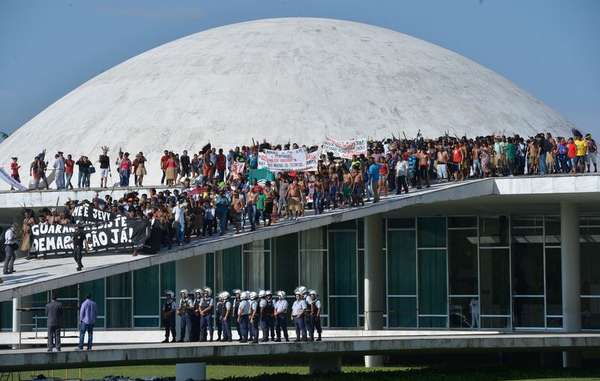
Hundreds of Brazilian Indians are protesting against the World Cup 30th May.

Hundreds of Brazilian Indians are protesting against the World Cup 30th May. Hundreds of Brazilian Indians are protesting against the World Cup this week, marching in the streets of Brasília and around the capital’s Mané Garrincha football stadium, calling for their lands and lives to be protected.

Yesterday Indians brandishing bows and arrows and carrying signs reading ‘FIFA NO. DEMARCATION YES!’ were teargassed by police. Watch a video clip here.

There is mounting anger at the government’s failure to recognize and protect their lands, vital for their survival, while spending millions of dollars on hosting the World Cup.

The protestors who are from several tribes have forced FIFA to close the stadium, and to cancel its trophy display.

A delegation of 18 indigenous protestors met the Minister of Justice yesterday. Indigenous leader Sonia Guajajara, national coordinator of the Association of Indigenous Peoples (APIB), said, ‘We are here to show that without our land, we are chained up. We are imprisoned. We are here to demand our rights.’

The Guarani tribe, Brazil’s largest, suffers extremely high malnutrition and suicide rates as their land has been stolen to make way for vast sugar cane plantations. Their leaders are frequently targeted and killed by gunmen acting for the landowners.

They are calling for their land to be demarcated as a matter of urgency before more lives are lost, and for the cancellation of a series of draft bills which, if passed into law, would drastically weaken their, and other tribes’, control over their lands. Those in the Amazon are calling for a halt to the many hydro-electric dams being built on their land.

Earlier this year, Nixiwaka Yawanawá, an Amazon Indian from western Brazil, greeted the World Cup trophy on its arrival in London with a T-shirt reading ‘BRAZIL: STOP DESTROYING INDIANS’.

Brazil is home to more uncontacted tribes than anywhere else in the world. They are the country’s most vulnerable people and face extinction if their lands are not protected. Survival is calling on Brazil to protect their land and remove all invaders, as has recently been achieved with the Awá, Earth’s most threatened tribe.

In the run up to the FIFA World Cup, Survival is highlighting ‘The dark side of Brazil’. Click here to find out more about the situation of Brazilian Indians and the government’s attacks on their rights to their land.

Rathlin Blitzkrieg About to Hit East Yorkshire

West Newton, Well Site29th May 2014 Rathlin Energy caught activists napping today when lorries arrived at Crawberry Hill site in East Yorkshire.
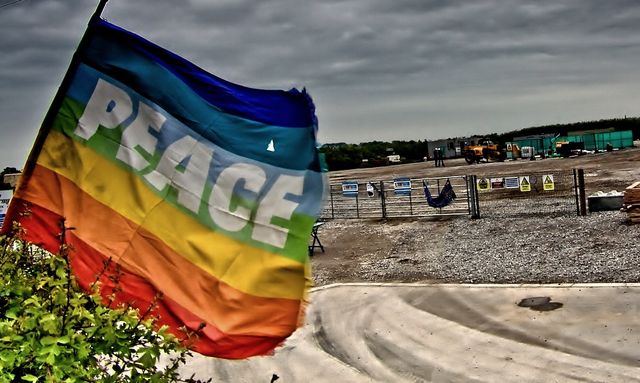
West Newton, Well Site29th May 2014 Rathlin Energy caught activists napping today when lorries arrived at Crawberry Hill site in East Yorkshire. The police had allowed Rathlin to ignore (no right turn) traffic signs to gain access without the knowledge of the activists waiting further down the road.
Activists aired their concerns about radio active hazard signs attached to lorries arriving to remove waste water at the West Newton site near Aldborough. The surface water had overflowed the man made ditches made specifically for the purpose due to heavy overnight rain. It seems this presents no present threat but fears are that when drilling begins again and the radioactive elements are brought to the surface any further overflow would contaminate the surrounding area. Residents of the USA and Canada have previously reported ‘dead zones’ of once thriving ecological areas. contaminated by fracking and radioactive chemicals, after overflowing into ponds and lakes.
Activists were also worried about ‘drill tips’ and accessories used in the drilling processes. These are according to the activists, tipped with depleted Uranium, to cut through the toughest rock. Although it cannot be confirmed that these practises are taking place in the East Riding area, the technique and equipment, have been available for quite some time.
The Environment Agency has already given permits to Rathlin to extract waste, including radioactive waste. Unconfirmed reports suggest Dermot Nesbit (Rathlin Energy director) had used his influence as an Ex Northern Ireland, Environment Minister to secure the permits, from the Environment Agency, the same department (within Northern Ireland) of which he was once chief.
Hull and East Yorkshire anti frack.

Reoccupation of the Hambach Forest in Germany

26.04.2014

Struggle against megalomaniac energy provider RWE and the biggest human-made hole of europe.

26.04.2014

Struggle against megalomaniac energy provider RWE and the biggest human-made hole of europe.


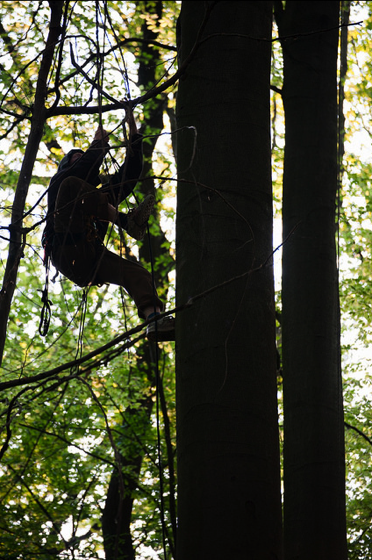
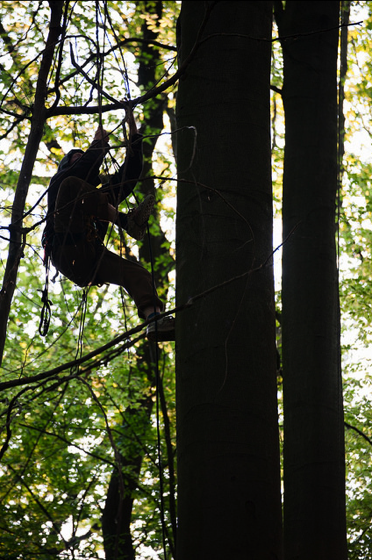
Since April 2012, activists in Germany have occupied the Hambach forest to prevent the expansion of Europe’s largest open-cast coal mine. The mine expansion project would mean the clearcutting of the forest and the eviction of thousands of local residents. On March 27, 2014, the forest occupation was evicted by police and today, on April 26, 2014 a new occupation arose. There are platforms and walkways up in the trees and a big demonstration is taking place close by. After a couple of days of strong repressions and the constant attempt by the „authorities“ to criminalize the sruggle the reoccupation is successful. For more information and a current ticker visit our English blog (hambachforest.blogsport.de).

A recent interview with an activist can be found via the following link

Love&Solidarity

Hambacher Forest
hambachforest.blogsport.de

Daring dawn blockade of Britain’s Nuclear weapons factory

19.5.2014

19.5.2014

This morning at 7.20am a group of peace campaigners began blockading the Atomic Weapons Establishment (AWE) site at Burghfield, near Reading. The protesters, acting as part of ActionAWE [1] campaign of non-violent direct action, are trying to disrupt construction of a new nuclear warhead factory on the site.

The new development at AWE Burghfield is being built at a cost to the tax payer of almost £2 billion, despite the fact that parliament has yet to vote on replacing the current generation of nuclear warheads that the site would build.

The protesters were locked together using handcuffs inside 'lock-on' devices – made from drainpipes, and vegetable oil drums filled with concrete in order to block the gate to the construction site to prevent further work on the site.

Amy Clark, 19, a Peace Studies Student at Bradford University said “Public money is already being spent in its millions toward the renewal of trident. The final decision on renewal must be made by 2016 so it's time to act now to stop it.”

Phil Wood, 20, a Politics Student also at Bradford University added “To be spending millions of pounds and planning to spend billions more on nuclear weapons while cutting back on essential public services that people rely on is unforgivable”

Catherine Bann, 40, mother of two from Todmorden, said: "The money we would spend renewing Trident could pay for all A & E hospital departments in the country for the next 40 years! It's a huge waste of public money to be investing in nuclear weapons, and people like us must make a stand now, so that future generations do not have to bear the cost.”

Matt Fawcett, 39, from Yorkshire CND said: "This 'do as we say, not as we do' policy of telling other countries they can't develop nuclear weapons while we spend billions developing new weapons of our own, not only undermines attempts to limit the spread of nuclear weapons but also discredits Britain on the world stage. Polls show 87% of the British public are against spending on new nukes at a time of such drastic cuts, yet the construction goes on at Burghfield without any parliamentary debate"

For further details contact:

Sarah 07737 596 808
Nina 07812 104 279

Notes to editors
The UK has an armed nuclear submarine on patrol and ready to fire at all times, with the ability to wipe out cities almost anywhere on earth within 15 minutes[2]. The UK has a stockpile of around 225 nuclear warheads[3], each with eight times the explosive power of the bomb dropped on Hiroshima in 1945 [4] that killed an estimated 140,000 to 200,000 people. Running the Trident nuclear weapons system currently costs £2 billion a year[5], and has not seen any of the cutbacks facing other government spending and public services. The government will vote in 2016 to decide whether to invest in the UK’s Trident nuclear weapon system for another 30 years.

Operated by a consortium of Jacobs Engineering Group, Lockheed Martin and Serco, AWE Burghfield plays an integral part in the final assembly and maintenance of nuclear warheads for use in the Trident system[6]. In 2011 Peter Luff, the then Minister for Defence Equipment, announced £2 billion of spending for redevelopment of the Burghfield and Aldermaston weapons factories[7]. The total spending on Weapons of Mass Destruction in the UK will soar to over £100 Billion should the government take the decision to renew Trident in 2016 [8].

Action AWE (Atomic Weapons Eradication) is a grassroots campaign of nonviolent action dedicated to halting nuclear weapons production at the Atomic Weapons Establishment factories at Aldermaston and Burghfield.

[1] http://www.actionawe.org/

[2] http://www.greenpeace.org.uk/peace/trident-the-uks-nuclear-weapons-system

[3]Stockholm International Peace Research Institute:
www.sipri.org/research/armaments/nuclear-forces‎

[4] http://www.cnduk.org/information/briefings UK warheads are thought to have a yield of 80-100kt.

[5]  http://fullfact.org/factchecks/cost_trident_nuclear_deterrent-28864

[6] www.awe.co.uk/aboutus/the_company_eb1b2.html

[7]  http://www.publications.parliament.uk/pa/cm201011/cmhansrd/cm111122/text/111122w0002.htm#111122114002933

[8]  http://www.cnduk.org/information/briefings/trident-briefings
Tags:Aldermaston, Bradford, Disarmament Activism, Nuclear, Nuclear weapon, Warfare and Conflict, Weapons, Yorkshire Campaign for Nuclear Disarmament

More Arrests of Anti Fracking Activists in East Yorkshire

24th May Following on from the arrests of two local residents last week, a further arrest has been made of an activist playing music in Beverley (near Hull.) A flotilla of Police, from the Humberside division, armed with tazers and dogs, swooped into Beverley, town centre, as the

24th May Following on from the arrests of two local residents last week, a further arrest has been made of an activist playing music in Beverley (near Hull.) A flotilla of Police, from the Humberside division, armed with tazers and dogs, swooped into Beverley, town centre, as the busker and anti fracking activist known as Daznez was playing and singing music in Beverley town centre. Local people who were watching and listening to the musician remarked at the heavy handedness of the arrest as at least six police personnel and their dogs took the musician into custody. The musician has been taken to Clough Road, Police Station in Hull but has not yet been charged with an offence.

Last week two residents of the Beverley area, were arrested whilst meditating, at an earmarked Frack site, at the Rathlin Energy, Crawberry Hill, drilling site. Husband and Wife, John and Valerie Majer, were charged with causing intimidation and annoyance contrary to section 241 of the Trade Union and Labour Relations Act.
Rathlin Energy has said it has no plans to frack in the area, although two permits have been granted to them for work to be carried out.
There have previously been charges of corruption, abuse of power and privledge, placed upon Rathlin Energy by activists. This follows after, ex Northern Ireland Environment Minister Dermot Nesbitt, who is now a director of Rathlin Energy succeeded in obtaining the permits from the very same government agency, who were once accountable to him, to drill and extract waste, including the extraction of radioactive waste, at the Crawberry Hill site and another, nearby site at West Newton near Aldborough. (Updates to follow.)
East Yorkshire Anti Frack