
Not Trespassing Walk on Brighton Downs

There will be a NOT TRESPASSING guid­ed walk on the Brighton Downs next Sun­day 25th Jan­u­ary, meet­ing at Housedean Farm, TQ 370 092, at 10.30am sharp.

There will be a NOT TRESPASSING guid­ed walk on the Brighton Downs next Sun­day 25th Jan­u­ary, meet­ing at Housedean Farm, TQ 370 092, at 10.30am sharp.

The Farm meet­ing point is on the A27 halfway between Falmer/edge of Brighton and Lewes, on the north side of the road/eastbound car­riage­way. Lay­by park­ing is avail­able. The meet­ing point is on the Brighton to Lewes Cycle­way. We will be walk­ing won­der­ful Down­land Access Land which the farmer has so far refused to make avail­able to the pub­lic, though he is flout­ing the law in so doing.

The walk will be rough­ly 2 miles out and 2 miles return, though we will be will­ing to con­sid­er a longer return route tak­ing in more sites if walk­ers so wish. The route will often take in steep ground, so it is unsuit­able for folk with mobil­i­ty prob­lems, and for pushchairs. Dogs can­not be brought because there are graz­ing sheep and cat­tle. We will be cross­ing sev­er­al barbed wire fences, and car­pets squares will be avail­able to assist peo­ple across with­out snar­ing.

Bring a lunch snack and a drink, and dress for poor weath­er.

Walk­ers with­out cars are meet­ing in Brighton at the Lewes Road/Elm Grove bus stop at 10.00am sharp to catch the 28 bus. Some car dri­vers will also attend the bus stop at that time to offer lifts. The bus stop is about 12 mins walk from Brighton Rail sta­tion.

Bus­es return to Brighton from New­mar­ket (on the oppo­site side of the road from Housedean Farm) every 20 mins, or walk­ers can go for­ward to Lewes, which has a rail sta­tion.
Walk­ers will be asked to con­tribute towards walk expens­es. We sug­gest a £3 dona­tion for those who can afford it. Come any­way, even if you can’t.

Fur­ther walks will be organ­ised reg­u­lar­ly there­after. The next walk will be on Sun­day March 1st.

Ecuador round-up: indigenous blockades, kidnappings & other protests against mining

Indi­ans Block Ecuador High­ways to Protest Min­ing
Jan­u­ary 20, 2009
QUITO — Indi­an groups in Ecuador start­ed block­ing high­ways before dawn Tues­day in protest against the new min­ing law, while Inte­ri­or Min­is­ter Fer­nan­do Bus­ta­mante asked that the demon­stra­tions be car­ried out peace­ful­ly.

Indi­ans Block Ecuador High­ways to Protest Min­ing
Jan­u­ary 20, 2009
Ecuador marchesQUITO — Indi­an groups in Ecuador start­ed block­ing high­ways before dawn Tues­day in protest against the new min­ing law, while Inte­ri­or Min­is­ter Fer­nan­do Bus­ta­mante asked that the demon­stra­tions be car­ried out peace­ful­ly.

The Con­fed­er­a­tion of Indige­nous Nation­al­i­ties of Ecuador, or Conaie, and some envi­ron­men­tal groups called for nation­wide protests against the new law, which they believe will harm the envi­ron­ment and favor multi­na­tion­al min­ing com­pa­nies.

Accord­ing to media accounts, indige­nous groups began block­ing high­ways at sun­rise, above all in the coun­try’s Andean region, although gov­ern­ment offi­cials said that these demon­stra­tions were not real­ly sig­nif­i­cant.

North of Quito some 1,000 Indi­ans stalled traf­fic before dawn on the Pan Amer­i­can High­way with tree trunks and stones, wit­ness­es said.

Those block­ades and sim­i­lar actions have not result­ed in any seri­ous clash­es with police, author­i­ties said.

Miguel Tor­res, an Indi­an leader in the north­ern province of Imbabu­ra where the police have kept the road to the cap­i­tal from being cut off, said on Radio Quito that “the block­ades will be pro­gres­sive.”

Anoth­er Indi­an leader said on the Telea­ma­zonas net­work that police stopped demon­stra­tors from enter­ing the cap­i­tal for a planned demon­stra­tion and march to Con­gress.

“Groups that want to protest against the min­ing law or any­thing else can do so, they have the right, they have free­dom of expres­sion and can give their points of view, but we are going to require that they do so with respect for law and order,” the inte­ri­or min­is­ter said in an inter­view on Sono­ra­ma radio.

“If they block high­ways or take any oth­er action that keeps peo­ple from car­ry­ing on with their nor­mal lives, we’ll have to inter­vene and do what the law requires in such cas­es,” Bus­ta­mante said.

After the state­ment Pres­i­dent Rafael Cor­rea made Mon­day that there are groups out to desta­bi­lize the gov­ern­ment, the min­is­ter said that “some lead­ers” of these groups may have such an inten­tion, but he does­n’t believe “that togeth­er the demon­stra­tors have that idea.”

Cor­rea, a left-lean­ing, U.S.-trained econ­o­mist, says the new min­ing law includes envi­ron­men­tal safe­guards and accus­es the mea­sure’s oppo­nents of engag­ing in “child­ish left­ism and envi­ron­men­tal­ism.”

———

Ecuador Anti-Min­ing Block­ades Met With Repres­sion, Nation­al Mobi­liza­tion Called for Jan­u­ary 20
9 Jan­u­ary 2009

The ongo­ing con­flict over min­ing in Ecuador esca­lat­ed this week as block­ades shut down high­ways through­out the country’s South­ern Andean high­lands and Ama­zon rain­for­est, while nation­wide protests have been called for Jan­u­ary 20.

The gov­ern­ment of Pres­i­dent Rafael Cor­rea has assumed an aggres­sive pos­ture, insult­ing indige­nous and envi­ron­men­tal activists and pledg­ing to secure approval for a con­tro­ver­sial new Min­ing Law. Cana­di­an com­pa­nies hold the major­i­ty of min­ing con­ces­sions in Ecuador and are press­ing for a new law that would allow for large-scale, open pit met­al min­ing.

A num­ber of lead­ers have been arrest­ed and oth­er pro­test­ers were beat­en and shot at by police. Campesino and indige­nous pro­test­ers, who depend on clean water to farm and for drink­ing water, are demand­ing that the gov­ern­ment shelve Pres­i­dent Rafael Correa’s pro­posed Min­ing Law, say­ing that it would be a social and envi­ron­men­tal dis­as­ter. The rur­al block­ades fol­low months of reg­u­lar protests in Quito and oth­er parts of the coun­try.

Pro­test­ers also argue that the law con­tra­dicts impor­tant pro­vi­sions of the new con­sti­tu­tion pro­tect­ing water, the envi­ron­ment and indige­nous peo­ples’ rights. The doc­u­ment drew inter­na­tion­al atten­tion for award­ing legal rights to nature. The new con­sti­tu­tion, approved by pop­u­lar ref­er­en­dum in Sep­tem­ber, is the cen­ter­piece of Correa’s first term.

After emer­gency meet­ings on Jan­u­ary 7, the Con­fed­er­a­tion of Indige­nous Nation­al­i­ties of Ecuador (CONAIE) called for a nation­al mobi­liza­tion on Jan­u­ary 20, call­ing the gov­ern­ment “dic­ta­to­r­i­al.” It is unclear whether the Jan­u­ary 20 mobi­liza­tion will spread road block­ades to oth­er provinces in cen­tral and north­ern Ecuador. Pro­test­ers are demand­ing a dia­logue with cen­tral gov­ern­ment lead­ers and for a broad nation­al dis­cus­sion on min­ing before any leg­is­la­tion is passed.

Some pro­test­ers in the South­ern provinces of Zamo­ra Chinchipe and Morona San­ti­a­go sus­pend­ed their block­ades for 24 hours in response to the provin­cial governor’s promise to reach out to Fran­cis­co Cordero, the Pres­i­dent of the Con­gre­sil­lo, Ecuador’s inter­im leg­is­la­ture. Oth­er block­ades were sus­pend­ed in antic­i­pa­tion of the nation­wide actions.

The block­ades began on Mon­day Jan­u­ary 5 in the South­ern province of Azuay, cut­ting off much of the traf­fic into and out of Cuen­ca, Ecuador’s third largest city. Over the next few days, the protests spread to the neigh­bor­ing Andean province of Loja and to the Ama­zon­ian provinces of Zamo­ra Chinchipe and Morona San­ti­a­go.

In Giron, Mol­leturo, Tar­qui (Azuay), Limon Indan­za (Morona San­ti­a­go) and in El Pan­gui (Zamo­ra Chinchipe) pro­tes­tors have been beat­en or shot by police. Police offi­cials and jour­nal­ists were released after being briefly detained by campesinos.

On Jan­u­ary 6, campesino leader Vicente Zhu­nio Samaniego was arrest­ed in the South­ern province of Morona San­ti­a­go, show­ing up 16 hours lat­er in a hos­pi­tal with bul­let wounds to the head. On Jan­u­ary 7, protest leader Miguel Ángel Criol­lo and his son Orlan­do were arrest­ed in an ear­ly morn­ing raid on the vil­lage of Pueblo Nue­vo in Azuay province. The news­pa­per El Uni­ver­so reports that over fifty police offi­cers from the Spe­cial Oper­a­tions Group (GOE) took part in the raid. When vil­lagers tried to defend the Criol­los from arrest, police fired tear gas, forc­ing the evac­u­a­tion of a local school.

In the city of Cuen­ca, police vio­lent­ly repressed protests at the Court of Jus­tice. As six lead­ers began a hunger strike inside the build­ing, the police attacked a press con­fer­ence tak­ing place out­side the build­ing, arrest­ing Water Board leader Car­los Pérez Guar­tam­bel. Police used tear gas to dis­perse pro­test­ers attempt­ing to defend Pérez. Police then forced hunger strik­ers and four women sup­port­ing them out of the Court build­ing, drag­ging them by their necks. The gov­er­nor of Azuay denied that Pérez was arrest­ed, and he was freed lat­er that day. The six hunger strik­ers are now in Cuenca’s San Roque Church.

Accord­ing to the news­pa­per El Com­er­cio, Min­is­ter of Mines and Petro­le­um Derlis Pala­cios said that the gov­ern­ment would push for­ward with the Min­ing Law. Pala­cios said that Ecuador “was a poor coun­try that could not afford to just sit on these large resources.” He added that protests were the result of manip­u­la­tion by indige­nous lead­ers who mis­lead com­mu­ni­ty mem­bers by claim­ing that min­ing would harm their access to clean water. Pala­cios said that the new law would ensure that water sources are pro­tect­ed. Con­gre­sil­lo Pres­i­dent Cordero told El Com­er­cio that pro­test­ers were using the demon­stra­tions to advance elec­toral ambi­tions.

The CONAIE con­demned the government’s descrip­tion of pro­test­ers as “crim­i­nals and sub­ver­sive ter­ror­ists,” say­ing that “the only thing we are fight­ing for is life and dig­ni­ty for all of Ecuador’s cit­i­zens.” The CONAIE that such com­ments are aimed “to stig­ma­tize [pro­test­ers] and pre­pare pub­lic opin­ion for even more severe repres­sion.”

Cor­rea is com­ing into increas­ing con­flict with social and indige­nous move­ment activists. On Thurs­day Jan­u­ary 8, the Unit­ed Labor Front (FUT), Ecuador’s largest labor fed­er­a­tion, announced mass protests for a high­er min­i­mum wage increase for Jan­u­ary 15. They say that Correa’s pro­posed increase of $18 a month, to $218, is a step back and fails to meet pro­vi­sions in the new con­sti­tu­tion ensur­ing that all Ecuado­ri­ans are paid a liv­ing wage.

———

Ecuador Pro­test­ers Release Police Doc­tor

8 Jan­u­ary 2009
QUITO — Peas­ants protest­ing in south­ern Ecuador against the approval of a new min­ing law draft­ed by the gov­ern­ment on Wednes­day freed police Capt. Eduar­do Castil­lo, a doc­tor who had been tak­en hostage at the begin­ning of the week, Ecuado­ri­an media report­ed.

Castil­lo was tak­en hostage on Mon­day when demon­stra­tors burned the ambu­lance he was rid­ing in.

After spend­ing 35 hours in cap­tiv­i­ty, Castil­lo is now in a clin­ic in Cuen­ca, in the south­ern moun­tain­ous part of the coun­try, where he is recov­er­ing from bruis­es and cuts in sev­er­al places.

“They kept me in a type of hole. I spent all morn­ing there. They tied me up and beat me,” Castil­lo told reporters.

On the third day of the protests, small min­ers, peas­ants and envi­ron­men­tal groups con­tin­ued to block roads and engage in con­fronta­tions with police in the coun­try’s south­ern provinces.

The demon­stra­tors are ask­ing that the min­ing law — which this week is being debat­ed in the Leg­isla­tive Com­mit­tee — be shelved because they feel that it threat­ens the envi­ron­ment and favors the large-scale exploita­tion of min­er­al resources at the expense of small min­ing oper­a­tions.

More than a dozen police have been injured and a like num­ber of demon­stra­tors have been arrest­ed dur­ing the protests, which have been cen­tered in the provinces of Azuay, Zamo­ra Chinchipe and Loja, espe­cial­ly near the Andean city of Cuen­ca.

———

Ecuador Res­i­dents Protest Against Min­ing With­out Envi­ron­men­tal Pro­tec­tion
Jan­u­ary 07, 2009
QUITO — Hun­dreds of peas­ants in Ecuador’s south­ern Andean region blocked roads on Mon­day to protest law­mak­ers’ expect­ed approval of a new min­ing law that oppo­nents claim does­n’t do enough to pro­tect the envi­ron­ment and rur­al com­mu­ni­ties.

The mil­i­tants piled sticks, rocks and piles of burn­ing tires on the three main routes into Cuen­ca, the biggest city in the south­ern high­lands.

Four pro­test­ers were arrest­ed, three police offi­cers injured and an ambu­lance set on fire in Mol­leturo, near Cuen­ca, reporters said.

The pres­i­dent of the Union of Water Sys­tems in Azuay province, Car­los Perez, told jour­nal­ists that the road­blocks will con­tin­ue until Ecuador’s Con­gress either shelves the pro­posed leg­is­la­tion or sends a com­mis­sion to the region to see the envi­ron­men­tal harm done by exist­ing min­ing projects.

The 120 police deployed to Cuen­ca were unable to clear the roads.

Sep­a­rate­ly, scores of inde­pen­dent min­ers arrived in Quito to demand that the con­gres­sion­al com­mit­tee now review­ing the bill amend the text to include pro­vi­sions legit­imiz­ing small min­ing coop­er­a­tives.

Pres­i­dent Rafael Cor­rea’s left­ist gov­ern­ment says the peas­ants’ objec­tions to the pro­posed law are unwar­rant­ed, as the mea­sure includes strict envi­ron­men­tal safe­guards.

The admin­is­tra­tion crit­i­cizes the demon­stra­tors as “child­ish,” assert­ing that min­ing, if prop­er­ly reg­u­lat­ed, can be part of lift­ing Ecuado­ri­ans out of pover­ty.

Though the Andean nation pro­duces near­ly 600,000 bar­rels of oil per day, rough­ly 70 per­cent of the pop­u­la­tion remains poor.

———

Indige­nous anti-min­ing protests hit Ecuador

Ecuadorian policeOn Dec. 21, more than a thou­sand indige­nous and campesino activists marched to the Ecuado­ri­an Nation­al Assem­bly in oppo­si­tion to Pres­i­dent Rafael Correa’s pro­posed min­ing law. In the South­ern Province of Azuay, campesinos blocked a num­ber of high­ways, resist­ing police efforts to dis­lodge them. Pro­test­ers said that large-scale min­ing would dam­age Ecuador’s envi­ron­ment and pol­lute rur­al com­mu­ni­ties’ water.

The Min­ing Law, cur­rent­ly under debate in the pro­vi­sion­al Nation­al Assem­bly, or Con­gre­sil­lo, would replace the Min­ing Man­date passed in May of this year. The Man­date froze min­ing oper­a­tions and revoked a num­ber of con­ces­sions to for­eign cor­po­ra­tions. The law would cre­ate a Nation­al Min­ing Com­pa­ny and increase state con­trol over for­eign cor­po­ra­tions, which are large­ly Cana­di­an. But the law would also allow min­ing to take place any­where, includ­ing in pro­tect­ed areas and sharply lim­it com­mu­ni­ty input.

In Quito, bus­es arrived from through­out the coun­try to protest the min­ing law. March­ing to the Nation­al Assem­bly, pro­test­ers clashed with police, who used pep­per spray to push back activists intent on meet­ing with leg­is­la­tors. A small del­e­ga­tion was allowed to enter in the after­noon. The protests were orga­nized by the Con­fed­er­a­tion of Indige­nous Nation­al­i­ties of Ecuador (CONAIE) and the Coor­di­na­tor for the Uni­ty of the Left and for Life, a new orga­ni­za­tion ded­i­cat­ed to regroup­ing social move­ments to con­front Cor­rea.

The march is pos­si­bly a pre­lude to a nation-wide upris­ing. While the protest was not large by Ecuado­ri­an stan­dards, rep­re­sen­ta­tives from many com­mu­ni­ties were present. Ear­li­er this month, more than 30 orga­ni­za­tions gath­ered in the Ama­zon­ian city of Coca and agreed to oppose Correa’s busi­ness friend­ly poli­cies. For­mer Cor­rea spokesper­son and Assem­bly Mem­ber Mon­i­ca Chu­ji said, “Today is a first step in a broad­er process of uni­fy­ing social move­ments. Today we don’t have quan­ti­ty, but we have uni­ty.” Chu­ji, an Ama­zon­ian Kich­wa, broke with Correa’s Alian­za País Par­ty in Sep­tem­ber, accus­ing the pres­i­dent of oppos­ing indige­nous rights.

Cor­rea insists that respon­si­ble min­ing is nec­es­sary for Ecuador’s devel­op­ment. In Novem­ber, Cor­rea accused the indige­nous move­ment of “los­ing their com­pass and play­ing into the hands of sec­tors that they have his­tor­i­cal­ly crit­i­cized, such as the Right, which the cur­rent admin­is­tra­tion is com­bat­ing.” Cor­rea has threat­ened to send the Min­ing Law to a nation­al ref­er­en­dum if the indige­nous move­ment alters it or blocks its approval, accus­ing the CONAIE of being anti-demo­c­ra­t­ic.

But Dr. Byron Real López, an expert in envi­ron­men­tal law, wrote in a recent report that the Man­date “is con­cerned with solv­ing impor­tant issues. … such as the cor­rup­tion sur­round­ing the indis­crim­i­nate grant­i­ng of con­ces­sions. But the pro­posed law ignores the eco­log­i­cal and social con­flicts that min­ing activ­i­ty caus­es. … and thus would tend to aggra­vate them.” López argues that the pro­posed law would vio­late a num­ber of pro­vi­sions in the new con­sti­tu­tion, such as those pro­tect­ing the rights of nature and indige­nous com­mu­ni­ties.

Juan Fran­cis­co, a young Kich­wa, trav­eled from the South­ern province of Cañar. “We will nev­er let them into our ter­ri­to­ry, which pro­vides our water. Respon­si­ble min­ing is a mis­er­able lie that the gov­ern­ment wants to sell to us.” Juan Fran­cis­co said that the gov­ern­ment should instead sup­port sus­tain­able and organ­ic farm­ing.

Despite Correa’s dis­mis­sive com­ments, it appears that the gov­ern­ment is tak­ing the move­ment seri­ous­ly. Two days after the protests Ecuador’s inter­im leg­is­la­ture, the Con­gre­sil­lo, announced that they were con­sid­er­ing extend­ing dis­cus­sion on the law by sev­en days – poten­tial­ly push­ing back a vote until Jan. 12. On Dec. 26, Con­gre­sil­lo Pres­i­dent Fran­cis­co Cordero began a series of meet­ings with social move­ment lead­ers opposed to the project. The stat­ed objec­tive is to incor­po­rate crit­ics’ per­spec­tives before the pro­pos­al under­goes a sec­ond debate, the last step before a vote.

But the CONAIE demands that the law be shelved so that a nation­al debate on min­ing can take place. And pro­test­ers were adamant in their oppo­si­tion to large-scale min­ing.

Car­men, a Saraguro Kich­wa woman from the South­ern province of Loja, said, “We oppose the Min­ing Law because we love nature. Min­ing will kill us, it will poi­son the water with chem­i­cals. We all drink this water and we all will die. Water doesn’t belong to any­one. It belongs to us all.”

Campesino Jorge Marin trav­eled hours by bus from the South­ern Ama­zon­ian province of Morona San­ti­a­go. “We’re here to stop the Min­ing Law, a law that will make it impos­si­ble for us to be own­ers of our land. We are here to defend nature and let the Con­gress know that we depend on the Ama­zon for life.”

Lead­ers of the CONAIE were sched­uled to meet in a spe­cial assem­bly the first week of Jan­u­ary to dis­cuss a pos­si­ble nation­al upris­ing.

Sal­vador Quish­pe, a Kich­wa leader from the South­ern Ama­zon­ian province of Zamo­ra Chinchipe, told the crowd that mass mobi­liza­tion would be nec­es­sary to stop the Min­ing Law. “If we have to cel­e­brate Christ­mas in the streets to stop this law, we will!” Quish­pe said that while it was impos­si­ble to bring thou­sands of peo­ple from Zamo­ra Chinchipe to Quito, 1,500 del­e­gates met in his province ear­li­er this month and declared their sup­port for nation-wide mass mobi­liza­tions.

———

10,000 Indige­nous Peo­ple Mobi­lize in Ecuador

24th Novem­ber 2008

In Ecuador, more than 10,000 indige­nous peo­ple mobi­lized last week to protest a new water law intro­duced by gov­ern­ment of Pres­i­dent Rafael Cor­rea, which they say could lead to pri­va­ti­za­tion, pol­lu­tion and deple­tion of this most pre­cious resource.

The protest took place on Novem­ber 19, “two days after thou­sands of campesinos and coastal fish­ers staged nation wide protests and road block­ades against Correa’s draft Min­ing Law and sup­port for large-scale shrimp farms”, says”>http://intercontinentalcry.org/tag/protests/’);”>says Daniel Den­vir, an inde­pen­dent jour­nal­ist in Quito. “Activists con­tend that the law would allow com­pa­nies to under­take dam­ag­ing large-scale and open pit min­ing in eco­log­i­cal­ly sen­si­tive areas, con­t­a­m­i­nat­ing the water sup­ply with heavy met­als. Fish­ers demand­ed that Cor­rea over­turn Decree 1391, passed on Octo­ber 15th, which hand­ed thou­sands of marine hectares over to large-scale shrimp farm­ers. This will lead to the fur­ther destruc­tion of man­grove forests, crit­i­cal habi­tat for the area’s fish, crabs and conchs.”

Dur­ing the protest, indige­nous peo­ple con­verged on the Pan-Amer­i­can High­way, “block­ing the country’s cen­tral artery for over six hours.”

For the Transformation of Ecuador

More impor­tant­ly the protest marked the begin­ning a defin­i­tive change in Ecuador.

It was orga­nized by CONAIE, the Con­fed­er­a­tion of Indige­nous Nation­al­i­ties of Ecuador, who has suf­fered many set­backs due to inter­nal divi­sions and var­i­ous polit­i­cal loss­es.

Need­less to say, the protest marked an end to all of that, and the begin­ning of a renewed CONAIE.

This can only mean change. After all, CONAIE has played a major role in “over­throw­ing three pres­i­dents in the past decade,” as”>http://intercontinentalcry.org/tag/protests/’);”>as Duroy­an Fertl notes for the Green Left. “Their renewed strength means they are like­ly to demand mean­ing­ful change” — and, if need be, bring it them­selves.

The mobi­liza­tion also marked some­thing impor­tant — “grow­ing social move­ment uni­ty and inde­pen­dence from the gov­ern­ment of Pres­i­dent Rafael Cor­rea,” says Den­vir. “Activists say that this week’s mobi­liza­tions are the begin­ning of a larg­er move­ment to con­front Correa’s envi­ron­men­tal poli­cies. Cor­rea scored a huge polit­i­cal vic­to­ry in Sep­tem­ber when vot­ers over­whelm­ing­ly approved a new con­sti­tu­tion, weak­en­ing the tra­di­tion­al polit­i­cal par­ties and busi­ness elites. Social move­ments, and the indige­nous move­ment in par­tic­u­lar, were instru­men­tal in mobi­liz­ing their mem­bers to vote ‘yes.’”

It’s an irony heard ’round the world, since Cor­rea says indige­nous peo­ple aren’t a part of any ‘real’ polit­i­cal body–a view he holds for anti-min­ing activists as well.

As far as he’s con­cerned, they’re all just a bunch of irra­tional trou­ble­mak­ers, or, to be more pre­cise: lunatics, ter­ror­ists, extor­tion­ists, for­eign­ers, roman­tic envi­ron­men­tal­ists, and “child­ish left­ists who want to desta­bi­lize the gov­ern­ment.”

Some­body should tell him the mean­ing of democ­ra­cy. His job may very well depend on him know­ing it.

For more infor­ma­tion, vis­it ecuador.indymedia.org (Span­ish) and ecuador-rising.blogspot.com (Eng­lish)

———

Back­ground — Ecuador: Min­ing, debt and indige­nous strug­gles
Green Left Week­ly, 22 Novem­ber 2008

On Novem­ber 17, thou­sands of indige­nous and envi­ron­men­tal activists ral­lied across Ecuador in protest against the intro­duc­tion of a new min­ing law by the gov­ern­ment of Pres­i­dent Rafael Cor­rea.

The protests, organ­ised large­ly by the Con­fed­er­a­tion of Indige­nous Nation­al­i­ties of Ecuador (CONAIE — Ecuador’s largest indige­nous fed­er­a­tion), marked the begin­ning of a week of protests by social, envi­ron­men­tal and indige­nous move­ments against the poten­tial­ly envi­ron­men­tal­ly destruc­tive con­se­quences of a num­ber of pro­posed new laws — includ­ing laws relat­ing to min­ing, water and the intro­duc­tion of large-scale shrimp farm­ing.

Ecuador’s weak econ­o­my is heav­i­ly depen­dent upon min­er­al extrac­tion — espe­cial­ly oil — and this has had a cat­a­stroph­ic effect on the envi­ron­ment and com­mu­ni­ties in affect­ed areas.

A large part of the Ecuado­ri­an Ama­zon is now being described as an “Ama­zon­ian cher­nobyl” after 18 bil­lion gal­lons of pol­lut­ed water were released into the water sys­tem by oil-giant Chevron Tex­a­co. This has result­ed in thou­sands of deaths, can­cer, birth defects and mas­sive envi­ron­men­tal col­lapse.

Affect­ed com­mu­ni­ties are cur­rent­ly pur­su­ing Chevron in court.

Min­ing com­pa­nies are also known to fre­quent­ly employ tac­tics of intim­i­da­tion and vio­lence to silence local protest, includ­ing the hir­ing of armed thugs and occa­sion­al­ly killing peo­ple.

While Cor­rea has con­demned the action of the min­ing com­pa­nies, he has also been crit­i­cal of anti-min­ing groups that employ direct action tac­tics, attempt­ing to shut down min­ing oper­a­tions.

Cor­rea, elect­ed in 2006 on a promise to spend more on social need, has pledged to use mon­ey from min­ing on improv­ing the well-being of the 50% of the country’s pop­u­la­tion liv­ing in pover­ty.

Nonethe­less there is, how­ev­er, a strong sen­ti­ment in Ecuador to have the coun­try declared “min­ing-free”.

Alber­to Acos­ta, who has been one of Correa’s clos­est advi­sors, has advo­cat­ed a total ban on open-cut min­ing, and CONAIE have demand­ed that indige­nous and oth­er affect­ed com­mu­ni­ties have a pow­er of total veto over min­ing oper­a­tions in their areas.

Cor­rea, how­ev­er, has opposed both a min­ing ban and the inclu­sion of a veto in the country’s recent­ly adopt­ed new con­sti­tu­tion. He has declared that Ecuador will pur­sue only “sus­tain­able” min­ing.

The new min­ing law increas­es gov­ern­ment con­trol over the sec­tor, requir­ing com­pa­nies to nego­ti­ate pay­ment of roy­al­ties of at least 5% to the gov­ern­ment, as well as plac­ing stricter envi­ron­men­tal safe­guards on all min­ing oper­a­tions, includ­ing reg­u­lar site inspec­tions.

How­ev­er, CONAIE pres­i­dent Mar­lon San­ti reject­ed the new law on the basis that social sec­tors did not par­tic­i­pate in its design.

Jose Cue­va, a com­mu­ni­ty leader from Intag — a region heav­i­ly affect­ed by min­ing — called for a delay in the min­ing law.

“The pres­i­dent needs to first pass a food sov­er­eign­ty law, a water law and a bio­di­ver­si­ty law. Then we can have a nation­al dia­logue over what to do about min­ing”, said Cue­va.

On Novem­ber 19, CONAIE led a fur­ther 10,000 peo­ple in a march from Ecuador’s north­ern high­lands in protest against the draft water law, which they are wor­ried could lead to pri­vati­sa­tion and pol­lu­tion by min­ing com­pa­nies.

Activists invoked the country’s new con­sti­tu­tion — approved by near­ly 70% of the vote in Sep­tem­ber — in defence of water rights for com­mu­ni­ties. The new con­sti­tu­tion specif­i­cal­ly grants legal rights to the envi­ron­ment and pro­tec­tion from being spoiled.

The protests are already being seen as a resur­gence of Ecuador’s social move­ments, which had fall­en into dis­ar­ray over the past few years.

While they have offered more or less crit­i­cal sup­port to Cor­rea, espe­cial­ly in get­ting the new con­sti­tu­tion passed, many social move­ments — espe­cial­ly CONAIE — are scep­ti­cal about get­ting too close to gov­ern­ment.

How­ev­er, the vic­to­ry over the right-wing oppo­si­tion in the con­sti­tu­tion­al ref­er­en­dum has embold­ened the social move­ments to reor­gan­ise and demand more of the gov­ern­ment.

Mean­while, Ecuador, which relies on oil exports for almost half of its for­eign exchange income, is already suf­fer­ing from the recent fall in glob­al oil prices as well as aging infra­struc­ture in urgent need of replace­ment.

After a recent review into its for­eign debt found that a sig­nif­i­cant por­tion is “ille­gal”, Cor­rea delayed a US$30 mil­lion inter­est repay­ment on the country’s debt.

Ecuador’s total for­eign debt is $10.3 bil­lion, equal to 21% of Ecuador’s gross domes­tic prod­uct. This was all accu­mu­lat­ed under pre­vi­ous admin­is­tra­tions — when Ecuador was renowned for its sys­temic cor­rup­tion.

Both Cor­rea and finance min­is­ter Maria Elsa Viteri have refused to rule out a com­plete default on all debts. Only one fifth of them were tak­en out for devel­op­ment projects, with the rest used for debt refi­nanc­ing.

Cor­rea has also announced that Ecuador is seek­ing a $1 bil­lion loan from the Inter-Amer­i­can Devel­op­ment Bank to finance key infra­struc­ture projects.

Ecuador’s elec­toral coun­cil is expect­ed to call the 2009 elec­tions on Novem­ber 23, the first elec­tions under the new con­sti­tu­tion. All 5993 elect­ed posi­tions in Ecuador will be up for re-elec­tion, includ­ing the pres­i­den­cy.

While Cor­rea has main­tained strong sup­port for his poli­cies, he can­not afford to fur­ther alien­ate the indige­nous pop­u­la­tion in the lead-up to the elec­tions.

CONAIE and oth­er social move­ments have been respon­si­ble for over­throw­ing three pres­i­dents in the past decade. Their renewed strength means they are like­ly to demand mean­ing­ful change — and a break from the cur­rent eco­nom­ic sys­tem that is destroy­ing their com­mu­ni­ties.

———
Against min­ing & water laws
Mass Indige­nous Protest In Defense of Water Caps Week of Mobi­liza­tions in Ecuador
20 Novem­ber 2008

Over 10,000 indige­nous peo­ple from hun­dreds of Ecuador’s North­ern Sier­ra (high­lands) com­mu­ni­ties gath­ered to present the native movement’s pro­posed Water Law. Pro­test­ers chant­ed, “Water is not for sale, it is to be defend­ed,” as speak­ers exco­ri­at­ed Pres­i­dent Rafael Correa’s draft Water Law, say­ing that it could lead to pri­va­ti­za­tion and pol­lu­tion by min­ing com­pa­nies.

The protest was orga­nized by the Con­fed­er­a­tion of Peo­ples of the Kich­wa Nation­al­i­ty (Ecuara­nari), the Sier­ra region­al block of the Con­fed­er­a­tion of Indige­nous Nation­al­i­ties of Ecuador (CONAIE). March­es left from the North, South and West to con­verge on the Pan-Amer­i­can High­way, block­ing the country’s cen­tral artery for over six hours.

The march also showed the indige­nous movement’s capac­i­ty to mobi­lize large num­bers of peo­ple, a sign that the CONAIE is recov­er­ing from past inter­nal divi­sions and polit­i­cal defeats. Cor­rea has reg­u­lar­ly insult­ed indige­nous lead­ers and anti-min­ing activists, claim­ing that they do not rep­re­sent a real polit­i­cal base. But indige­nous peo­ple at
Wednesday’s protest were pas­sion­ate about defend­ing their access to clean water.

Maria came to the march from the com­mu­ni­ty of San­ta Ani­ta, in the Cen­tral Sier­ra province of Chimb­o­ra­zo: “We are here to defend the water. We take care of the páramos (Andean wet­lands) to get our water. We don’t get our water for free. They say they’re going to take away our water, and we’re not going to let them.”

The protest came two days after thou­sands of campesinos and coastal fish­ers staged nation wide protests and road block­ades against Correa’s draft Min­ing Law and sup­port for large-scale shrimp farms. Activists con­tend that the law would allow com­pa­nies to under­take dam­ag­ing large-scale and open pit min­ing in eco­log­i­cal­ly sen­si­tive areas, con­t­a­m­i­nat­ing the water sup­ply with heavy met­als. Fish­ers demand­ed that Cor­rea over­turn Decree 1391, passed on Octo­ber 15th, which hand­ed thou­sands of marine hectares over to large-scale shrimp farm­ers. This will lead to the fur­ther destruc­tion of man­grove forests, crit­i­cal habi­tat for the area’s fish, crabs and conchs. Par­tic­i­pants in all of this week’s march­es have empha­sized the impor­tance of nat­ur­al resources to their com­mu­ni­ties.

Five peo­ple were arrest­ed dur­ing Monday’s protests, includ­ing Jorge Sarango, a for­mer Con­stituent Assem­bly mem­ber from the indige­nous par­ty Pachaku­tik. While Sarango has been released, the oth­er four activists remain in jail.

Ceas­er Quilum­baquin came to Wednesday’s march with over 400 peo­ple from San Miguel del Pra­do, a com­mu­ni­ty in the province of Pich­in­cha.

”We’re fight­ing for our water because they want to pri­va­tize it. We are indige­nous peo­ple and the major­i­ty of water comes from our páramos. Water is life, and the gov­ern­ment wants to sell water to pri­vate enti­ties,” said Quilum­baquin.

This week’s mobi­liza­tions are an impor­tant demon­stra­tion of grow­ing social move­ment uni­ty and inde­pen­dence from the gov­ern­ment of Pres­i­dent Rafael Cor­rea. Activists say that this week’s mobi­liza­tions are the begin­ning of a larg­er move­ment to con­front Correa’s envi­ron­men­tal poli­cies. Cor­rea scored a huge polit­i­cal vic­to­ry in Sep­tem­ber when vot­ers over­whelm­ing­ly approved a new con­sti­tu­tion, weak­en­ing the tra­di­tion­al polit­i­cal par­ties and busi­ness elites. Social move­ments, and the indige­nous move­ment in par­tic­u­lar, were instru­men­tal in mobi­liz­ing their mem­bers to vote “yes”—but they have
in recent months increas­ing­ly dis­tanced them­selves from the gov­ern­ment.

Although the Left has been in con­flict with Cor­rea since he took office in Jan­u­ary 2007, September’s defeat of the right wing has embold­ened social move­ments in tak­ing on gov­ern­ment social and envi­ron­men­tal poli­cies. Indeed, water and anti-min­ing activists invoke the new constitution’s strict envi­ron­men­tal pro­vi­sions in demand­ing local con­trol over com­mu­ni­ty ter­ri­to­ry.

Ivonne Ramos of Acción Eco­log­i­ca, said, “The con­sti­tu­tion pri­or­i­tizes the use of water to ensure food sov­er­eign­ty, for small live­stock and agri­cul­ture, and for human con­sump­tion. Water for indus­try comes last.”

And, in an inter­est­ing move, leg­is­la­tors usu­al­ly close to Correa—from the Pop­u­lar Demo­c­ra­t­ic Move­ment (MPD) as well as Correa’s own par­ty, Alian­za País (AP)—showed up to speak in sup­port of the Water Law. While the MPD has become increas­ing­ly crit­i­cal of Cor­rea in recent weeks, it seems like­ly that AP law­mak­ers’ pres­ence has more to do with pos­tur­ing than a real polit­i­cal shift.

Indige­nous del­e­gates from Bolivia, Peru, Guatemala and Mex­i­co addressed the crowd and, recount­ing their own strug­gles in defense of water, expressed their sol­i­dar­i­ty with Ecuador’s indige­nous peo­ple.

———
In Ecuador, Mass Mobi­liza­tions Against Min­ing Con­front Pres­i­dent Cor­rea
19 Novem­ber 2008

In Ecuador, thou­sands of indige­nous, campesinos, Afro-descen­dants and envi­ron­men­tal­ists took to the streets on Mon­day, protest­ing the pend­ing min­ing law and gov­ern­ment fail­ure to ful­ly apply a min­ing man­date passed by the Nation­al Con­stituent Assem­bly in April.
With strong turnout in five dif­fer­ent parts of the coun­try, the day of action was an impor­tant demon­stra­tion of grow­ing social move­ment uni­ty and inde­pen­dence from the gov­ern­ment of Pres­i­dent Rafael Cor­rea. Activists call Mon­day’s mobi­liza­tion the begin­ning of a broad­er move­ment to con­front Cor­rea’s envi­ron­men­tal poli­cies. The Ecuado­ri­an Left has increas­ing­ly dis­tanced itself from the gov­ern­ment after broad­ly sup­port­ing the approval of a new con­sti­tu­tion in Sep­tem­ber.

In Quito, hun­dreds of peo­ple from rur­al com­mu­ni­ties threat­ened by min­ing through­out Ecuador’s North­ern high­lands, espe­cial­ly from the north­west­ern area of Intag, par­tic­i­pat­ed. Intag has blocked the entrance of min­ing com­pa­nies since the ear­ly 1990s and is cur­rent­ly fight­ing the Cana­di­an-financed transna­tion­al Ascen­dant Cop­per.

Jose Cue­va, a com­mu­ni­ty leader from Intag, said, “They need to shelve the min­ing law. The Pres­i­dent needs to first pass a food sov­er­eign­ty law, a water law and a bio­di­ver­si­ty law. Then we can have a nation­al dia­logue over what to do about min­ing.”

Met­al min­ing has been pro­mot­ed in Ecuador since the ear­ly nineties, how­ev­er, no large-scale project has yet to reach pro­duc­tion.

Grow­ing alliances were in evi­dence as hun­dreds of coastal campesinos or mon­tubios and Afro-Ecuado­ri­ans joined anti-min­ing activists in Quito, protest­ing Cor­rea’s sup­port large-scale indus­tri­al shrimp farm­ing.

In the south­ern high­lands city of Cuen­ca, the coun­try’s third largest, some 600 peo­ple par­tic­i­pat­ed.

The march, which wove through the colo­nial city streets, was led by the Uni­fied Com­mu­ni­ty Water Sys­tems of Azuay (UNAGUAS) and the Fed­er­a­tion of Campesino Orga­ni­za­tions. More than nine rur­al com­mu­ni­ties were rep­re­sent­ed.

These com­mu­ni­ties are direct­ly affect­ed by var­i­ous min­ing con­ces­sions in the hands of com­pa­nies such as Toron­to-based IAMGOLD, as well as oth­er com­pa­nies list­ed on Toron­to Stock Exchange, includ­ing Inter­na­tion­al Min­er­als, Andean Gold and Chan­nel Resources.

A mem­ber of the rur­al water sys­tem from Vic­to­ria-Tar­qui said, “We have come out in defense of water which is life for the entire coun­try. It is Cor­rea’s fault that we are out here. We are defend­ing the wet­lands of Quim­sacocha, our water.”

———

———

Ecuador marches

CLIMATE ACTION NEWS SHEET 85, December/January 2008/2009

————————-
UPCOMING/ONGOING EVENTS AND ACTIONS:
————————-

1. Camp for Cli­mate Action Gath­er­ing, 31.01.09–01.02.09
2. Earth First! Win­ter Moot, 6–8.02.09
3. Mobil­is­ing for the COP, 13–15.03.09
4. Do It Your­self! Course, 22–27.03.09
5. Fos­sil Fools Day 2009, 01.04.09
6. Coal Car­a­van, April 2009

————————-
UPCOMING/ONGOING EVENTS AND ACTIONS:
————————-

1. Camp for Cli­mate Action Gath­er­ing, 31.01.09–01.02.09
2. Earth First! Win­ter Moot, 6–8.02.09
3. Mobil­is­ing for the COP, 13–15.03.09
4. Do It Your­self! Course, 22–27.03.09
5. Fos­sil Fools Day 2009, 01.04.09
6. Coal Car­a­van, April 2009
7. Earth Activist Train­ing, 11–26.07.09
8. Non­vi­o­lence for a Change Train­ing, Jan-Dec 2009

—————-
RECENT HAPPENINGS:
—————-
1. Case col­laps­es against E.On block­aders, 14.01.09
2. Heathrow’s third run­way gets the go-ahead and activists respond, Jan­u­ary 2009
3. Plane Stu­pid shut down Stanst­ed Air­port, 08–12.08
4. 48 hours of action against E.on and new coal, 28–29.11.08
5. Scot­tish coal rail ter­mi­nal shut down, 15.12.08
6. E.ON forced to aban­don recruit­ment tour, Novem­ber 2008
7. Kel­ster­back For­est Occu­pa­tion (Frank­furt Air­port), ongo­ing

————————-
UPCOMING EVENTS AND ACTIONS:
————————-

1) Camp for Cli­mate Action New Year Gath­er­ing, 31.01.09 – 01.02.09
2008 saw the biggest Cli­mate Camp to date and the most incred­i­ble array of direct action against cli­mate change on record. But what does 2009 hold in store? Regard­less of whether you’ve been to a cli­mate camp, all are wel­come to come along to this excit­ing week­end gath­er­ing. We will be ask­ing our­selves whether there should be anoth­er big sum­mer event and, if so, what it should be. Already there have been many pos­si­bil­i­ties raised, rang­ing from anoth­er rur­al camp to a sin­gu­lar day of action. Oth­er ideas include an urban con­ver­gence or a cli­mate car­a­van. The gath­er­ing will also pro­vide a forum to talk http://climatecamp.org.uk/?q=node/468

2) Earth First! Win­ter Moot, 6–8.02.09
The Earth First! Win­ter Moot is a week­end to reflect on where we are as a rad­i­cal ecol­o­gist move­ment and on where we are going. The moot will be about dis­cussing strat­e­gy, strength­en­ing the EF! net­work, secu­ri­ty and com­mu­ni­ca­tions, and action plan­ning. A ses­sion is also reserved for dis­cussing a UK mobil­i­sa­tion for the UN cli­mate con­fer­ence in Copen­hagen late 2009. The moot will be held in Brighton (t.b.c.). Please check the web­site near­er to the time for fur­ther details and email any items you would like to add an item to the agen­da to moot2009 at earthfirst.org.uk.
http://earthfirst.org.uk/actionreports/node/21557

3) Mobil­is­ing for the COP, 13–15.03.09
The UN Cli­mate Con­fer­ence of Par­ties num­ber 15 is set to take place in Copen­hagen on the 30th of Novem­ber 2009, and it will be the biggest cli­mate sum­mit ever to have tak­en place. More than 12,000 del­e­gates — busi­ness lead­ers, politi­cians, diplo­mats and lob­by­ists — are going to be dis­cussing an inter­na­tion­al treaty to replace the failed Kyoto Pro­to­col.

Tens of thou­sands of activists and pro­test­ers will be mak­ing their way to Copen­hagen for this major event. In Sep­tem­ber 2008 peo­ple from more than 23 coun­tries met in Copen­hagen and agreed on a Call to Action, call­ing for peo­ple to start mobi­liz­ing and to car­ry out actions local­ly as well as com­ing to Copen­hagen for mass actions.
Anoth­er inter­na­tion­al plan­ning meet­ing will take place in March (13th-15th) 2009 where the con­cepts and strat­e­gy for action will be dis­cussed. http://climateaction09.org/

4) Do It Your­self! 22–27.03.09
A course explor­ing tools for empow­er­ment and grass­roots social change, at the Find­horn Foun­da­tion

Can we man­age our own lives and com­mu­ni­ties at the grass­roots rather than retreat­ing into fear, blame and stereo­types or look­ing to oth­ers to solve the prob­lems? Many peo­ple believe that the answers to the big ques­tions lie in com­mu­ni­ty empow­er­ment, bot­tom up organ­is­ing. This course pro­vides a chance to become con­fi­dent using a range of tech­niques designed to this end and to clar­i­fy our visions for the poten­tial of these approach­es. We will also put aside time to deal with the emo­tions and doubts raised and include a range of short films and con­tem­po­rary case stud­ies.

The main aims of the course are to share with par­tic­i­pants tools, knowl­edges, and ini­tia­tives which can be used to empow­er them­selves and their com­mu­ni­ties, and inspire pos­i­tive social change, based on co-oper­a­tion and sol­i­dar­i­ty. The course will draw on the book DO IT YOUSELF – A Hand­book for Chang­ing Our World edit­ed by TRAPESE (see handbookforchange.org) Email for more info: trapese@riseup.net

5) Fos­sil Fools Day 2009, 01.04.09
Just in case you missed the news – Fos­sil Fools Day is back! On April 1st, join the glob­al day of resis­tance and pull a prank that packs a punch. Call-out now avail­able on the web­site, so help spread the word. If you would like leaflets and/or posters send us an email and we’ll post you some – info@risingtide.org.uk
www.risingtide.org.uk/fossilfoolsday2009

6) Coal Car­a­van, 17.04.09 – 04.05.09
The fab­u­lous cli­mate car­a­van lives on. This time we will be the COAL CARAVAN, walk­ing and cycling between the sites for pro­posed open cast mines and new pow­er sta­tions in the Mid­lands, York­shire and North East. On our route we’ll be talk­ing to local peo­ple, organ­is­ing bicy­cled pow­er films and events, hold­ing pub­lic dis­cus­sions and dis­plays, and link­ing groups from dif­fer­ent areas to help strength­en iso­lat­ed cam­paigns.

Pre­cise details of the route are to be con­firmed, but put the dates in your diary now! Meet up Fri­day 17th April (W. Mid­lands), to start our jour­ney on Sat­ur­day 18th. The Car­a­van will end two and a half weeks lat­er with a grand finale on Bank Hol­i­day Mon­day (4th May).
The car­a­van itself will not involve direct action (although we may offer train­ing, if local groups so request).
http://earthfirst.org.uk/actionreports/node/21915
/caravan@climatecamp.org.uk.

7) Earth Activist Train­ing, 11–26.07.09
Learn the skills to trans­form a piece of land, a com­mu­ni­ty, and our polit­i­cal and eco­nom­ic sys­tems. Spend two weeks in rur­al Devon learn­ing: Nature and wilder­ness aware­ness, Diver­si­ty in ecosys­tems and social move­ments, Solu­tions that exist: alter­na­tive ener­gy; organ­ic farm­ing; nat­ur­al build­ing; biore­me­di­a­tion & restora­tion, Soil and wood­land ecol­o­gy and much, much more …

On com­ple­tion par­tic­i­pants will receive a per­ma­cul­ture design cer­tifi­cate. The course will be held at Land­mat­ters Per­ma­cul­ture Coop­er­a­tive in Devon. Costs: £200 — £650 slid­ing scale accord­ing to income. http://www.landmatters.org.uk / earthactivisttraining@riseup.net

8) Non­vi­o­lence for a Change Train­ing, 2009
Turn­ing the Tide will offer month­ly work­shops in non­vi­o­lent meth­ods and strate­gies for social change. You can par­tic­i­pate as a mem­ber of the year-group (com­mit­ting to all eleven ses­sions) or only come to those work­shops which inter­est you.
http://www.turning-the-tide.org

—————-
RECENT HAPPENINGS:
—————-

1) Case col­laps­es against E.On block­aders, 14.01.09
Two envi­ron­men­tal­ists, arrest­ed fol­low­ing a block­ade of E.On’s Not­ting­ham offices on Fos­sil Fools Day 2008, had the case against them dis­missed on Wednes­day 14th Jan­u­ary. The case col­lapsed after it emerged that the pros­e­cu­tion had offered no evi­dence to sup­port the charge of aggra­vat­ed tres­pass. The Crown Pros­e­cu­tion Ser­vice (CPS) were found to have been neg­li­gent in their admin­is­tra­tion of the case and were ordered to pay the defence’s costs.
http://www.indymedia.org.uk/en/2009/01/419126.html

2) Heathrow’s third run­way gets the go-ahead and activists respond,
Jan­u­ary 2009
Both Heathrow and Man­ches­ter air­ports were tar­get­ed Mon­day 12th Jan­u­ary with the domes­tic depar­ture lounges of both air­ports simul­ta­ne­ous­ly occu­pied by pro­test­ers. In Lon­don over 500 peo­ple defied air­port bylaws by stag­ing a sit-down din­ner, forc­ing air­port oper­a­tor BAA to close 18 check-in desks. In Man­ches­ter police used pow­ers under Sec­tion 14 of the Pub­lic Order Act to con­tain up to 100 pro­test­ers on the ground floor of Ter­mi­nal 3, with one arrest.

Mean­while, Green­peace revealed that a plot of land with­in the pro­posed expan­sion site had been pur­chased in an attempt to delay the con­struc­tion.

When the announce­ment came on Thurs­day 15th, ‘cli­mate suf­fragettes’ smashed the win­dows of the Depart­ment of Trans­port (http://www.indymedia.org.uk/en/2009/01/418697.html) and on Sat­ur­day 17th Jan, 500 flash mobbed at Heathrows ter­mi­nal 5.

For all the details, pic­tures, videos and more vis­it -
http://www.indymedia.org.uk/en/2009/01/418105.html

3) Plane Stu­pid shut down Stanst­ed Air­port, 08–12.08
50 activists from Plane Stu­pid shut down Stanst­ed Air­port by camp­ing on the run­way and sur­round­ing them­selves with for­ti­fied secu­ri­ty fenc­ing. Plane Stu­pid announced ‘We are gen­uine­ly grate­ful for the lev­el of sup­port from peo­ple who have agreed with us that des­per­ate times call for des­per­ate mea­sures. We have used this action to ask for every­one to ‘please, do some­thing’. We hope that all those that have expressed sup­port for today’s action will now think about what they are going to do to ensure the sur­vival of our plan­et and peo­ple on it’.
http://www.planestupid.com/?q=content/plane-stupid-shuts-stansted-airport

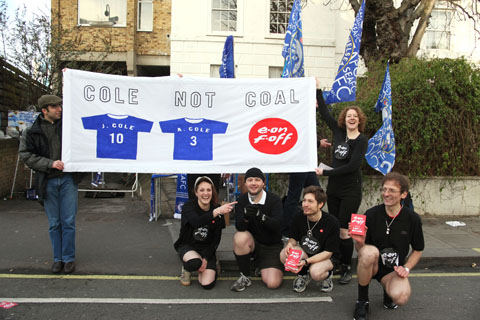
4) 48 hours of action against E.on and new coal, 28–29.11.08
The 48 hours of action was a great first shot across the bows. E.On were rat­tled, local and nation­al media took an inter­est, resources were gath­ered and are now ready to go, a new web­site is now up and run­ning (http://www.e‑onf-off.org.uk/), a list of tar­gets has been com­piled and E.on know that if they try to build a new coal fired pow­er sta­tion at Kingsnorth then they will face a bar­rage of direct action — both towards their dai­ly oper­a­tions and their sup­ply chain. E.on be warned. Actions took place in: Lon­don, Brighton, Bris­tol, Nor­wich, Coven­try, Not­ting­ham & Coven­try and at Kingsnorth itself. http://risingtide.org.uk/node/309

Plus, ‘Green Banksy’ invades Kingsnorth dur­ing the 48 hours: An
uniden­ti­fied group alleged­ly pen­e­trat­ed Kingsnorth secu­ri­ty and switched off almost 500 megawatts of gen­er­at­ing capac­i­ty, cut­ting almost 2% off the nation’s pow­er sup­ply for about four hours.
http://www.indymedia.org.uk/en/2008/12/414463.html

5) Scot­tish coal rail ter­mi­nal shut down, 15.12.08
30 cam­paign­ers from Coal Action Scot­land togeth­er with local res­i­dents peace­ful­ly block­ad­ed the entrance to the Scot­tish Coal-oper­at­ed Raven­struther coal rail ter­mi­nal in South Lanark­shire for 8 hours. The pro­tes­tors were act­ing to oppose the five open cast coal mines that deliv­er coal to the rail ter­mi­nal and in resis­tance to the thir­teen new open cast coal mines due to open in Scot­land. Pro­tes­tors erect­ed and scaled a 15ft scaf­fold­ing tri­pod, block­ing trucks from enter­ing the ter­mi­nal. Oth­ers locked them­selves by their necks to a con­vey­or belt and a bull­doz­er, pre­vent­ing coal stock­piles from being loaded onto trains. An
esti­mat­ed 6,380 tonnes of coal were stopped from being trans­port­ed from the coal mines to pow­er sta­tions, pre­vent­ing the equiv­a­lent to 11,675.4 tonnes of CO2 from being released into the atmos­phere.
http://coalactionedinburgh.wordpress.com/

6) E.ON forced to aban­don recruit­ment tour, Novem­ber 2008
Anti-coal protests at grad­u­ate careers fairs around the UK forced E.ON to can­cel its recruit­ment tour. The ener­gy com­pa­ny, which is plan­ning to build a new coal pow­er sta­tion at Kingsnorth, Kent, saw sev­en­teen of its careers events dis­rupt­ed. This was a co-ordi­nat­ed nation­al effort from stu­dents involved in Peo­ple & Plan­et, the Coal Action Net­work, and the Camp for Cli­mate Action. Leaflets, ban­ners, fan­cy dress, con­ver­sa­tions with atten­dees and eye-catch­ing stunts were used to embar­rass E.ON and dis­suade grad­u­ates from join­ing the com­pa­ny. The Roy­al Bank of Scot­land, one of E.ON’s main finan­cial back­ers, were also tar­get­ed at the fairs over their role in pro­vid­ing loans to build the pro­posed new pow­er sta­tion.
http://leaveitintheground.org.uk/?p=185

7) Kel­ster­back For­est Occu­pa­tion (Frank­furt Air­port), ongo­ing Resist Frank­furt Air­port Expan­sion — defend the for­est camp. After Heathrow, Frank­furt is the largest air­port in Europe. Fra­port (the com­pa­ny run­ning the air­port) and the Ger­man gov­ern­ment are try­ing to build a new run­way, to mas­sive­ly increase flights. To build the new run­way, Fra­port need to clear 250,000 m² of pro­tect­ed for­est. For sev­en months, activists have been squat­ting the for­est, build­ing tree plat­forms and float­ing rafts to resist attempts to chop down the for­est. Jan­u­ary 2009 is bring­ing threat of evic­tion — and they need all the help they can get.
http://waldbesetzung.blogsport.de/english-information/ or
http://waldbesetzung.blogsport.de/photos/

—————–
Ris­ing Tide UK,
c/o 62 Fieldgate Street,
Lon­don E1 1ES
www.risingtide.org.uk
www.artnotoil.org.uk
www.fossilfoolsday.org
Tel: 07708 794665

See also the Camp for Cli­mate Action (www.climatecamp.org.uk), Net­work for
Cli­mate Action (www.networkforclimateaction.org.uk) and Cli­mate Indy­media
(www.climateimc.org)

———-

Please send any­thing you’d like includ­ed in this news sheet to:
newssheet@risingtide.org.uk

To view pre­vi­ous edi­tions of the Ris­ing Tide News Sheet, vis­it the News
Sheet Archive at http://risingtide.org.uk/newssheet

This News Sheet was brought to you by Ris­ing Tide, a grass­roots net­work
of groups and indi­vid­u­als com­mit­ted to tak­ing action and build­ing a
move­ment against cli­mate change.

For more infor­ma­tion…
email: info@risingtide.org.uk
Phone: +44 (0)845 458 8923 / +44 (0)7708 794665
Address: 62 Fieldgate St, Lon­don, E1 1ES
Web site: http://risingtide.org.uk

PLEASE FORWARD THIS TO A FRIEND AND INVITE THEM TO JOIN THE LIST

To sub­scribe or unsub­scribe vis­it:
http://risingtide.org.uk/mailman/listinfo/rt-news

To receive this News Sheet month­ly, send an email to news-sub­scribe at
risingtide.org.uk with the sub­ject line ‘sub­scribe’ (with­out the quotes
and replace at with @).

North East Open Cast Conference 31st Jan

North East Region­al Con­fer­ence
A chance for cam­paign­ers, past and present, to meet and learn from our suc­cess­es and fail­ures and plan how we can all help each oth­er

St John Bap­tist Church — Grainger St — New­cas­tle
1:30pm — 4pm Sat­ur­day 31st Jan

NE Opencast conference flierNorth East Region­al Con­fer­ence
A chance for cam­paign­ers, past and present, to meet and learn from our suc­cess­es and fail­ures and plan how we can all help each oth­er

St John Bap­tist Church — Grainger St — New­cas­tle
1:30pm — 4pm Sat­ur­day 31st Jan

Speak­ers and work­shops on the diverse range of options to oppose open cast­ing

Toon Cli­mate Action
http://www.toonclimateaction.tk/

EDO smashed — Gaza solidarity action

17-01-2009
Anti-mil­i­tarist activists entered the ITT/EDO MBM arms fac­to­ry in Moule­scombe, Brighton in the ear­ly hours of this morn­ing, where they are believed to have caused exten­sive dam­age to the offices, and to equip­ment used to make arms, includ­ing the ‘zero reten­tion force arm­ing units’ and ‘ejec­tor release unit 151’ which the Smash EDO/ITT cam­paign says are sup­plied to the Israeli Air Force. The cam­paign became aware of the action when they received a phone call from those inside the fac­to­ry this morn­ing who said that they were ‘decom­mis­sion­ing’ the fac­to­ry in sol­i­dar­i­ty with the peo­ple of Gaza, who are cur­rent­ly at the receiv­ing end of the fac­to­ries prod­ucts.

17-01-2009
Anti-mil­i­tarist activists entered the ITT/EDO MBM arms fac­to­ry in Moule­scombe, Brighton in the ear­ly hours of this morn­ing, where they are believed to have caused exten­sive dam­age to the offices, and to equip­ment used to make arms, includ­ing the ‘zero reten­tion force arm­ing units’ and ‘ejec­tor release unit 151’ which the Smash EDO/ITT cam­paign says are sup­plied to the Israeli Air Force. The cam­paign became aware of the action when they received a phone call from those inside the fac­to­ry this morn­ing who said that they were ‘decom­mis­sion­ing’ the fac­to­ry in sol­i­dar­i­ty with the peo­ple of Gaza, who are cur­rent­ly at the receiv­ing end of the fac­to­ries prod­ucts.

The arms fac­to­ry has been tar­get­ted by the Smash EDO Cam­paign for a num­ber of years. In 2005 EDO MBM took High Court action in an attempt to cur­tail protest at the fac­to­ry. They lost the action, which proved to be an expen­sive own-goal as it gave the cam­paign increased expo­sure, and brought it to nation­al atten­tion. In 2008 the fac­to­ry was tak­en over by ITT.

Week­ly protests have been held out­side the fac­to­ry since 2004, and there have been a num­ber of nation­al demos, at the fac­to­ry and on the streets of Brighton. On Octo­ber 15th, the SHUT ITT Demo suc­ceed­ed in shut­ting the fac­to­ry for the day.

Accord­ing to reports in the nation­al media, todays action may have the effect of shut­ting down the fac­to­ry for some time. The BBC quotes Det Ch Insp Gra­ham Pratt as say­ing: “Win­dows had been smashed and offices turned over in what I would describe as wan­ton van­dal­ism, but with machin­ery and equip­ment so tar­get­ed that it could have been done with a view of bring­ing busi­ness to a standstill.…The dam­age is sig­nif­i­cant and the val­ue sub­stan­tial.”

Pri­or to enter­ing the fac­to­ry, the activists made a video (attached) in which they explained their rea­sons for the action. One com­ment­ed: “Israel are com­mit­ting a gross crime now in Gaza. Israel have killed hun­dreds of chil­dren. I think its absolute­ly dis­gust­ing that weapons made in our cities and in our coun­try are being used to kill inno­cent women and chil­dren. They have been used indis­crim­i­nate­ly. If the law and the police cant do any­thing about it its about time some­body else did.”

About 30 police are believed to have attend­ed the fac­to­ry, where they wit­nessed com­put­ers and office equip­ment being thrown out of first floor win­dows. Nine peo­ple are believed to have been arrest­ed and tak­en to the Holling­bury and Wor­thing Police Sta­tions, where police say they are being held on ‘sus­pi­cion of bur­glary’. One pro­tes­tor is believed to have required hos­pi­tal treat­ment.

- from IMC UK

Decom­mis­sion­ers — video/mpeg 127M

For oth­er reports of direct action and protests in sol­i­dar­i­ty with the peo­ple of Gaza, see the Indy­media Pales­tine top­ic pages

Five hundred flashmob at heathrow

[London,Sat 17] Mid­day today, five hun­dred peo­ple flash­mobbed Heathrow’s Ter­mi­nal 5 in protest at the gov­ern­ments deci­sion to give the go-ahead on build­ing a third run­way and yet anoth­er ter­mi­nal. Among the mob were four naked women, lots of red ‘no expan­sion’ t‑shirts, umbrel­las and Heathrow’s largest con­ga dance.

Heathrow Terminal 5 Decision Day Flash mob[London,Sat 17] Mid­day today, five hun­dred peo­ple flash­mobbed Heathrow’s Ter­mi­nal 5 in protest at the gov­ern­ments deci­sion to give the go-ahead on build­ing a third run­way and yet anoth­er ter­mi­nal. Among the mob were four naked women, lots of red ‘no expan­sion’ t‑shirts, umbrel­las and Heathrow’s largest con­ga dance. It was all fin­ished with­in an hour.

The flash­mob had been called for the first Sat­ur­day after the deci­sion on the air­ports expan­sion plans and comes at the end of a packed week of protests which has already seen the domes­tic depar­tures lounge of ter­mi­nal three occu­pied by a Cli­mate Rush din­ner, a plot of land pur­chased by cam­paign­ers in the mid­dle of the pro­pose new run­way and suf­fragettes esca­lat­ing the mil­i­tan­cy of the cam­paign by smash­ing win­dows at the gov­ern­ments Depart­ment of Trans­port.

The week also saw twen­ty four Plane Stu­pid activists qui­et­ly sen­tenced for their part in the blockad­ing of Stanst­ed air­port late last year.

Many more actions are expect­ed and the Cli­mate Camp is hold­ing a nation­al gath­er­ing in Oxford next week­end at which pro­pos­als to shut down Heathrow air­port down com­plete­ly for a day are expect­ed to be dis­cussed.

——–

Attract­ing most press atten­tion were four brave young ladies who had saved the ten quid for a red ‘STOP AIRPORT EXPANSION’ t‑shirt and instead opt­ed for red body paint with a black mes­sage across their midriffs, ‘Sim­ply No Slaugh­ter’ and a pair of strate­gi­cal­ly placed gold stick­ing plas­ters pro­claim­ing ‘art’ and ‘port’ (port was indeed on the left.)

Among them were many of the locals who have led the long term oppo­si­tion to the project, includ­ing some I pho­tographed on the march in 2003 in Sip­son and Har­mondsworth, as well of course as John Stew­art of HACAN and local MP John McDon­nell who many were con­grat­u­lat­ing for his seizure of the mace in the House of Com­mons when the announce­ment was made.

For three-quar­ters of an hour the demon­stra­tors chant­ed, threw red bal­loons in the air and red ten­nis balls at an ‘Aunt Sal­ly’ of Trans­port Sec­re­tary Geoff Hoon and con­ga’ed around the area and had there pic­tures tak­en by a large squad of pho­tog­ra­phers includ­ing some from the nation­al press and some TV crews.

They were watched by a few of those wait­ing to check in and rather more police and air­port secu­ri­ty staff who made a loose ring around event. But although the atmos­phere before the demon­stra­tion had appeared a lit­tle tense, with police mak­ing con­tin­ued patrols through the depar­ture area pre­sum­ably look­ing for trou­ble-mak­ers, they seemed pret­ty relaxed — and some were clear­ly amused by what was hap­pen­ing.

Final­ly Stew­art thanked us all for com­ing, and repeat­ed the deter­mi­na­tion of all those involved to keep up the fight to ensure that despite the deci­sion, the run­way will nev­er be built. McDon­nell was giv­en a cheer for his action in par­lia­ment and every­one was invit­ed to take a last chance to pelt Hoon before we all slipped away to the und­e­dr­ground and bus sta­tions.

Climate Activists smash windows at The Department for Transport

16.01.2009
Cli­mate Suf­fragettes smashed glass front doors at The Depart­ment for Trans­port ear­ly this morn­ing in protest against the gov­ern­men­t’s deci­sion to expand Heathrow.

Suffra-jet broken windows at Dept for Transport16.01.2009
Cli­mate Suf­fragettes smashed glass front doors at The Depart­ment for Trans­port ear­ly this morn­ing in protest against the gov­ern­men­t’s deci­sion to expand Heathrow.

At 4 am, three women, wear­ing red cli­mate sash­es, hurled bricks and broke the glass doors of The Depart­ment for Trans­port, on Mar­sham Street, Lon­don. Echo­ing the protests of the Suf­fragettes, they wrapped their bricks in notes that read: ‘NO THIRD RUNWAY, THE SUFFRA-JETS ARE BACK before hurl­ing them at the gov­ern­ment build­ing. They also hurled green paint to sym­bol­ise the green­wash they heard from the gov­ern­ment today. They tar­get­ed the build­ing as a direct response to yes­ter­day’s deci­sion to allow a third run­way at Heathrow.

A spokes­woman said: “The gov­ern­ment has opened the flood-gates for rad­i­cal action. Yes­ter­day they sac­ri­ficed all of our futures and spat in the face of democ­ra­cy. The third run­way is unwant­ed and is a glob­al threat. When they make democ­ra­cy mean­ing­less what oth­er
reac­tion could they expect?

“We have less than ten years to turn cli­mate change around. Women can­not just stand by and let this gov­ern­ment treat our futures as a joke. We fight for the safe­ty of human­i­ty, and if the gov­ern­ment will only lis­ten to the smash of win­dows, then so be it.”

Not­ing that their elect­ed MPs had been refused a vote on this issue, she added;

“The gov­ern­ment has bypassed demo­c­ra­t­ic process for the sake of cor­po­rate prof­it. The Suf­fragettes died for the demo­c­ra­t­ic rights that the gov­ern­ment so sweeps aside. We take our lead from our past to defend our future.”

Bath Bomb #18 Out Now!

THE BATH BOMB

@nti-copyright: copy and dis­trib­ute!
Issue #18
free/donation
Jan 09

“Steal this new­sheet!”

Look­ing Back At A Busy Year

THE BATH BOMB

@nti-copyright: copy and dis­trib­ute!
Issue #18
free/donation
Jan 09

“Steal this new­sheet!”

Look­ing Back At A Busy Year

2009 promis­es to be a busy year for BAN and friends, but before we look for­ward, let’s look take a look back at 2008. The year start­ed with a con­tin­u­ing spate of foie gras, forc­ing the sick dish off the menus of many a restau­rant. The FreeShop went from strength to strength, dis­trib­ut­ing goods to thou­sands of sat­is­fied anti-shop­pers and spread­ing its month­ly anti-con­sumerist (2nd Sat­ur­day of each month, 12–3pm, Stall Street, oppo­site Hol­land and Bar­rett). In a new twist, BAN­ners also dis­trib­uted free eth­i­cal, eco-friend­ly veg­an food to hun­gry passers­by at the ‘There is such thing as a free lunch!’ stall. Pun­ters of the Porter were kept enter­tained at ‘Bub­bling Under’, Bath’s ongo­ing free month­ly rad­i­cal film show­ings. Mem­bers of BAN also helped open ‘The 78’, Chippenham’s first squat­ted social cen­tre, and joined dozens in Bris­tol to resist the evic­tion of ‘Ash­ley Road’.

Bath’s ani­mals rights advo­cates have been equal­ly busy, demo­ing Bath race­course dur­ing a vis­it by Rolf Har­ris, trav­el­ling to Oxford Uni and Hunt­ing­don for anti-vivi­sec­tion events, sab­o­tag­ing local fox hunts, trav­el­ling to Cardiff for an anti-bad­ger cull demo and feed­ing hun­dreds at the first Bath Veg­an Fayre. Bath activists also spent a fair bit of time in Bris­tol, help­ing organ­ise the Bris­tol Anar­chist Book­fair, sev­er­al days of cred­it crunch-relat­ed work­shops, the first Bris­tol Anar­chist Games Day (high­ly rec­om­mend­ed!) and also helped organ­ise anti-cap­i­tal­ist demos around the open­ing of the mon­strous Cabot Cir­cus shop­ping cen­tre, which was invad­ed by zom­bie pro­test­ers. Get­ting active for the envi­ron­ment, BAN joined 3,000 oth­ers at Kingsnorth Camp for Cli­mate Action, help­ing to seize the site, and caus­ing seri­ous dis­rup­tion to the coal plant by scal­ing the perime­ter fence. Ear­li­er in the year, mem­bers of BAN joined oth­ers from Bris­tol, Oxford and Wales to suc­cess­ful­ly block­ade Aberthaw coal-fired pow­er plant, whilst more recent­ly, anoth­er BAN­ner helped out at the Plane Stu­pid block­ade at Stanst­ed. We were also busy with No Bor­der­s/pro-asy­lum seek­er events, like the anti-IOM demos in Bris­tol and ID cards protest at Cardiff, and joined the anar­chist ‘Free­dom of Move­ment’ bloc and 5,000 oth­ers at the Man­ches­ter anti-Labour Par­ty Con­fer­ence.

We’ve teamed up with Bath Mad Hat­ters to high­light the dan­ger­ous effects of forced med­ica­tion, and our new ped­al-pow­ered sound sys­tem is justin about ready to go, after a year of hard work. Fas­cists failed to escape our atten­tion, with local activists head­ing up north to oppose and con­front the BNP’s annu­al Red, White and Blue fes­ti­val (due to this year’s dis­rup­tion, it is unlike­ly to hap­pen again). Com­bined events and forces helped to delay the open­ing of Bath­wick Hill Tesco for near­ly a year, and BAN were there to greet them when they arrived. BAN­ners cel­e­brat­ed Buy Noth­ing Day, and twice jour­neyed down to Brighton to join the ‘Smash EDO/ITT’ demos, aimed at clos­ing down a weapons fac­to­ry sup­ply­ing geno­ci­dal states such as Israel and the US of A; after the demos (both of which got a bit ‘rio­ty’) and a four-year cam­paign, the fac­to­ry is on its last legs – don’t miss the next demo on 04/05/09: www.smashedo.org.uk. BAN also launched its anti-cred­it crunch cam­paign, aimed at defend­ing our com­mu­ni­ties against unem­ploy­ment, bailiffs, cor­po­rate greed and reces­sion. The cam­paign kick-start­ed with a 35-strong, noisy demo in Novem­ber and will con­tin­ue on as reces­sion deep­ens, with a focus on prac­ti­cal­ly resist­ing reces­sion and direct­ly defend­ing our rights and liveli­hoods. And we even man­aged well-earned group hol­i­days at Tolpud­dle fes­ti­val and the beau­ti­ful Gow­er, too!

Oppo­si­tion Increas­es As Attacks Inten­si­fy

On Sat­ur­day 3rd Jan­u­ary, 400–500 gath­ered in Bris­tol to oppose the con­tin­ued Israeli attacks on Pales­tine. The march, attend­ed by young and old, anar­chists, stu­dents, Mus­lims and social­ists alike, took place on the after­noon of the day that Israel was report­ed to have begun its land incur­sion in Pales­tine. The demon­stra­tion coin­cid­ed with var­i­ous oth­ers around the coun­try, and indeed around the world, includ­ing a 50,000-strong march in Lon­don. The fol­low­ing week­end 100,000 peo­ple attend­ed a march in Lon­don in oppo­si­tion to the con­tin­ued dev­as­tat­ing attacks which have since includ­ed the bomb­ing of a school being used as a shel­ter for civil­ians, in which more than 40 peo­ple were killed. The IDF have also dropped leaflets over Gaza threat­en­ing to increase the feroc­i­ty of their attacks. In the five years that pre­ced­ed the recent attacks, around 5,000 Pales­tini­ans are report­ed to have been killed by the Israelis’ advanced weapon­ry. In spite of the British Gov­ern­men­t’s renewed call for cease­fire, fig­ures report­ed in the Guardian in 2006 tell a dif­fer­ent sto­ry: the Gov­ern­ment approved £22.5m of weapon­ry exports to Israel in the pre­vi­ous year. If you would like to get involved in oppos­ing the attacks, there is a vig­il in Bath every Sat­ur­day out­side the Abbey between 11.30 and 12.30. In Bris­tol, there is a vig­il every night at 5pm in the cen­tre, oppo­site the Hip­po­drome, and Bristol’s also home to the ‘Raytheon Out’ cam­paign, who are now in the fifth week of their rooftop occu­pa­tion of that arms man­u­fac­tur­er. And let’s not for­get neigh­bour­ing deathdeal­ers Boe­ing, who recent­ly found all their win­dows smashed! In Frome too, 40 peo­ple recent­ly occu­pied Lloyds TSB, who have ridicu­lous­ly closed the account of human rights char­i­ty Inter­Pal. Oth­er cor­po­rate nas­ties with ties to Israel include M&S and Star­bucks, and be sure to boy­cott Israeli super­mar­ket goods, where many pep­pers, sweet pota­toes and avo­ca­dos are grown on stolen land.

http://www.bathstopwar.org.uk/index.html
www.stopwar.org.uk/
http://palsolidarity.org/
http://raytheonout.wordpress.com/
http://electronicintifada.net
http://www.maannews.net/en
http://www.freegaza.org
http://talestotell.wordpress.com

Bash Back Against Bath’s Bas­tard Bailiffs!

Recent arti­cles in the Chron­i­cle have stark­ly con­tra­dict­ed asser­tions by gov­ern­ment and aca­d­e­m­ic think tanks that Bath would “weath­er the worst effects of the reces­sion.” At the last count, 1,542 peo­ple are claim­ing ben­e­fits in the Bath area, an increase of 59% on last year, with 600 peo­ple hav­ing lost their jobs in the city since last Novem­ber — a dra­mat­ic rise. And how are we reward­ed when we’re laid off and forced onto the dole? Do we enter a nur­tur­ing wel­fare sys­tem that caters for the needs and skills of the unem­ployed? No, it’s more author­i­tar­i­an than ever — ben­e­fits have not risen with the increas­ing cost of liv­ing, and claimants are harassed into search­ing for non-exis­tent jobs under the con­stant threat of ben­e­fit stop­page for fail­ure to con­form to the infu­ri­at­ing­ly bureau­crat­ic world of Job­seek­ers. As a direct result of this and the rise in bills, food and liv­ing costs, Bath res­i­dents are see­ing a lot more of everyone’s least favourite par­a­site, the bailiff. Recent fig­ures show that bailiffs chas­ing unpaid coun­cil tax vis­it­ed 2,400 homes in Bath last year. With three/four peo­ple in the aver­age house­hold, that means that 8,000 (10% of Bath’s pop­u­la­tion) were vis­it­ed for coun­cil tax alone! When we take into con­sid­er­a­tion bailiffs sent out by banks, loan com­pa­nies and ener­gy sup­pli­ers, we can real­is­ti­cal­ly increase the num­ber of Batho­ni­ans being harassed sev­er­al times over. At this point the old reac­tionary cry that peo­ple who are unem­ployed or bailiff-rid­den are ‘layabouts’ who have ‘brought it on them­selves’ sim­ply no longer holds true. The major­i­ty of us are now feel­ing the pinch, some hard­er than oth­ers, and it’s sim­ply not our fault. If your boss fires you and the job mar­ket is emp­ty, what choice is there but ben­e­fits? If you were going to pay your coun­cil tax, but had to spend the mon­ey on the 40% gas and elec­tric bill increase and feed­ing your fam­i­ly, what would you do?

Bailiffs are famed for their ruth­less­ness — a recent court case tells of a bailiff who posed as an ambu­lance dri­ver to gain entry to an elder­ly couple’s house to repos­sess goods, while the elder­ly occu­pant suf­fered a heart com­plaint. And this is the norm, not the excep­tion. Par­lia­ment recent­ly passed laws allow­ing bailiffs to break into your house, so with­out our elect­ed rep­re­sen­ta­tives to rely on, it looks like it’s up to us! In Bath dur­ing the Poll Tax cam­paign of the ear­ly 90s, and today in Edin­burgh, Lon­don and else­where, bailiffs have met com­mu­ni­ty sol­i­dar­i­ty. Organ­is­ing amongst your neigh­bours to face off bailiffs when they turn up on your street is a pow­er­ful way of defend­ing your­self, your prop­er­ty and your com­mu­ni­ty against these vul­tures. Bailiffs prey on the weak, the strand­ed and the vul­ner­a­ble. Resist­ing bailiffs is to be a key part of BAN’s anti-reces­sion cam­paign in the com­ing year, and they will be hold­ing an infor­mal day of dis­cus­sion, net­work­ing and organ­is­ing on Sat­ur­day the 28th of Feb­ru­ary; loca­tion TBC. To get involved in the cam­paign, if you need help organ­is­ing resis­tance to bailiffs or if you can name and shame any bailiffs, e‑mail BAN at bathac­tivist­net [at] yahoo.co.uk

EVENTS

Bath Hunt Sabo­teurs meet­ings, 2nd and 4th Mon­day of the month, 8pm, The Bell, Wal­cot Street

Lon­don Road Food Co-op, Wednes­days, 4–7pm, River­side Com­mu­ni­ty Cen­tre, Lon­don Road

Bath Stop The War Coali­tion vig­il, Sat­ur­days, 11.30am-12.30, Bath Abbey Court­yard

Broad­lands Orchard­share Was­sail­ing, Sat­ur­day 17th Jan­u­ary, 3pm, Broad­lands Orchard, £2 entry

Israel Out of Gaza demon­stra­tion, Sat­ur­day 17th Jan­u­ary, 12.30 start, Abbey Court­yard

Bub­bling Under, Sun­day 18th Jan­u­ary, 1–5pm, Porter Cel­lar bar, George Street

Talk: ‘Eco Upgrad­ing of Exist­ing Hous­es — Chal­lenges and Oppor­tu­ni­ties’, Mon­day 19th Jan­u­ary, 7.30pm, Quak­er Meet­ing House, Brad­ford on Avon, free entry

Seed Swap, Sun­day 1st Feb­ru­ary, 3–5pm, St Marks Com­mu­ni­ty Cen­tre, Wid­combe, £2 entry

Bath Friends of the Earth meet­ing, Mon­day 2nd Feb­ru­ary, 8pm, Still­point, Broad Street Place

Talk: ‘Com­post­ing — how to make it and when to use it’, Wednes­day 4th Feb­ru­ary, 7.30pm, Grove St Church Halls

Bath Ani­mal Action meet­ing, Wednes­day 4th Feb­ru­ary, 7.30–8.30pm, back room of The Bell

Bath Activist Net­work meet­ing, Thurs­day 5th Feb­ru­ary, 7.30–9pm, down­stairs Hob­gob­lin

Earth First! Win­ter Moot, Sat­ur­day 7th Feb­ru­ary-Sun­day 8th, 10am start, Cow­ley Club, Brighton, e‑mail: moot2009 [at] earthfirst.org.uk

Bath Green­peace meet­ing, Mon­day 9th Feb­ru­ary, 7.30–9pm, Still­point, Broad Street Place

Tran­si­tion Bath Forum, Tues­day 10th Feb­ru­ary, 7pm, Wid­combe Social Club

Bath Green Drinks, Wednes­day 11th Feb­ru­ary, 8.30pm, the Rum­mer, Grand Parade

Bor­ders & Immi­gra­tion work­shop, Sat­ur­day 14th Feb­ru­ary, 1–3pm, Bris­tol venue tbc email trapeze [at] riseup.net

Bath FreeShop, Sat­ur­day 14th Feb­ru­ary, 12–3pm, out­side Pump Rooms, Stall Street

‘Beat the Bailiffs’ lis­ten­ing post, Sat­ur­day 28th Feb­ru­ary, more details tbc

Talk: ‘Por­trait of a Road Protest’, Sun­day 1st March, 3–4pm, Bath Cen­tral Library, £6/£4 entry

Res­cue Rangers

Appar­ent­ly, a dog’s not just for Christ­mas, and nei­ther is the rest of the four-legged fur­ry world, too. Fol­low­ing the usu­al sea­son­al peak in lit­tle Tim­my and Sarah’s pass­ing whim for cute lit­tle caged pets, a huge num­ber of unwant­ed rodents need re-hom­ing. Whilst the major­i­ty of humankind can’t get over the crazed notion that oth­er ani­mals exist pure­ly to enter­tain, feed and oth­er­wise serve them, and pet breed­ers are always out to make a quick buck, offi­cial res­cue author­i­ties such as the RSPCA cen­tres and Bath Cats & Dogs Home are full to burst­ing, with many hap­less beasts not lucky enough to reach res­cue cen­ters fac­ing lethal injec­tion. If you can offer a lov­ing and respon­si­ble home for any of four mice, 21 ger­bils or 60 rats in the near­by area, please drop us a line.

www.fancy-rats.co.uk/

Greece Is The Word

Last month’s issue of the Bath Bomb car­ried a hasti­ly-writ­ten report of the mur­der of a Greek teenag­er, and the night of riots fol­low­ing his death. Since then, the riots have giv­en birth to a full-blown revolt and although (or prob­a­bly more accu­rate­ly, because) a gen­uine­ly rev­o­lu­tion­ary sit­u­a­tion has emerged in Greece, the media has lost inter­est. Don’t let the sub­si­dence of the sen­sa­tion­al­ist tabloid press’s rant­i­ng of ‘bomb-throw­ing youths’ fool you though, the insur­rec­tion in Greece is as alive as ever. Coin­cid­ing with a gen­er­al strike, the riots expand­ed beyond the anar­chist move­ment and became a coher­ent expres­sion of anger at the deep­en­ing eco­nom­ic cri­sis. For three weeks, riot­ing involv­ing hun­dreds of thou­sands raged across all of Greece, with sym­bols of cap­i­tal­ism and the state, such as police sta­tions and banks, tar­get­ed by Molo­tovs, bricks and graf­fi­ti. Uni­ver­si­ties, schools and work­places were occu­pied and self-man­aged by work­ers and stu­dents, and many dis­tricts of Greece remain in con­trol of the res­i­dents, as no-go areas for the police. So why have the events in Greece fall­en from the eye of the world’s media? It is because revolt and rev­o­lu­tion almost always ini­tial­ly man­i­fest them­selves in riot­ing and ‘chaos’. It is the instinct of most peo­ple, when lib­er­at­ed from the oppres­sive yoke of their for­mer mas­ters to cel­e­brate, rev­el, and attack the sym­bols of the old order — this makes excit­ing footage, which can eas­i­ly be por­trayed as mis­guid­ed vio­lence. The next step in a revolt is thought­ful­ness, of organ­i­sa­tion, of order, and of begin­ning to think about how to organ­ise and prac­ti­cal­ly man­i­fest a lib­er­at­ed space. The media have giv­en this phase no atten­tion, as first­ly, it’s less dra­mat­ic, and sec­ond­ly, and most impor­tant­ly, because it is against the ethos of the cor­po­rate media to report on rad­i­cals as ratio­nal peo­ple capa­ble of, and seri­ous about, organ­is­ing a soci­ety free of lead­ers, pover­ty and cap­i­tal­ist greed. Make no mis­take, Greece is still in revolt, and is prov­ing that as the old say­ing goes “cap­i­tal­ism is chaos, anar­chy is order.”

Wel­come To The New Year

2008 fin­ished with riots in Greece, as peo­ple on the streets fought back against the cor­rupt gov­ern­ment and police who gunned down Alexan­dros-Andreas Grig­oropou­los. 2009 has opened with a blood­bath in Gaza car­ried out by the Israeli Defence Force, while world lead­ers blame the vic­tims and refuse to inter­fere like they did with Iraq and Afghanistan, all because Israel is their friend. Only ordi­nary peo­ple through­out the world have raised their voic­es against this new wave of killing. Mean­while, over here, unem­ploy­ment and house repos­ses­sion are up because we pay for the cri­sis caused by pol­i­cy mak­ers and politi­cians. Let’s try to make 2009 a year when we can shake off these lead­ers who run this sick sys­tem. A year like Eng­land 1381, Great Britain 1640, France 1789, Europe 1848, Mex­i­co 1914, Rus­sia 1917, Kro­n­stadt and the Ukraine 1921, Spain 1936, Hun­gary 1956, every­where 1968 and East­ern Europe 1989. Most of these strug­gles fell just short, per­mit­ting dic­ta­tor­ships of the left and right, but these were still years in which ordi­nary peo­ple strived to bring about a bet­ter world, and will try again. (Oscar Nom­i­nee inspi­ra­tional speech time:) the time is always now, and if you’re inter­est­ed in join­ing the strug­gle in a move­ment where every­body is equal and val­ued, join us in Bath Activist Net­work. A bet­ter world is pos­si­ble!

Bath Activist Net­work are a local umbrel­la group cam­paign­ing on issues as diverse as devel­op­ment, envi­ron­men­tal­ism, anti-war, ani­mal rights, work­ers’ rights and more. Help­ing to pro­duce The Bath Bomb, we are open to any­one, and our mem­bers range from trade union­ists to anar­chists, lib­er­als to greens, and peo­ple who just want to change Bath for the bet­ter. For details on meet­ings, demos, or just to get in touch, ring us on 07949 611912, email bathactivistnet@yahoo.co.uk, or see our web­site: www.myspace.com/bathactivistnetwork

Earth First! Things First

Dur­ing the com­ing Bath Book fes­ti­val on the 1st of March, Bath Cen­tral Library will be host­ing the exhi­bi­tion ‘Por­trait of a Road Protest,’ about the goings on at Sols­bury Hill in the ear­ly 90s. It’s free entry to see the images, but a talk will take place from 3–4pm, £6 entry waged, £4 unwaged. Here’s a lit­tle his­to­ry les­son. The direct action protest against the would-be Bath­eas­t­on Bypass began in March ‘94, fol­low­ing the pub­lic enquiry sev­er­al years before. Bath­eas­t­on did have a traf­fic prob­lem, and a small bypass, traf­fic calm­ing or improved pub­lic trans­port (we’re still wait­ing) would have been accept­able, but the sheer scale of the road, destroy­ing water mead­ows and slic­ing through the low­er slopes of Sols­bury Hill, was mad­ness. The non-vio­lent direct action that took place con­sist­ed of sit­ting on dig­gers, build­ing tree camps, squat­ting, blockad­ing, and stand­ing up to the most­ly bru­tal secu­ri­ty guards (rumour has it that one was fed raw meat!). The protest brought many dif­fer­ent peo­ple togeth­er: locals, Earth First!ers and Don­gas, all fight­ing the Depart­ment of Trans­port. Over all, it went on for sev­er­al months, with reunion actions the fol­low­ing year, received lots of cov­er­age and, along with oth­er road protests round the rest of the coun­try, cut back around 90% of the UK road build­ing pro­gramme start­ed by the dread­ed iron lady.

Bath Bomb Word­watch: Don­ga, Don­ga Tribe (noun) — a group of semi-nomadic hip­pies and squat­ter-punks that joined to defend Twyford Down and oth­er road protest sites

www.earthfirst.org.uk

Air­port Expan­sion Is Plane Stu­pid

The run­way of Stanst­ed air­port was invad­ed by activists from the group Plane Stu­pid at 3.15am on 8th Decem­ber, while closed for main­te­nance work. Sched­uled to be reopened at 5am, the run­way was closed for three hours while con­fused cops and secu­ri­ty guards strug­gled to remove 57 pro­tes­tors. 56 flights were can­celled. The aver­age flight out of Stanst­ed releas­es 41.58 tonnes of CO2 into the atmos­phere. We lit­er­al­ly can’t go on like this – hopes of the UK meet­ing even the ridicu­lous­ly low gov­ern­ment-set tar­gets for emis­sions are screwed if we don’t cut our reliance on avi­a­tion, yet Neo-Labour has approved the capac­i­ty increase of Stanst­ed by ten mil­lion pas­sen­gers a year. So yeah, this action no doubt pissed many peo­ple off, but noth­ing else has worked so far. Who now would deny the wor­thi­ness of the cause of the suf­fragettes, and the effec­tive­ness of their tac­tics (which were far more dis­rup­tive than those of Plane Stu­pid, who’ve nev­er turned to explo­sives)? Thou­sands of well-behaved pro­tes­tors marched against the war in Iraq and got nowhere. The media claim that pro­tes­tors dis­rupt­ed work­ing class fam­i­lies’ hol­i­days, yet it is the poor who will be hit hard­est by cli­mate change — who gen­er­al­ly lack the means to sur­vive floods, famine and freak weath­er. Indeed, sta­tis­tics show that the major­i­ty of flights are still tak­en by busi­ness peo­ple and rich hol­i­day-mak­ers. Plane Stupid’s stunt comes at a crit­i­cal time when the gov­ern­ment is soon to make their deci­sion on Heathrow’s third run­way, and des­per­ate times call for rad­i­cal mea­sures. To pro­tect the very near future, we must act now.

www.planestupid.com/

Review Cor­ner: Off The Hoof

As we always say, going veg­an is a way for­ward to save the world against cli­mate change and to take a stand against the cru­el and mur­der­ous meat indus­try, so we here at the Bath Bomb thought we’d take a look at this lat­est news agent addi­tion. Off the Hoof is a mag­a­zine that pur­ports to cater for “veg­gies, veg­ans and meat eaters every­where.” How­ev­er, a clos­er inspec­tion reveals that this is unfor­tu­nate­ly a veg­an mag for veg­an peo­ple, with some of the con­tent sure to offend all but the thick­est-skinned of meat eaters. This first win­ter issue has inter­views with veg­an celebs such as con­tor­tion­ist Rub­ber Richie, medal-win­ning body builder Pete Ryan, and musi­cian Deb­bie Leigh Dri­ver, and fea­tures on veg­an stars like Natal­ie Port­man and Chris Mar­tin. Oh, and an arti­cle on non-veg­an Har­ry Hill and his fair trade nuts. The mag­a­zine is gen­er­al­ly a very good read with inter­est­ing arti­cles, and a style all of its own. Why not give it a read?

www.offthehoof.co.uk/

Duck Tales

It may be a new year, but some things nev­er change. The epic war between com­pas­sion­ate do-good­ers and the arro­gant ani­mal-abus­ing restau­ra­teurs of Bath over the issue of foie gras con­tin­ues. But enough objec­tive jour­nal­ism. The pro­duc­tion of foie gras is banned in this coun­try and many oth­ers, and involves tak­ing oth­er­wise free-range ducks and geese and forc­ing them to spend the last 12 weeks of their lives in tiny cages, being force-fed corn mash up to three times a day via gav­age pipes shoved down their throats. Even­tu­al­ly, as well as suf­fer­ing throat lac­er­a­tions and find­ing it painful to move, the birds’ liv­ers become infect­ed with the dis­ease ‘hepat­ic steato­sis’ and expand to up to ten times its nat­ur­al size – which is then served up as pâte de foie gras. Haute cui­sine this is not. Though restau­rants present this as an exot­ic del­i­ca­cy, the scale and eth­ic of pro­duc­tion is clos­er to that of fast food, and then they just slap on a hefty mark-up.

Over the Christ­mas peri­od, reg­u­lar protests and vis­its from Bath Ani­mal Action, Bath Activist Net­work and Bris­tol Ani­mal Rights Coali­tion per­suad­ed The Pinch and Bistro Num­ber 5 to stop pub­licly sell­ing, but they are both expect­ed to resume the dirty habit soon. The Olive Tree and Roy­al Cres­cent Hotel both appar­ent­ly only serve ‘faux gras,’ a sea­son­al, rar­er dish, based on the nat­ur­al over-eat­ing ten­den­cies of geese before migra­tion, and involves much less ani­mal tor­ture. Bathamp­ton Mill has been found to be sell­ing foie gras, as have Beau­jo­lais, who’ve been serv­ing dodg­i­ly under the counter ever since pre­vi­ous protests; didn’t your mum ever tell you lying was wrong? Whilst around 800 mem­bers of the pub­lic have now added their sig­na­tures to a peti­tion call­ing for a city-wide ban on the sale of the stuff, the offend­ing eater­ies should be expect­ing mys­tery shop­pers and more demos soon.

Here endeth the ser­mon.

www.banfoiegras.org.uk/
www.viva.org.uk/campaigns/foiegras/index.html

GOT A STORY? WANT TO RECEIVE THE BATH BOMB BY EMAIL? HOPING TO SUE? Con­tact us by e‑mailing bathbombpress@yahoo.co.uk. Large print e‑versions avail­able on request.

For Fox Sake

Box­ing Day saw hunt sabs from Bath team­ing up with Pewsey and Wales to stop the cru­el ‘sport’ of fox hunt­ing — we fol­lowed the hunters with video cam­eras to ensure they obeyed the law, and used cit­ronel­la spray to mask the fox’s scent. This jit­tery reporter was con­cerned by the hunt sup­port­ers’ his­to­ry of vio­lence towards sabo­teurs, yet the bar­bar­ic scum gave up after a piti­ful hour and a half. Maybe it had some­thing to do with the high­ly effec­tive hunt sab­bing seen on the day, or maybe the hunt mas­ter just realised he’d left his cousin hand­cuffed to the bed. It is ille­gal to hunt with dogs in the UK, although it is still legal to exer­cise hounds, chase a scent and flush out fox­es to be shot, mak­ing the ban vir­tu­al­ly un-enforce­able. Police gen­er­al­ly don’t give a shit, so sabo­teurs are need­ed as much as ever. To get involved con­tact Bath Hunt Sabs at bath­huntsabs [at] yahoo.co.uk, or find your local group at http://hsa.enviroweb.org/contact/index.html

And now, to the dis­claimer: As any­one is free to con­tribute, the opin­ions expressed in each arti­cle are not nec­es­sar­i­ly reflec­tive of each con­trib­u­tor. Nat­u­ral­ly, any right-wing or cor­po­rate bull­shit will be binned and spat on. Need­less to say, the opin­ions of the author of this dis­claimer does not nec­es­sar­i­ly rep­re­sent the views of any oth­er con­trib­u­tor…

For fur­ther info on any of our sto­ries see www.myspace.com/bathbomb

Attacks against luxury cars in Germany

04/01/2009: Again two upper­class cars burned, Berlin

Direct Action Germany: 24th Dec - 4th Jan Direct Action Germany: 24th Dec - 4th Jan
Direct Action Germany: 24th Dec - 4th Jan Direct Action Germany: 24th Dec - 4th Jan 04/01/2009: Again two upper­class cars burned, Berlin
02/01/2009: Again anoth­er car burned down, Berlin
31/12/2008: 7 upper­class cars torched, Berlin
25/12/2008: Five posh cars dam­aged in Kreuzberg, Berlin

————————————-

Again two upper­class cars burned

Berlin 4th Jan­u­ary 2009

The series of polit­i­cal­ly moti­vat­ed arsons on cars keeps on going also in the new year.

In the night to sun­day, two upper­class cars have been torched in Friedrichshain. In the Pet­tenkofer­str. a mer­cedes SLK went on flames short­ly after mid­night. Around 2am, anoth­er car, a BMW X5 went on flames around Frank­furter Tor. The state secu­ri­ty took up the inves­ti­ga­tion.

With­in last year, the police reg­is­tered 87 polit­i­cal­ly moti­vat­ed arson attacks, from which 67 have been on cars. About 98 cars have been dam­aged on the end from such arsons.

Source: Tagesspiegel

————————————-

Again anoth­er car burned down

Berlin, 2nd Jan­u­ary 2009

The series of burned car keeps on. On the ear­ly hours of fri­day, a car of the upper­class has been burned in the Christi­nen­str. in Pren­zlauer­berg, as the police reports.
Since one can­not exclude a polit­i­cal moti­va­tion behind it, state secu­ri­ty took up the inves­ti­ga­tions.

Source: Berlin­er Zeitung

————————————-

7 upper­class cars torched

Berlin, 31st Decem­ber 2008

It is dan­ger­ous for cardrivers to park in Berlin.
Just a night before new year’s eve, sev­er­al cars went on flames in three dif­fer­ent dis­trcits of thw city. No trace of respon­si­bles, state secu­ri­ty inves­ti­gates.

Unknown per­sons set up sev­en upper­class cars in flames. In the dis­tricts of Mitte, Friedrichshain and Pren­zlauer­berg, about 15 cars have been there­fore dam­aged.

Inhab­i­tants alarmed the cops around 2am hav­ing seen a car in flames in the Zionkirschestr.
Short­ly after­wards, anoth­er car went off in the Fehrber­lin­er­str., while its flames daamges four cars parked near­by. Two fur­ther cars went on flames in the Ruppiner/corner Rheins­berg­er­str. and in the Swinemün­der­str, two cars parked near­by got also dam­aged.

Also in the Kas­tanien­allee a car was set on fire, dam­ag­ing a car parked near­by. In the Seumestr. and in the Kraut­str. in Friedrichshain, two ore cars went on flames, dam­ag­ing one oth­er parked near­by.

Source: Tagesspiegel

————————————-

Five posh cars dam­aged in Kreuzberg

Berlin, 25th Decem­ber 2008

Five posh cats have been dam­aged by unkn­won per­sons on the 25th Decem­ber, along the Paul-Licke-Ufer in Kreuzberg.
Wit­ness­es found out that the tires of three mer­cedes and a bmw have been slashed off, while a jaguar have been paint­ed with orange col­or.

„The cars were parked almost next to each oth­er“, said a police spokesper­son.
One of the mer­cedes had all its tires slashed off. Just few days before there has been an attack against a con­do project, Carl Loft, very close to the place where the cars were parked at.

Source: Tagesspiegel

————————————-

direct action news from ger­many
e‑mail: directactionde(at)riseup.net
Home­page: http://directactionde.blogspot.com/search/label/English

Heathrow runway ‘gets go-ahead’ — flashmob this Saturday

A flash­mob action is planned for this com­ing Sat­ur­day:

Min­is­ters have approved a con­tro­ver­sial plan to build a third run­way at Heathrow, the BBC under­stands.

Heathrow decision flashmobA flash­mob action is planned for this com­ing Sat­ur­day:

Min­is­ters have approved a con­tro­ver­sial plan to build a third run­way at Heathrow, the BBC under­stands.

Despite oppo­si­tion from res­i­dents, envi­ron­men­tal cam­paign­ers and many of its own MPs, Labour is set to con­firm the deci­sion offi­cial­ly on Thurs­day.

Lead­ing busi­ness and union fig­ures back the project, say­ing it will cre­ate jobs and boost the UK’s com­pet­i­tive­ness.

But crit­ics have said it will irrepara­bly dam­age the UK’s cre­den­tials on tack­ling cli­mate change.

Labour unease

The gov­ern­ment has long argued, in prin­ci­ple, that it is in favour of the scheme, sub­ject to noise and air pol­lu­tion lim­its, and under­tak­ings about access and traf­fic con­ges­tion.

Along­side the com­mit­ment to a new run­way, Trans­port Sec­re­tary Geoff Hoon is expect­ed to announce increased invest­ment in pub­lic trans­port, includ­ing a new high-speed rail link from the air­port to cen­tral Lon­don.

There has been deep unease with­in Labour ranks about the deci­sion, with sev­er­al cab­i­net mem­bers report­ed to be uncon­vinced about the project and more than 50 MPs open­ly opposed.

In an effort to appease its crit­ics, BBC polit­i­cal cor­re­spon­dent Jo Coburn said the gov­ern­ment would announce new safe­guards for lim­it­ing emis­sions with air­lines using the new run­way required to use the newest, least pol­lut­ing air­craft.

Busi­ness Sec­re­tary Lord Man­del­son defend­ed the gov­ern­men­t’s com­mit­ment to envi­ron­men­tal con­cerns over Heathrow.

He said: “It’s a clas­sic dilem­ma — we want to forge ahead in imple­ment­ing our cli­mate change ambi­tions when oth­ers are not but we don’t want to lose our eco­nom­ic com­pet­i­tive­ness in the process. We want to do both these things.”

But back­bench Labour MP John McDon­nell, whose con­stituen­cy includes the air­port, said the fight against the expan­sion was only just “begin­ning” and oppo­nents would “use every mech­a­nism pos­si­ble” includ­ing legal chal­lenges, to stop the run­way going ahead.

“If the gov­ern­ment is not will­ing to lis­ten to Par­lia­ment or the peo­ple then there is no oth­er option but to mobilise the largest coali­tion of pub­lic oppo­si­tion and protest to halt this dis­as­trous pro­pos­al in its tracks,” he said.

The Con­ser­v­a­tives say a new run­way would be an “envi­ron­men­tal dis­as­ter” and have pledged to reverse the deci­sion should they win the next elec­tion.

Shad­ow trans­port sec­re­tary There­sa Vil­liers said approval of the scheme would show Gor­don Brown was “deaf to the con­cerns of his own par­ty and mil­lions of peo­ple liv­ing under the flight path”.

The Lib­er­al Democ­rats have urged min­is­ters to invest in high-speed rail links instead.

Asked about the deci­sion on Wednes­day, Prime Min­is­ter Gor­don Brown declined to guar­an­tee MPs a vote on the issue.

Should the gov­ern­ment give the go-ahead, he said there would be a debate in Par­lia­ment and that the scheme would have to be grant­ed plan­ning per­mis­sion.

This is like­ly to be a lengthy process, with work on a new run­way unlike to be com­plet­ed before 2019.

Pub­lic protests

Protests have been grow­ing in antic­i­pa­tion of a deci­sion, which was due to be made in Decem­ber but was delayed amid reports of divi­sions with­in gov­ern­ment over the issue.

About 700 homes will have to be demol­ished to make way for the run­way, which will increase the num­ber of flights using Heathrow from about 480,000 a year now to 702,000 by 2030.

Cam­paign­ers have bought some land ear­marked for the con­struc­tion of the run­way in an effort to frus­trate the expan­sion plans.

Envi­ron­men­tal cam­paign­ers say pro­ceed­ing with the new run­way will leave the gov­ern­men­t’s legal com­mit­ment to cut car­bon emis­sions by 80% by 2050 in tat­ters.

“Expand­ing Heathrow would shat­ter the gov­ern­men­t’s inter­na­tion­al rep­u­ta­tion on cli­mate change,” said Andy Atkins, exec­u­tive direc­tor of Friends of the Earth.

“We need bold and urgent action to cre­ate a low-car­bon econ­o­my, not more back­ing for the cli­mate-wreck­ing activ­i­ties of the avi­a­tion indus­try.”

But the gov­ern­ment believes the new run­way will not vio­late its EU com­mit­ments on air and noise pol­lu­tion, point­ing out that new air­craft being built will reduce emis­sions sig­nif­i­cant­ly.

‘At risk’

Sup­port­ers of the run­way say Heathrow is already oper­at­ing at full capac­i­ty and the UK econ­o­my will lose busi­ness to the rest of Europe if it does not go ahead.

They point out that rival air­ports such as Paris, Frank­furt and Ams­ter­dam already have at least four run­ways and that Heathrow is at risk of falling fur­ther behind.

For­mer Labour MP Lord Soley is the cam­paign direc­tor of Future Heathrow, which rep­re­sents groups in favour of expand­ing the air­port.

He told BBC News that Heathrow brought jobs and “pros­per­i­ty” to the sur­round­ing areas and in an “ide­al world” the expan­sion would not be need­ed.

“But the ide­al world does­n’t exist and it isn’t true to say that Heathrow isn’t at risk.

“It is at risk and if it con­tin­ues to decline, then the con­se­quences for west Lon­don and the Thames Val­ley will be very, very seri­ous indeed,” he said.

British Air­ways, the largest air­line at Heathrow, has said expand­ing the air­port is the only “cred­i­ble option”.