Mass action camp: End Coal Now — April/May 2016

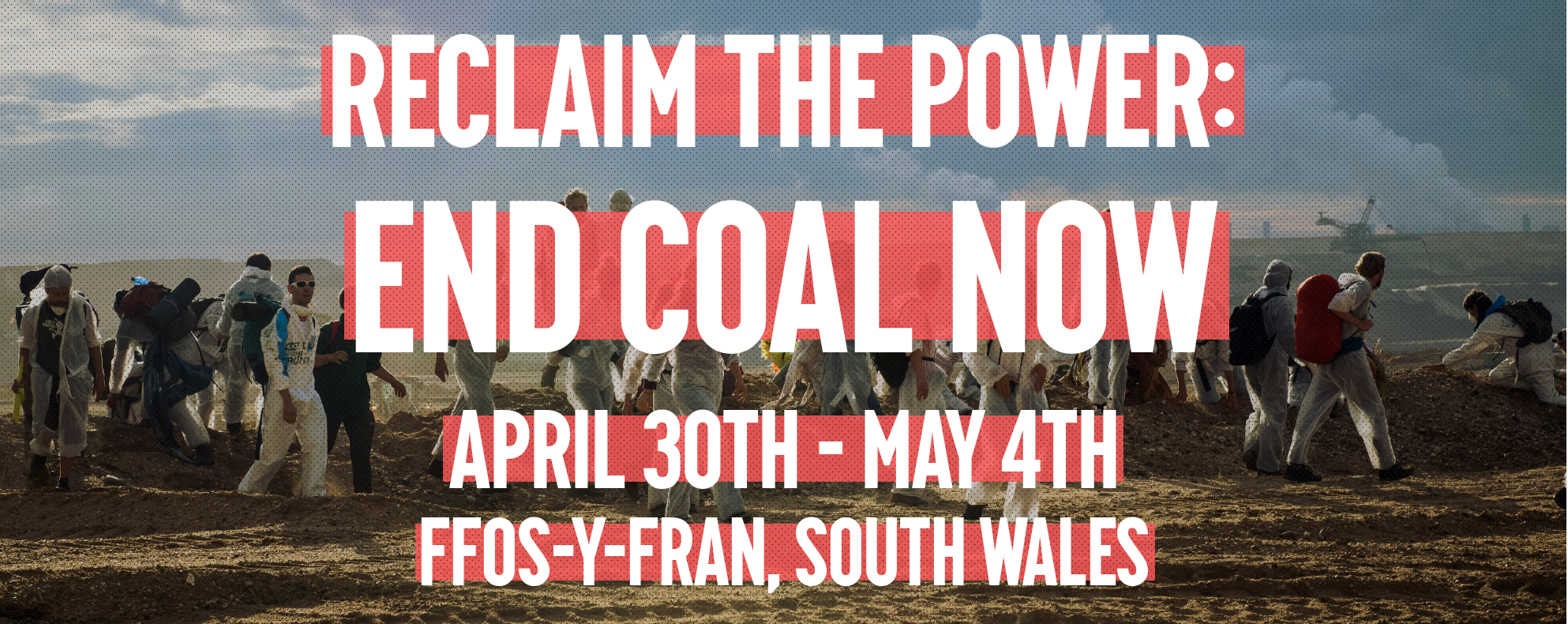
As part of the Groundswell year of action and inter­na­tion­al mobil­i­sa­tions tak­ing on the fos­sil fuel indus­try, this May, we’re going to shut down the UK’s largest open­cast coal mine – Ffos-y-fran in Wales.

As part of the Groundswell year of action and international mobilisations taking on the fossil fuel industry, this May, we’re going to shut down the UK’s largest opencast coal mine – Ffos-y-fran in Wales. It’s up to us to keep it in the ground – sign up to join us and get updates on plans.

What’s the Plan?

In col­lab­o­ra­tion with local resis­tance groups, we’ll set up camp near Ffos-y-fran and the site of the pro­posed new mine. We’ll build a camp and use this as a base to host a pro­gramme of work­shops and train­ings, and to build the kind of com­mu­ni­ty we want to see – just, demo­c­ra­t­ic and sus­tain­able. We will also be tak­ing mass action to shut down Ffos-y-fran. The camp will take place over the May bank hol­i­day week­end, from Sat­ur­day 30th April to Wednes­day 4th May and will come just before the Welsh Assem­bly elec­tions on May 5th. Fur­ther infor­ma­tion on the prac­ti­cal­i­ties of the camp is com­ing soon. Sign up to the mail­ing list for updates.

Why?

For near­ly a decade, the 11-mil­lion-tonne Ffos-y-fran mine has scarred the land­scape and the com­mu­ni­ty in South Wales. Now the cor­po­ra­tion respon­si­ble for Ffos-y-fran – Miller Argent – wants to crush local democ­ra­cy and resis­tance, and dig anoth­er vast coal mine just next door at Nant Llesg. Coal is the dirt­i­est fos­sil fuel and we can­not tran­si­tion to a just, demo­c­ra­t­ic and clean ener­gy sys­tem while we con­tin­ue to dig it up and burn it. We want to build on the strong tra­di­tion of mass action Cli­mate Camps in the UK, and the suc­cess of the Reclaim the Pow­er camps over the last few years. We have also been inspired by Ende Gelände and oth­er inter­na­tion­al coal resis­tance move­ments. Last year, the Welsh Assem­bly vot­ed for a mora­to­ri­um on open­cast coal min­ing, but the Gov­ern­ment have ignored them. Let’s make leav­ing fos­sil fuels in the ground a defin­ing polit­i­cal issue in Wales and the UK.

The reality of the UK’s coal industry exposed

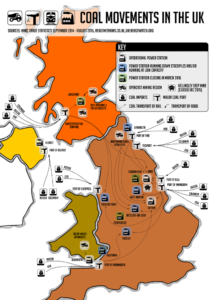
Map

A new report from the Coal Action Net­work expos­es the untold human and envi­ron­men­tal sto­ries of the coal sup­ply chain. Ditch Coal calls on the gov­ern­ment to phase out coal faster than its sug­gest­ed end of 2025. The extreme sit­u­a­tions sur­round­ing mines in Rus­sia, Colom­bia, the USA and the UK which sup­ply the UK’s pow­er sta­tions show that coal ener­gy is an extreme ener­gy. 24% of elec­tric­i­ty gen­er­at­ed in 2015 came from coal.

Grass roots group the Coal Action Net­work has worked with com­mu­ni­ties and envi­ron­men­tal activists from the four major coun­tries sup­ply­ing the UK’s coal. The report details the ignored social jus­tice issues caused by our addic­tion to coal.

Mining Impacts Abroad

Rus­sia sup­plies 42% of the coal import­ed to the UK. In Rus­si­a’s main coal pro­duc­ing region, the Kuzbass area of Siberia, min­ing is dev­as­tat­ing indige­nous com­mu­ni­ties and their cul­tures. Shor and Teleut peo­ples are being forced off their ances­tral lands, break­ing the con­nec­tion with their spir­i­tu­al homes, their cul­ture is being attacked and their lan­guage is fad­ing from use.

Com­pa­nies export­ing coal from Colom­bia have been impli­cat­ed in financ­ing para­mil­i­tary mass mur­ders, exe­cu­tions, and dis­ap­pear­ances. Whole vil­lages have been forcibly evict­ed to make way for mines, with insuf­fi­cient relo­ca­tion plans. Colom­bia pro­duces a third of the coal import­ed here.

In the USA, where 19% of the coal import­ed to the UK is from, extreme­ly destruc­tive min­ing oper­a­tions are destroy­ing huge swathes of land and ecosys­tems, and poi­son­ing local peo­ple. Moun­tain­top removal and dam­ag­ing deep min­ing process­es are used by com­pa­nies export­ing coal to the UK.

Although the UK gov­ern­ment has announced an inten­tion to phase out coal by 2025 Coal Action Net­work do not see this as some­thing to cel­e­brate. This time-frame and the phase out­’s many caveats show that the gov­ern­ment con­tin­ues to pri­ori­tise our high elec­tric­i­ty demands over oth­ers basic rights such as the safe­ty of ones home, the abil­i­ty to grow food, rights to health, free­doms of reli­gion and spir­i­tu­al­i­ty, and bio­di­ver­si­ty.

Mining in the UK

Since the gov­ern­men­t’s coal phase out announce­ment Durham based min­ing com­pa­ny Har­g­reaves have been grant­ed per­mis­sion to mine at Field House Coun­ty Durham. Miller Argent who run the UK’s biggest mine Ffos-y-Fran are appeal­ing a deci­sion against a new mine adja­cent to it. Five oth­er coal mine appli­ca­tions are still wait­ing a deci­sion. We need to stop coal min­ing in this coun­try.

Com­mu­ni­ties in the UK are fight­ing for their areas and against coal pow­er. As envi­ron­men­tal activists we should fol­low their exam­ple and stand up to the com­pa­nies involved and stand in sol­i­dar­i­ty with front-line com­mu­ni­ties. We can­not sim­ply wait for the gov­ern­ment to sort this out. The coal indus­try is spread wide across our island. Ditch Coal high­lights where the ports import­ing coal are, where pow­er sta­tions are sit­u­at­ed and which com­pa­nies are min­ing in the UK. There are nine pow­er sta­tions burn­ing coal with­out a clo­sure plan.

Coal pow­er used to be a main focus of the UK envi­ron­men­tal move­ment, it still is in Ger­many and remains an issue here. The Coal Action Net­work will be tour­ing the UK with a Russ­ian activist in the spring, you can catch a pre­view at the Earth First Win­ter Moot. The Coal indus­try’s cur­rent­ly in a posi­tion of change, where new tech­nol­o­gy needs to be imple­ment­ed or pow­er sta­tions closed. Join the Coal Action Net­work in fight­ing the indi­vid­ual pow­er sta­tions and work­ing with com­mu­ni­ties, let’s not rely on the gov­ern­ment to take these impor­tant actions.

The whole report can be viewed at www.coalaction.org.uk/ditchcoal as can the two page sum­ma­ry and info­graph­ics. Check out the web­site to see what we are up to or fol­low us on face­book.

actions in Paris at #COP21 & around the world

For all the lat­ests updates on cli­mate direct actions tak­en around the world, includ­ing in Paris par­al­lel to the UN cli­mate nego­ti­a­tions, see our twit­ter feed

For all the lat­ests updates on cli­mate direct actions tak­en around the world, includ­ing in Paris par­al­lel to the UN cli­mate nego­ti­a­tions, see our twit­ter feed

Save Sheffield Trees & Smithy Woods — campaign update

Protesters

5.11.15 Latest:

An inde­pen­dent pan­el aim­ing to resolve dis­agree­ments involv­ing the felling of trees in Sheffield has been set up.

It fol­lows thou­sands of peo­ple sup­port­ing a cam­paign to stop 12 trees being chopped down on Rustlings Road.

Com­mu­ni­ty group Save Sheffield Trees said it would wait to see the “terms of ref­er­ence” of the new pan­el.

A coun­cil spokesman said a sur­vey will be sent to res­i­dents when upgrad­ing works which affect trees.

If over half of respon­dents object, it will then be referred to the Inde­pen­dent Tree Pan­el.

After con­sid­er­ing the evi­dence, the pan­el will then pro­vide advice to the coun­cil about the pro­pos­als.

15 Sep­tem­ber 2015: Cam­paign­ers took their fight against con­tro­ver­sial tree felling to the door of Sheffield Coun­cil con­trac­tor Amey, which is car­ry­ing out the work.


A demon­stra­tion was held at the firm’s Olive Grove Road depot in Hee­ley yes­ter­day morn­ing.

Cam­paign­ers across the city con­tin­ue to call for a pause on felling while a for­mal tree strat­e­gy is devel­oped.

David Dil­ner, from Sheffield Tree Action Group, said: “Since the last tree forum our mem­ber­ship has grown from 200 to 800 – that demon­strates the lev­el of frus­tra­tion and it is grow­ing apace.

16 Sep­tem­ber 2015: Cam­paign­ers fight­ing felling in Sheffield have set up a camp near to 11 trees which have become the ‘sym­bol’ of the city-wide con­tro­ver­sy.

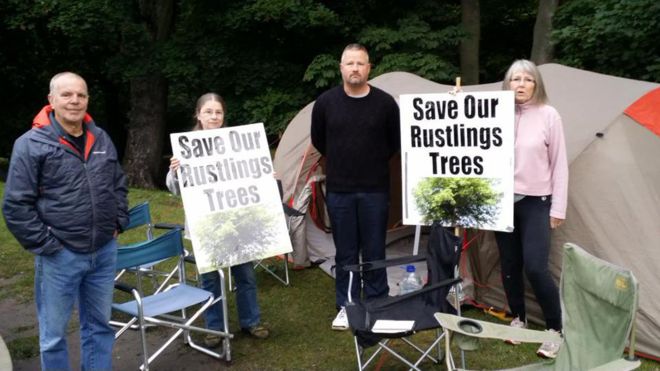
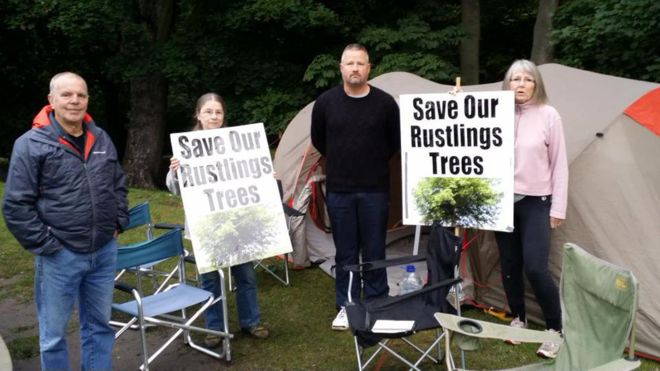
Mem­bers of the Sheffield Tree Action Group (STAG) pitched their tents in End­cliffe Park on Rustlings Road to pro­tect trees which are due to be felled as part of Sheffield City Coun­cil’s £2bn road improve­ment scheme.

The orig­i­nal dri­ve to save those 11 trees led to a 13,000-strong peti­tion, which trig­gered a debate in Sheffield Town Hall and was the spark behind calls for a for­mal city-wide tree strat­e­gy to be devel­oped by Sheffield Coun­cil.

Save Our Road­side Trees (SORT) cam­paign­er Calvin Payne, who was sleep­ing over in the tent last night, said all sup­plies had been donat­ed and passers-by were sup­port­ive.

He added: “This road is sym­bol­ic, although the cam­paign is city wide, and we do want a win here to inspire peo­ple across the city.”

Aims of the camp were to enable cam­paign­ers to take peace­ful action quick­ly if felling did begin and also to raise more aware­ness as protests spread across the city.

Protests have been held over the last few months in oth­er parts of the city to try and pre­vent trees being felled.

In June/July, STAG gath­ered more that 10,000 sig­na­tures on a peti­tion call­ing for the coun­cil to stall the plans until inde­pen­dent experts assessed the trees.
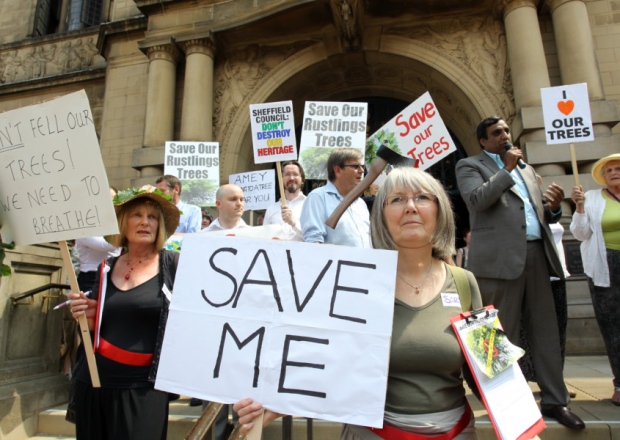
Protestors gathered outside Sheffield Town Hall to protest about the cutting down of Sheffield's trees.
Back­ground: With an esti­mat­ed two mil­lion trees – four for every per­son – Sheffield holds a strong claim to be Europe’s green­est city. But the South York­shire city’s tree-lined streets have become a bat­tle­ground in an angry row that has pit­ted res­i­dents against coun­cil high­ways offi­cials.

Con­trac­tors are assess­ing 36,000 road­side trees on behalf of Sheffield City Coun­cil to decide which need to be felled as part of a £2bn road improve­ment scheme.

About 2,000 have already been cut down since the Streets Ahead scheme was launched in 2012, although the coun­cil says it has replaced them all with younger trees and has plant­ed 50,000 extra trees in 17 new wood­lands.

But res­i­dents have launched their own grass­roots cam­paigns to defend the road­side trees, some of which are 100 years old, and the dis­pute is becom­ing increas­ing­ly heat­ed. A protest camp has been set up in a city park and oth­er res­i­dents have been rush­ing out of their homes to dis­rupt work­men arriv­ing in their streets.

“Res­i­dents across the city want to save these trees,” said ecol­o­gist and envi­ron­men­tal cam­paign­er David Garlovsky, a spokesman for the Sheffield Trees Action Group. “Eight or nine groups have sprung up in dif­fer­ent areas. These trees are there for our well­be­ing and cut­ting them down will increase pol­lu­tion. The coun­cil haven’t looked after these trees in the past and they now have a prob­lem on their hands, but there seems to be a blitz on now to cut down as many as pos­si­ble, as quick­ly as pos­si­ble.”

Only last week it was report­ed that the coun­cil was refus­ing to answer Free­dom of Infor­ma­tion requests from res­i­dents about the trees because the requests were con­sid­ered “vex­a­tious”.

Sheffield City Coun­cil apol­o­gised last week after Steve Robin­son, the head of high­ways, was secret­ly record­ed alleged­ly say­ing “we’re not inter­est­ed” in res­i­dents’ “non­sense” rea­sons for sav­ing indi­vid­ual trees.

Res­i­dents have spent a month under can­vas at a protest camp in the city’s End­cliffe Park to pro­tect 11 lime trees on neigh­bour­ing Rustlings Road, which they say are under threat. A peti­tion has attract­ed 10,000 sig­na­tures.

Louise Wilcock­son, who lives close to the park, said: “I walk past those trees around five or six times a day. We have to save them – not just for the peo­ple on this street but for the entire city.”

Res­i­dents in West­ern Road, Crookes, have also ral­lied around a Lon­don plane tree – one of sev­er­al plant­ed in mem­o­ry of war heroes. They say an inde­pen­dent sur­vey has found that the tree is in “rea­son­able health”, in con­trast with a contractor’s report say­ing it is a “safe­ty risk”.

Sheffield City Coun­cil says the aim of the Streets Ahead project is to upgrade the city’s roads, pave­ments and street light­ing as part of a Pri­vate Finance Ini­tia­tive project. Offi­cials say Sheffield is the green­est city in the UK and is in a “unique posi­tion” to car­ry out this “vital work”.

It also says an inde­pen­dent sur­vey iden­ti­fied that three-quar­ters of Sheffield’s street trees were dead, dan­ger­ous or dying, and need­ed replac­ing. The con­trac­tor, Amey, is work­ing to replace trees that fit cri­te­ria known as the “six Ds”, which also include those found to be dis­eased, dam­ag­ing or dis­crim­i­nat­ing – obstruct­ing safe pas­sage for prams and wheel­chairs.

The main rea­son that is being giv­en for felling these trees on the indi­vid­ual sur­vey reports is that they are dam­ag­ing the pave­ment, not that they are dis­eased or dying and that it is eas­i­er to remove the tree than find any oth­er way of mak­ing the pave­ment flat. Most of these trees are around 100 years old and are species such as Limes and Lon­don Panes, and so have a life expectan­cy of 300–400 years. These trees are teenagers, and will last for many more gen­er­a­tions if Sheffield City Coun­cil lets them.

I think some­one has con­fused a 2006–2007 sur­vey that said 75% of the trees are over-mature (which does not real­ly mean any­thing — 100 year old trees, with a 400 year life expectan­cy fall in to this cat­e­go­ry — it is a forestry term relat­ing to the val­ue of the tim­ber), and the lat­er sur­vey in 2012 cat­e­go­rized trees accord­ing to oth­er cri­te­ria (the 6 Ds), includ­ing that trees were dam­ag­ing pave­ments. I sus­pect this mis­un­der­stand­ing is the coun­cil’s of the sur­vey the com­mis­sioned, rather than the jour­nal­ist, as we have seen it else­where. They appear to be felling most of the city’s street trees based on mis­un­der­stand­ing a report…

Sheffield Tree Action Group


Anoth­er sim­i­lar fight in Sheffield ‑Take Action for Smithy Woods

If you are con­cerned about the loss of ancient wood­land, local green spaces, local wildlife and wildlife sites or wor­ried about inap­pro­pri­ate devel­op­ment in the green belt and ero­sion of eco­log­i­cal net­works then please object to this appli­ca­tion. Help us to Save Smithy Wood!

For background information about Smithy Wood and this case click here.

An out­line plan­ning appli­ca­tion has been sub­mit­ted by ‘Extra MSA’ group that pro­pos­es to build a new motor­way ser­vice area on Smithy Wood Ancient Wood­land and Local Wildlife Site close to Junc­tion 35 of the M1 in the Ecclesfield/Chapeltown area of Sheffield. The devel­op­ment includes a large fast food court, 80-bed hotel, petrol sta­tion and car park.

There is now a FINAL oppor­tu­ni­ty to com­ment on this appli­ca­tion fol­low­ing the sub­mis­sion of fur­ther mate­r­i­al by the devel­op­er. The more objec­tions that are received by the City Coun­cil, the more like­ly the appli­ca­tion is to be refused. It does not mat­ter if you have object­ed pre­vi­ous­ly – you can always refer to your pre­vi­ous sub­mis­sion or re-iter­ate your points.

You have until the Fri­day 13th Novem­ber to sub­mit your objec­tion to Sheffield City Coun­cil Plan­ning Dept. This is how to respond to the plan­ning appli­ca­tion.

Peruvian Land Defender Killed After 48-Hour Anti-Mining Strike

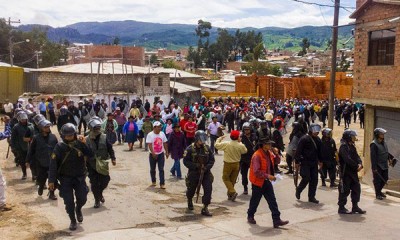
Sev­en rur­al com­mu­ni­ties orga­nized a gen­er­al strike that immo­bi­lized com­plete­ly the activ­i­ties in Puquio, cap­i­tal of Lucana province, and result­ed in the unfor­tu­nate death of a young mem­ber of the Cccol­lana com­mu­ni­ty: Erick Men­don­za Tumaylle, age 22.

Octo­ber 29th, 2015

Sev­en rur­al com­mu­ni­ties orga­nized a gen­er­al strike that immo­bi­lized com­plete­ly the activ­i­ties in Puquio, cap­i­tal of Lucana province, and result­ed in the unfor­tu­nate death of a young mem­ber of the Cccol­lana com­mu­ni­ty: Erick Men­don­za Tumaylle, age 22. The con­flict occurred at the site of one infor­mal min­ing project where tox­ic run-offs lead direct­ly into fields used by the com­mu­ni­ty for agri­cul­ture.

Lead­ers of the com­mu­ni­ty have report­ed Juan Par­i­ona of Ccol­lao injured as a result of being held hostage by the infor­mal min­ing com­pa­ny in the San Andrés zone.

This theme of con­flict is a recur­ring one through­out the entire south­ern ter­ri­to­ries of Ayacu­cho, Ica, and parts of Are­quipa. Some com­mu­ni­ty mem­bers are suing Lay­tau­ma Cor­po­ra­tion for being the main stor­age facil­i­ty for explo­sives, for being the main source of income for infor­mal tran­sient work­ers, and for being the sole pur­chas­er of feed pro­duced in San­cos dis­trict.

Peo­ple are wor­ried about how thou­sands of infor­mal work­ers are affect­ing the Yuar­iviri lagoon, the many springs and water sources. It has been made appar­ent that the cen­ter storm of this con­flict has moved to this zone of the coun­try.

by Obser­va­to­rio de Con­flic­tos Mineros en el Perú /  Con­flic­tos Mineros

trans­lat­ed by Earth First! Newswire

Anti-Dam Activists Celebrate Two Years of Blockades in Malaysia

On Octo­ber 23rd 2015, indige­nous com­mu­ni­ties from around the world gath­ered on the banks of the Baram Riv­er in Sarawak, Malaysia in the con­text of the sec­ond year anniver­sary of the indige­nous-led block­ades against the pro­posed Baram Dam.

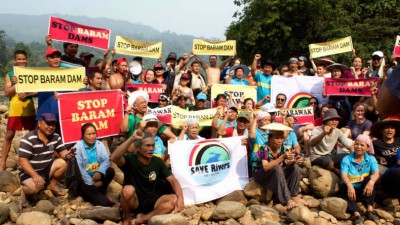
On Octo­ber 23rd 2015, indige­nous com­mu­ni­ties from around the world gath­ered on the banks of the Baram Riv­er in Sarawak, Malaysia in the con­text of the sec­ond year anniver­sary of the indige­nous-led block­ades against the pro­posed Baram Dam. Two years ago indige­nous com­mu­ni­ties set up two block­ades and chased work­ers and researchers from the site. The works on the dam have come to a stand­still and last month the gov­ern­ment of Sarawak announced a mora­to­ri­um.

Indige­nous anti-dam activists from Indone­sia, the Philip­pines, Cam­bo­dia, Brazil, the US, Hon­duras, and from around Malaysia unit­ed at the block­ades to stand in sol­i­dar­i­ty with the resis­tance against the Baram Dam and to strength­en ties between their com­mu­ni­ties. The week-long event is called the World Indige­nous Sum­mit on Envi­ron­ment and Rivers, WISER Baram 2015, and was host­ed by the grass­roots net­work SAVE Rivers.

Dur­ing cel­e­bra­tions at the two block­ades, the pro­posed dam site, as well as at a con­fer­ence in the town of Miri, the par­tic­i­pants were unit­ed by the sim­i­lar­i­ties between their strug­gles. “I have gained a lot of expe­ri­ence from all of the del­e­gates. And with such infor­ma­tion, I am con­fi­dent enough such expe­ri­ences will be fun­da­men­tal to us – the Baram Peo­ple – and our strate­gies to con­tin­ue to fight and stop the pro­posed Baram Dam,” said James Nyu­rang, who host­ed the del­e­gates at his vil­lage.

Accord­ing to Berta Cáceres, 2015 Gold­man Prize win­ner from Hon­duras, “this sum­mit on indige­nous peo­ples and rivers has a spe­cial val­ue in that its actions give strength to the his­toric resis­tance of our peo­ples and makes vis­i­ble the grave aggres­sion and con­flict gen­er­at­ed by the pri­va­ti­za­tion of rivers and the con­struc­tion of dams with­in Indige­nous com­mu­ni­ties and regions.”

The dec­la­ra­tion also calls on gov­ern­ments and insti­tu­tions to stop pre­sent­ing dams as cli­mate neu­tral, and rec­og­nize that dams emit large amounts of green­house gas­es, includ­ing methane.

Par­tic­i­pants in the sum­mit col­lec­tive­ly pro­duced a dec­la­ra­tion that acknowl­edges the wide­spread suf­fer­ing and destruc­tion caused by dams, and stress­es the impor­tance of obtain­ing Free, Pri­or, and Informed Con­sent from com­mu­ni­ties impact­ed by dam build­ing. It urges all stake­hold­ers to act in full account­abil­i­ty, trans­paren­cy, and com­pli­ance of all human rights prin­ci­pals and val­ues.

The indige­nous defense of the Baram riv­er stands unit­ed with oth­er com­mu­ni­ties’ strug­gles for land, liveli­hood, spir­i­tu­al­i­ty, iden­ti­ty, and com­mu­ni­ty cohe­sion.

protest against British Columbia Hydro Dawson Creek dam — unconnected person wearing anonymous mask gets shot dead

Sept 23, 2015

Sept 23, 2015

Ter­ry Had­land, a Peace Riv­er farmer, says he should have got the police bul­let that killed a man wear­ing a Guy Fawkes mask out­side a Site C open house this sum­mer.

“He cre­at­ed a diver­sion so I could get away,” Mr. Had­land told The Globe and Mail in an inter­view. “He stepped up and took that shot for me, that’s for sure.”

RCMP were called to the open house in Daw­son Creek on July 16 after get­ting calls about a man caus­ing a dis­tur­bance at the British Colum­bia Hydro pub­lic infor­ma­tion ses­sion.

One day after the hack­er group Anony­mous vowed to “avenge one of our own” fol­low­ing the shoot­ing, the group is claim­ing to have crashed parts of the RCMP web­site on Sun­day morn­ing.

A Twit­ter account asso­ci­at­ed with the glob­al activist group has post­ed pho­tos show­ing the Daw­son Creek RCMP web­site serv­er sta­tus list­ed as “down.”

- See more at: http://www.alaskahighwaynews.ca/dawson-creek/police-mum-on-link-between-police-shooting-anonymous-group‑1.2005056#sthash.SbEOrEJA.dpuf

Mr. Had­land said he was the man caus­ing trou­ble, but he left before police arrived, and offi­cers con­front­ed anoth­er man, who was report­ed­ly car­ry­ing a knife and wear­ing the trade­mark mask of the hack­tivist group Anony­mous. Moments lat­er, shots were fired, and James McIn­tyre, a dish­wash­er at Le’s Fam­i­ly Restau­rant, was dead out­side the Stone­bridge Hotel’s Fixx Urban Grill.

In response to the shoot­ing, Anony­mous promised ret­ri­bu­tion, sub­se­quent­ly post­ing a 2014 Trea­sury Board memo about Cana­di­an Secu­ri­ty Intel­li­gence Ser­vice fund­ing, and threat­en­ing to leak more mate­r­i­al.

One day after the hack­er group Anony­mous vowed to “avenge one of our own” fol­low­ing the shoot­ing, the group is claim­ing to have crashed parts of the RCMP web­site on Sun­day morn­ing.

A Twit­ter account asso­ci­at­ed with the glob­al activist group has post­ed pho­tos show­ing the Daw­son Creek RCMP web­site serv­er sta­tus list­ed as “down.”

- See more at: http://www.alaskahighwaynews.ca/dawson-creek/police-mum-on-link-between-police-shooting-anonymous-group‑1.2005056#sthash.SbEOrEJA.dpuf

One day after the hack­er group Anony­mous vowed to “avenge one of our own” fol­low­ing the shoot­ing, the group is claim­ing to have crashed parts of the RCMP web­site on Sun­day morn­ing.

A Twit­ter account asso­ci­at­ed with the glob­al activist group has post­ed pho­tos show­ing the Daw­son Creek RCMP web­site serv­er sta­tus list­ed as “down.”

- See more at: http://www.alaskahighwaynews.ca/dawson-creek/police-mum-on-link-between-police-shooting-anonymous-group‑1.2005056#sthash.hTyGNWmh.dpuf

Anony­mous has already begun its retal­i­a­tion cam­paign, knock­ing the main RCMP web­sites offline for sev­er­al hours on Sun­day (19 July).

This is part of the group’s cam­paign to “remove the RCMP cyber infra­struc­ture from the Inter­net” as it calls on mem­bers to “march, cre­ate and sign peti­tions, hack, dox [until] all demand and jus­tice is met”.

The hack­i­tivst col­lec­tive has also offered to raise funds for the vic­tim’s bur­ial.

Doxxing

The group lead­ing the cam­paign — Oper­a­tion Anon Down — also tweet­ed on Mon­day (20 July) that it had accessed doc­u­ments marked “secret” inside the Cana­di­an gov­ern­ment, warn­ing: “It’s not just a DDoS op any­more kid­dos.”

#Anon­Down has accessed docs marked “secret” inside Cana­di­an gov­ern­ment. It’s not just a DDoS op any­more kid­dos. More tomor­row. Night all.
— Oper­a­tion Anon Down (@OpAnonDown) July 20, 2015

In an emailed state­ment released over the week­end, Anony­mous vowed to “iden­ti­fy the RCMP offi­cer involved, thor­ough­ly dox him — and release that dox on the Inter­net. Because the world has a right to know every detail about killer cops.”

Anony­mous has a patchy his­to­ry with “doxxing” police offi­cers accused of shoot­ing mem­bers of the pub­lic how­ev­er, with one mem­ber of Anony­mous hav­ing incor­rect­ly iden­ti­fied the offi­cer accused of shoot­ing Michael Brown in Fer­gu­son last year.

Mr. Had­land, 66, said he did not know Mr. McIn­tyre, 48, and regrets that his actions inad­ver­tent­ly brought police into con­flict with him. “It’s trag­ic, that’s for damn sure,” he said. “They were try­ing to get me.”

Mr. Had­land said if police had found him instead of Mr. McIn­tyre, the inci­dent would have end­ed peace­ful­ly. “I would have obeyed them,” he said.

Mr. Had­land, who lives off the grid on a farm in the Peace Riv­er dis­trict, said he went to the open house to protest against the con­tro­ver­sial Site C dam.

“I’d been plan­ning it for a cou­ple of weeks,” he said. “I walked into the room … I thought, ‘I’m just going to push them a bit.’”

Anonymous

Mr. Had­land said BC Hydro offi­cials were talk­ing to mem­bers of the pub­lic at infor­ma­tion tables cov­ered with pam­phlets, maps and posters.

“I flipped a cou­ple [of tables],” he said. “I ripped up the rest of the maps …. They had plac­ards. … I start­ed break­ing up those.”

Mr. Had­land said he was quick­ly sur­round­ed by BC Hydro staff, but the con­fronta­tion did not become vio­lent.

“They didn’t try to push me,” he said. “I made my state­ment and I walked out.”

Mr. Had­land said he assumes 911 calls were made dur­ing his protest, but added that if any­one report­ed a vio­lent inci­dent, then the police were mis­in­formed and may have arrived expect­ing seri­ous trou­ble.

“It was all very peace­ful,” he said. “The police could have showed up and been ami­ca­ble.”

When it was sug­gest­ed that tip­ping over tables and tear­ing up posters might seem threat­en­ing to some, Mr. Had­land agreed.

“Oh, it could have been,” he acknowl­edged.

Mr. Had­land said he passed with­in metres of Mr. McIn­tyre in the park­ing lot but did not see a knife or a mask.

“I thought he was a BC Hydro per­son [because] he kept turn­ing away and try­ing to hide his face,” he said.

Mr. Had­land was wor­ried police were com­ing, so he jumped in his vehi­cle and drove away with­out look­ing back. He said he went to the RCMP the next day, iden­ti­fied him­self as the man who dis­rupt­ed the meet­ing, and told police he was con­cerned some­one had made a 911 call “that wasn’t valid” because his protest was not vio­lent.

Arthur Had­land, a for­mer direc­tor of Peace Riv­er Region­al Dis­trict, con­firmed his cousin was the man who dis­rupt­ed the Site C open house.

The Inde­pen­dent Inves­ti­ga­tions Office (IIO) of B.C. is inves­ti­gat­ing the police shoot­ing of Mr. McIn­tyre.

“It is not our prac­tice to pro­vide spe­cif­ic details about an inves­ti­ga­tion while it is still active – what I can say is that while we obtain all acces­si­ble and avail­able infor­ma­tion we believe is rel­e­vant to the IIO inves­ti­ga­tion, our focus is on the actions of the police offi­cers,” Kel­lie Kil­patrick, an IIO spokesper­son said in an e‑mail.

“Since our inves­ti­ga­tion of the ini­tial dis­tur­bance is a par­al­lel inves­ti­ga­tion to that of the IIO’s inves­ti­ga­tion which is still ongo­ing, it would be inap­pro­pri­ate for me to com­ment at this time,” Cor­po­ral Dave Tyre­man of the RCMP’s North Dis­trict said in a sep­a­rate e‑mail.

BC Hydro spokesman Dave Con­way declined to com­ment on Mr. Hadland’s ver­sion of events.

July 2015:

B.C. Hydro Site C protest in Van­cou­ver can­celled due to con­cerns about vio­lence

Ral­ly orga­niz­ers say they’re con­cerned about reac­tion to the recent death of a man in Daw­son Creek

Fur­ther info

Indigenous activists celebrate bitter victory over rainforest dam moratorium

22nd Octo­ber 2015

22nd October 2015

As indige­nous activists oppos­ing hydropow­er dams on their ter­ri­to­ries gath­er this week­end in the rain­forests of Sarawak, Malaysia, they have good news to cel­e­brate: a giant dam on the Baram riv­er has been put on hold. But the forests are still being logged, local peo­ple have been stripped of land rights, and a pro­gramme of 12 giant dams is still offi­cial pol­i­cy.

Indige­nous anti-dam cam­paign­ers from Brazil, India, Hon­duras, and across South­east Asia are gath­er­ing on the island of Bor­neo to coor­di­nate cam­paigns on the impact of large hydro­elec­tric dams.

The World Indige­nous Sum­mit on Envi­ron­ment and Rivers is now under way in the town of Miri on Baram Riv­er in the Malaysian state of Sarawak — where rain­for­est dams have already drowned thou­sands of square kilo­me­tres of for­est.

Local indige­nous peo­ple belong­ing to Penan, Kenyah, Kayan and oth­er groups have led a two-year block­ade against the pro­posed Baram hydropow­er dam sit­ed on the upper reach­es of the Baram Riv­er, stag­ing encamp­ments at the dam site itself and at a site along its access road.

“We are main­tain­ing the block­ade and we are going to cel­e­brate the anniver­sary on the 23–24 Octo­ber”, said Peter Kallang, con­fer­ence orga­niz­er and coor­di­na­tor of SAVE Rivers Sarawak, a net­work of groups oppos­ing dams.

Baram dam on hold — but the logging rages on

Activists have rea­son to cel­e­brate. In a tele­vi­sion address in July Sarawak’s Chief Min­is­ter Tan Sri Ade­nan Satem declared a mora­to­ri­um on the Baram Dam project. The 400-square-kilo­me­ter (154-square-mile) reser­voir of the 1,200-megawatt Baram Dam would dis­place up to 20,000 peo­ple and sub­merge their lands.

So good news, cer­tain­ly. But despite the mora­to­ri­um, clear­ance of the vast Baram Dam site is pro­ceed­ing quick­ly. The gov­ern­ment has already extin­guished local land rights and issued log­ging per­mits to large Malaysian log­ging com­pa­nies, and log­ging has begun, as Kallang explains:

“The log­gers are going all out to take this oppor­tu­ni­ty to cut every­thing in the way. This license for log­ging is a legal license giv­en by the gov­ern­ment under what they call the sal­vage log­ging … under sal­vage log­ging they cut any­thing and every­thing, even the small trees about six inch­es in diam­e­ter.”

Mean­while it appears that the mora­to­ri­um deci­sion may have been forced by sim­ple eco­nom­ics: an inabil­i­ty to raise the bil­lions of dol­lars need­ed for its con­struc­tion.

In the case of the 2,400-megawatt Bakun Dam, which became oper­a­tional in 2011 pri­vate financ­ing fell short and British-Aus­tralian min­ing giant Rio Tin­to backed out of a pro­posed alu­mini­um smelter. The state resort­ed to loan­ing most of the $2.3 bil­lion con­struc­tion cost from state pen­sion funds.

The con­tro­ver­sial dam, Asi­a’s sec­ond largest out­side Chi­na, dis­placed 10,000 peo­ple and sub­merged 700 square kilo­me­tres (270 square miles) of rain­for­est and farm­land. But now it is run­ning at well under half of its capac­i­ty three years after it came online: it is actu­al­ly gen­er­at­ing just 900MW due to lack of domes­tic ener­gy demand.

A plan to export Bakun’s ener­gy to the Malaysian main­land via under­sea trans­mis­sion lines has been shelved. Activists are also keen to high­light the poor record of elec­tric­i­ty gen­er­a­tion by Sarawak’s Batang Ai dam.

But there’s plenty more dams planned for Sarawak’s rivers

The Baram Dam is only the fourth pro­posed devel­op­ment of twelve large dams slat­ed to be con­struct­ed by 2030 as part of a broad­er hydropow­er-devel­op­ment plan called the Sarawak Cor­ri­dor of Renew­able Ener­gy (SCORE). And there’s no sign that the project is to be aban­doned.

Next in line for con­struc­tion is the 1,295 megawatt, 204-meter (669-foot) high Baleh Dam, which so far has attract­ed less oppo­si­tion because it is not sched­uled to dis­place com­mu­ni­ties. Over the long term, 50 dams will be required to real­ize the Malaysian gov­ern­men­t’s tar­get of 20 gigawatts of hydropow­er capac­i­ty in Sarawak.

“The essence of SCORE is to indus­tri­alise the state by lever­ag­ing on Sarawak’s com­pet­i­tive advan­tage in bulk hydropow­er”, Sarawak’s Pub­lic Util­i­ties Min­is­ter Datuk Amar Haji Awang Ten­gah Ali Hasan said in a speech at the Inter­na­tion­al Hydropow­er Asso­ci­a­tion’s (IHA) con­fer­ence in Chi­na last July.

Hasan argued that the plan would bring jobs and eco­nom­ic devel­op­ment to Sarawak, par­tic­u­lar­ly it’s remote areas, accord­ing to the Bor­neo Post. Mongabay con­tact­ed the IHA for its views on SCORE and the Baram mora­to­ri­um but it declined to com­ment.

SCORE, born in 2006 out of the Ninth Malaysia Plan, a gov­ern­ment roadmap for devel­op­ment by 2020, rep­re­sents a for­mi­da­ble scheme to replace indige­nous lands and trop­i­cal rain­forests with heavy indus­try like steel, glass, alu­mini­um, and agri-busi­ness plan­ta­tions.

How­ev­er, the aim to indus­tri­al­ize might not be going accord­ing to plan. “It is all talk­ing non­sense”, said Kallang, explain­ing that Sarawak Ener­gy, the nation­al­ized state ener­gy sup­pli­er that man­ages all of Sarawak’s elec­tric­i­ty, has repeat­ed­ly failed to dis­close a list of com­pa­nies that have signed on to pur­chase elec­tric­i­ty from the 12 planned dams. Kallang sus­pects this is because no such list exists.

Mean­while Sarawak’s 944-megawatt Murum Dam is com­plete but has yet to become oper­a­tional. Kallang explained that con­tro­ver­sy still sur­rounds the project, with dis­placed Penan hunter-gath­er­er indige­nous com­mu­ni­ties claim­ing they have not been paid the com­pen­sa­tion that the Sarawak gov­ern­ment promised them. But anoth­er prob­lem, sure­ly, is that there is no demand for its pow­er.

Still no final decision on Baram dam

Activists remain cau­tious about the Baram mora­to­ri­um and have decid­ed to main­tain their block­ade pend­ing fur­ther con­fir­ma­tion. Kallang thinks the state elec­tions next year might have influ­enced the deci­sion to put the dam on hold. “When politi­cians talk we have to know whether they are real­ly gen­uine or they are fish­ing for votes”, he said.

Sarawak Ener­gy spokesper­son Aha­di­ah Zamhari told Mongabay that a final deci­sion on the dam’s con­struc­tion has yet to be made. “The Chief Min­is­ter of Sarawak has imposed a mora­to­ri­um to all par­ties on mat­ters relat­ed to Baram hydropow­er project pend­ing the gov­ern­men­t’s final deci­sion on the project”, he stat­ed in an email, while declin­ing to be inter­viewed.

But Rebekah Shirley, a researcher with the Ener­gy and Resources Group at Uni­ver­si­ty of Cal­i­for­nia, Berke­ley, is cau­tious­ly opti­mistic: “I see this recent mora­to­ri­um on works in Baram as pro­gres­sive. It is hope­ful­ly a sig­nal of new lead­er­ship that is keen on lis­ten­ing to the con­cerns of stake­hold­ers — albeit stake­hold­ers that should already be a legit­i­mate part of the deci­sion mak­ing process.”

Shirley’s work with her Berke­ley col­league Daniel Kam­men show­ing the poten­tial of small-scale ener­gy options such as solar and micro-hydro to meet Sarawak’s ener­gy needs with­out build­ing dams has influ­enced the gov­ern­ment.

Their research appears to pro­vide a cost-effec­tive alter­na­tive to big dams with the added advan­tage of reduced envi­ron­men­tal and social con­flicts. After meet­ing with Kam­men, Kallang, and oth­ers in June, Sarawak Chief Min­is­ter Ade­nan said in a tele­vi­sion inter­view last month that he would look into these alter­na­tives.

But in recent years a num­ber of rev­e­la­tions have exposed cor­rup­tion at the high­est lev­els of Sarawak’s Gov­ern­ment. The busi­ness affairs of the for­mer Chief Min­is­ter and cur­rent state Gov­er­nor, Taib Mah­mud, have par­tic­u­lar­ly been in the spot­light. Kallang explained Taib’s links to dam con­struc­tion, which have been well doc­u­ment­ed by the news media:

“If the dams, espe­cial­ly Baram and Baleh are can­celled, it will affect Taib’s com­pa­ny very much because the sole sup­pli­er of cement in the whole of Sarawak is a com­pa­ny called CMS [Cahya Mata Sarawak] which is owned 90% by the Taib fam­i­ly… Also Sarawak Cable is owned by his son, so they are going to sup­ply all the cable required for the trans­mis­sion lines.”

The struggle is global

Dam-build­ing remains wide­spread world­wide. The Inter­na­tion­al Hydropow­er Asso­ci­a­tion in its 2015 report said: “We pub­lish this report at a time of sig­nif­i­cant hydropow­er devel­op­ment, with 37.4 GW of new installed capac­i­ty in 2014 bring­ing the glob­al total to 1,036 GW.”

As part of the con­ver­gence this week, the inter­na­tion­al del­e­ga­tion of activists is due to join vil­lagers on the block­ades in sol­i­dar­i­ty, and over a hun­dred peo­ple are expect­ed to stay in the camp, extend­ed for the occa­sion, at kilo­me­ter 15 of the dam’s access road. “They are going to vis­it the dam site and from there they will vis­it the vil­lages which could be flood­ed if the dam is built. We will stay overnight on the block­ade”, Kallang said.

Anni­na Aeber­li, who is help­ing to orga­nize the events as a cam­paign­er with the Swiss NGO Bruno Manser Fonds, explained the idea behind the ini­tia­tive: “We were real­ly think­ing about what we can do to strength­en [the vil­lagers’] spir­its to fight. So then we came back to this idea to bring inter­na­tion­al dam activists to the Baram area, so that they can show sol­i­dar­i­ty and moti­vate the peo­ple.”

Though the Baram Dam protests appear to have been effec­tive, on Octo­ber 26 Kallang is due in court, where he faces fines and even jail-time in a suit brought by Sarawak Ener­gy against him and 22 oth­ers for alleged­ly chas­ing the com­pa­ny away from the Baram work­site.

What­ev­er the court out­come, Kallang is com­mit­ted to the strug­gle long-term and rec­og­nizes the glob­al dimen­sions of the issue as indige­nous activists bat­tling dams abroad make the long jour­ney to Sarawak:

“We would like to invite them to share their expe­ri­ence in fight­ing against dams. And with this we hope to build bet­ter sol­i­dar­i­ty with them.”

Videos and sources here
 

Ahousaht First Nation Blockade Open Net Salmon Farm

Clayoquot Sound
An aer­i­al view of Clay­oquot Sound, just north of Tofi­no, B.C., is shown in this hand­out pho­to. The Ahousaht First Nation are protest­ing an open-net salmon farm in the area.

Sep­tem­ber 11th, 2015

TOFINO, B.C. — Mem­bers of a Van­cou­ver Island First Nation are vow­ing to risk arrest rather than allow an inter­na­tion­al fish farm­ing com­pa­ny to anchor an open-net salmon farm north of Tofi­no.

Mem­bers of the Ahousaht First Nation say they set up a boat block­ade Wednes­day at the site of the new farm, owned by Nor­we­gian-based Cer­maq.

The Ahousaht say the com­pa­ny holds 17 salmon farm tenures in Clay­oquot Sound and applied for two new tenures in the same area last year.

The First Nation believes the appli­ca­tions sig­nal a new round of fish farm expan­sion on the West Coast, with the Ahousaht Fish Farm Com­mit­tee pre­dict­ing a four-fold increase in the indus­try over the next 15 years.

Pro­test­ers oppose any new fish farms in the area.

They fear pos­si­ble dis­eases bred in fish with­in the open nets could be passed to clam beds or wild salmon trav­el­ling to and from near­by spawn­ing grounds.

http://www.ctvnews.ca/canada/first-nations-blockade-halts-anchoring-of-tofino-area-salmon-farm‑1.2556934

First Nations blockade Clayoquot Sound salmon farm

This is a media release from UBCIC.

Mem­bers of Ahousaht First Nations are cur­rent­ly blockad­ing the attempts of Cer­maq to install a new open-net salmon farm at Yaak­swi­is, north of Tofi­no BC.

On Wednes­day Ahousaht mem­bers took boats out to the site and pre­vent­ed Cer­maq from anchor­ing the con­tro­ver­sial new farm, which was assem­bled off-site and towed to Yaak­swi­is.

“Wild salmon are in decline every­where salmon feed­lots are in oper­a­tion around the world. We will stop any future activ­i­ty at this loca­tion”, said Tom Paul, an Ahousaht mem­ber. “We will stay out there until we are moved—we will be arrest­ed if need be” he added.

The Ahousaht Fish Farm Com­mit­tee strong­ly opposed any fish farms at the Yaak­swi­is loca­tion, due to con­cerns about prox­im­i­ty to rich seafood resources such as clam beds and wild salmon rivers.

Cer­maq is a Nor­we­gian-based cor­po­ra­tion recent­ly acquired by Mit­subishi. They cur­rent­ly hold 17 salmon farm tenures in Clay­oquot Sound, which was the site of major log­ging con­fronta­tions in 1993.

Cer­maq applied in 2014 for two new tenures in Ahousaht First Nations ter­ri­to­ries. The Depart­ment of Fish­eries and Oceans approved one appli­ca­tion in late July this year, and one was refused.

The salmon farm­ing indus­try is poised to increase four-fold on the BC coast by 2030. These new appli­ca­tions are the first round of this major expan­sion.

http://www.vancouverobserver.com/news/first-nations-blockade-clayoquot-sound-salmon-farm