Creedy Valley Protection Group

Gleesons Devel­op­ments are sub­mit­ting plans to devel­op part of a rur­al Devon val­ley, build­ing 330 homes on slop­ing farm­land abut­ting a flood­plain that floods every year.

Gleesons Devel­op­ments are sub­mit­ting plans to devel­op part of a rur­al Devon val­ley, build­ing 330 homes on slop­ing farm­land abut­ting a flood­plain that floods every year. The val­ley is beau­ti­ful, nar­row lanes, hedgerows, Devon banks, a home to many pro­tect­ed species includ­ing bats, dormice, owls, bad­gers, cray­fish, buz­zards. The loss of coun­try­side, farm­land and wildlife habi­tat to serve a sin­gle landown­er’s bank bal­ance and the need to tick box­es by the coun­cil. https://www.facebook.com/Creedy-Valley-Protection-Group-1994240084134661/?fref=nf 

sign up for The Big Burn anti-incineration carnival, near Stroud

THE BIG BURN!

24 hours after sig­nif­i­cant con­struc­tion activ­i­ty begins at Javelin Park we will be con­verg­ing for The Big Burn! Come along and shield Hares­field at a com­mu­ni­ty-led car­ni­val of anti-incin­er­a­tion rev­el­ry. All are warm­ly invit­ed to join Glouces­ter­shire in a show of front-line pro­tec­tion against those that threat­en us and our envi­ron­ment. Sign up here to ensure you receive an invi­ta­tion to this most poignant of par­ties!

All those signed-up will, when the time beck­ons, receive a text mes­sage with a start time. You’ll be want­i­ng to pack a par­ty-bag in advance so you’ll be ready when the time comes. Imag­ine being the only one at the par­ty with­out a cos­tume. Only jok­ing, you won’t be allowed in if you’re not in fan­cy dress. No that’s not true either. This is a com­mu­ni­ty-led event and is open to all. Chil­dren most-def­i­nite­ly includ­ed!

Javelin Park is eas­i­ly acces­si­ble from Stroud and Glouces­ter by car.

There will most like­ly be free trans­port run­ning to the Big Burn. Please con­tact honeybuzzard@riseup.net to request or offer a lift!

Take Note!:

The Big Burn! will be a show of com­mu­ni­ty pro­tec­tion against the threat of harm to our health and envi­ron­ment posed by the Hares­field Incin­er­a­tor. This indus­try is sup­port­ed by the state and there­fore there will almost cer­tain­ly be a police-pres­ence. Know your rights, read this pam­phlet (opens in new tab) and don’t be intim­i­dat­ed. The Big Burn! will be a inclu­sive, friend­ly space and we won’t be bul­lied.

See you at the par­ty, it’ll be cookin’…!

Direc­tions, more details includ­ing what to bring and not to bring and TO SIGN UP, here

some Stroud protest present & past (location of 2016 EF! Winter Moot)

Stroud was an appro­pri­ate loca­tion for this year’s Win­ter Moot, with a proud his­to­ry of protest past and present.


Stroud was an appro­pri­ate loca­tion for this year’s Win­ter Moot, with a proud his­to­ry of protest past and present.

The venue for the Moot is the Cen­tre for Sci­ence & Art, itself saved by the Stroud Cam­paign Against The Ringroad in the 70s. In 1980 there were plans to demol­ish some 17th & 18th cen­tu­ry list­ed build­ings on the High Street — a com­bi­na­tion of roof top occu­pa­tions and oth­er strate­gies saved them, and the road is now pedes­tri­anised.

In 1989 the Save The Trees Cam­paign took on the coun­cil’s road-widen­ing scheme (for a Tesco’s). A mid­night raid to fell thir­teen trees in Strat­ford Park was foiled when local peo­ple got wind of the ‘secret’ and attached them­selves to the trees. The trees are still there, and instead a traf­fic calm­ing scheme was devel­oped, result­ing in less crash­es.

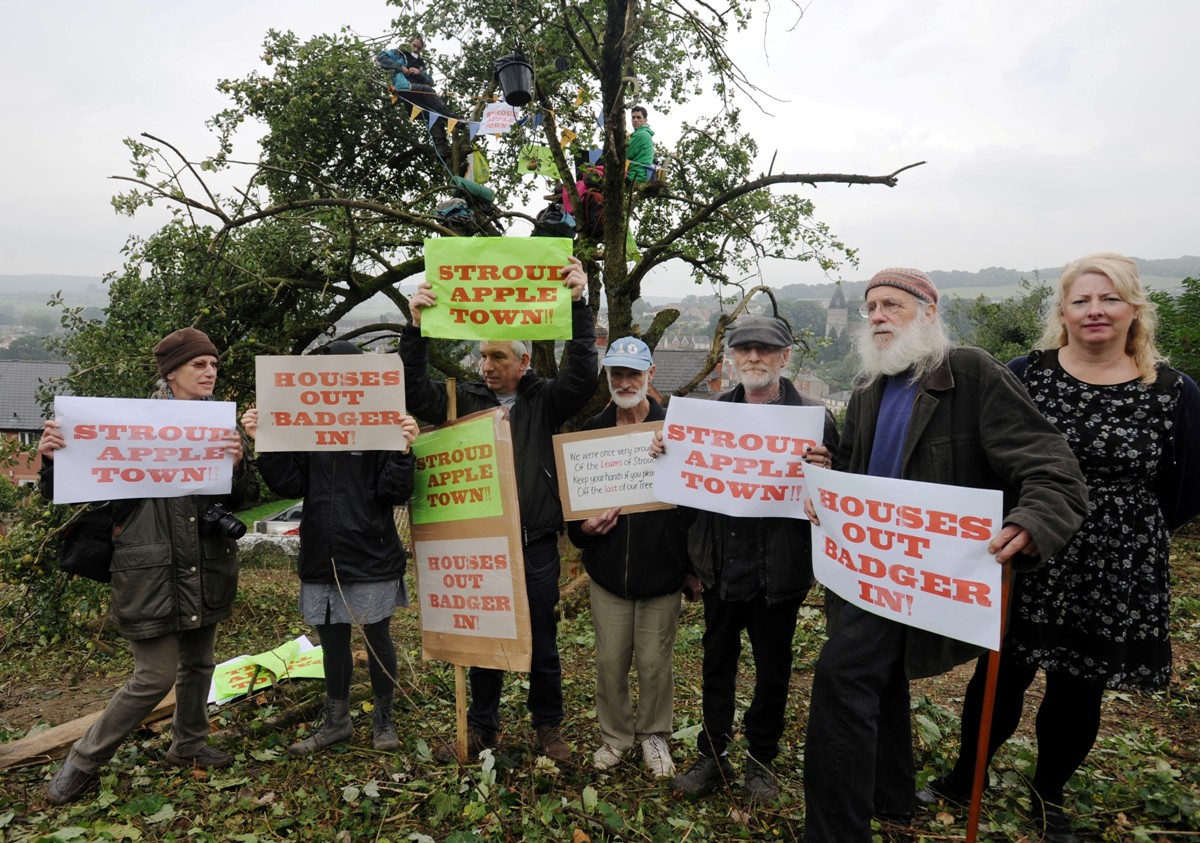
In 2013 a cam­paign was fought against devel­op­ers with an apple tree being occu­pied for 6 days. A local who gave us a tour dur­ing the Moot of places fought for or saved by protests said: “There was a very sad end to this sto­ry, but I hope it is a good reminder of what we can do, and what may be need­ed in some of the bat­tles over local devel­op­ment and our envi­ron­ment in the near future.” (source)

There’s been a long cam­paign these last years against the Javelin Park incin­er­a­tor at Hares­field, and though the coun­ty coun­cil’s plan­ning com­mit­tee blocked it in 2013, they were over-ruled by the Sec­re­tary of State. Glos­VAIN and oth­ers con­tin­ue to cam­paign, and came to talk to us about the dif­fer­ent com­mu­ni­ty organ­is­ing strate­gies they’ve used.

Though per­mis­sion has been grant­ed for the incin­er­a­tor, the cam­paign con­tin­ues (though unfor­tu­nate­ly push­ing an alter­na­tive that involves, er, incin­er­a­tion!).

Plane Stupid kick off Red Lines COP21 direct action

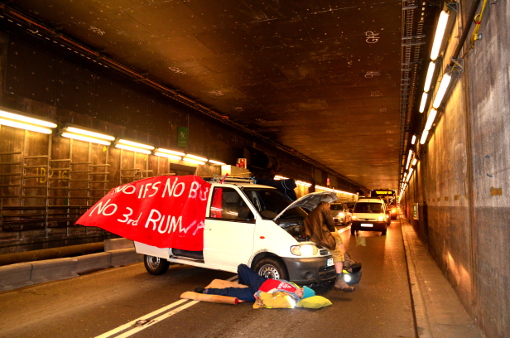
The main road entrance to Heathrow air­port, Lon­don, was blocked by cli­mate change activists for four hours ear­ly on Thurs­day morn­ing, caus­ing a traf­fic tail­back sev­er­al miles long.

The main road entrance to Heathrow air­port, Lon­don, was blocked by cli­mate change activists for four hours ear­ly on Thurs­day morn­ing, caus­ing a traf­fic tail­back sev­er­al miles long. Three mem­bers of anti air­port expan­sion cam­paign group Plane Stu­pid parked a vehi­cle across both lanes of the inbound tun­nel and locked their bod­ies to it, unfurl­ing a red ban­ner quot­ing David Cameron’s elec­tion promise: “No Ifs, No Buts: No Third Run­way”. David Cameron has promised a deci­sion by the end of the year on whether to build anoth­er run­way at Heathrow.

This action rep­re­sents an ear­ly entry for the Cli­mate Games, send­ing a clear mes­sage to the UK gov­ern­ment that expand­ing avi­a­tion is a no-go for the cli­mate; were it to go ahead the UK would undoubt­ed­ly miss its emis­sions tar­gets as set out under the 2008 Cli­mate Change Act.

Nor will avi­a­tion expan­sion ben­e­fit the major­i­ty of the pop­u­la­tion or busi­ness­es, as is often claimed. The demand for air­port expan­sion is being dri­ven by rich fre­quent  fly­ers. Last year, less than half of peo­ple in Britain flew. Of those who did, a mere 15% of fly­ers took 70% of our flights. As well as noise and air pol­lu­tion, poor peo­ple are pay­ing the price in droughts, flood­ing and storms so that the rich can cook the plan­et with fre­quent leisure flights. Whilst we might hope that David Cameron might live up to his pre-elec­tion promise — “no ifs, no buts, no third run­way” — we can’t rely on it. Part­ly after being forced to take non-vio­lent dis­obe­di­ent action where all oth­er options were exhaust­ed, we stopped a third run­way before and we’ll stop it again this time too.

#Red­Lines

At the COP21 talks this year in Paris, the theme for the mass day of action on Decem­ber 12th (D12) is Red Lines. These block­ades will rep­re­sent lines that can­not be crossed if we are to stay with­in the 2C rise in glob­al tem­per­a­tures. Fail­ure to stay with­in this thresh­old will take us down a road where even if we reduce emis­sions to zero, feed­back loops will mean that emis­sions will con­tin­ue to rise: cli­mate chaos.

In real­i­ty there are many Red Lines we should not cross, but gov­ern­ments and cor­po­ra­tions seem intent to do so. In the UK this includes the avi­a­tion indus­try, which if it con­tin­ues to grow at its cur­rent rate will by 2050 emit all of the car­bon it is safe for the UK to emit. Beyond this, oth­er red lines that are close to being crossed nation­al­ly include increas­ing uncon­ven­tion­al fos­sil fuel extrac­tion through frack­ing and a government’s ‘dash for gas’ to build pow­er sta­tions rather than renew­ables. Inter­na­tion­al­ly, there are sim­i­lar con­cerns as well as a clear need to stop lig­nite coal min­ing in Ger­many and the Tar Sands in Alber­ta, Cana­da. Whilst there are many such exam­ples of indus­tries that can­not con­tin­ue, over­all the sci­ence dic­tates that the fos­sil fuel indus­try must tran­si­tion to renew­ables and most of the car­bon must be kept in the ground.

Beyond the Paris con­fer­ence

Unlike the cli­mate talks in Copen­hagen, many activists are going to Paris with low expec­ta­tions. We know that the heads of state and busi­ness lead­ers won’t come up with a sat­is­fac­to­ry deal to pre­vent cli­mate cat­a­stro­phe. Nao­mi Klein writes in ‘This Changes Every­thing’ that cli­mate deals always come in sec­ond place to trade deals as cor­po­rate prof­it and per­pet­u­al eco­nom­ic growth are ide­o­log­i­cal­ly untouch­able in our neolib­er­al era. With this in mind, the aim for many activists is to see the Paris talks as a way for us all to net­work between strug­gles and to show on day 12 that if our ‘lead­ers’ won’t do it, then we can stop cli­mate chaos  our­selves. Unfor­tu­nate­ly, with the recent events in Paris, march­es have been banned out of fears over safe­ty, which may mean that our mobil­i­sa­tions might not be as big or as effec­tive as we hoped.

How­ev­er, giv­en that we know that the solu­tions to the cli­mate cri­sis won’t come from the COP, let’s see this as an oppor­tu­ni­ty rather than a prob­lem. Let’s get out and take action wher­ev­er the real #Red­Lines are: the dirty fos­sil fuel indus­tries, the unsus­tain­able, unde­mo­c­ra­t­ic mega-projects. #Cli­mateGames starts tomor­row. In this game we have noth­ing to lose but our fears. We have our whole futures to win. Ask­ing our ‘lead­ers’ to solve our prob­lems has left us with the hottest years on record, year after year.  We are the solu­tion we’ve been wait­ing for.

We are not fight­ing for nature. We are nature defend­ing itself.

Sabotage at Hambach open-cast mine

On Mon­day night, we sab­o­taged some con­struc­tion machin­ery at the open-cast mine Ham­bach, Ger­many.

29.10.15

On Mon­day night, we sab­o­taged some con­struc­tion machin­ery at the open-cast mine Ham­bach, Ger­many. Five dig­gers, two bull­doz­ers, one road roller and one oth­er, expen­sive look­ing machine ahd their hydraulics and elec­tron­ic cables cut. the fuel and oil tanks were filled with sand, some mechan­ic parts dam­aged and all the win­dows were smashed. Despite the mas­sive secu­ri­ty-mea­sures RWE and the police put up against us, it was still real­ly easy to do seri­ous dam­age to these tools of destruc­tion.

This action is tar­get­ed against the mine’s oper­a­tor RWE and its accom­plices, which are destroy­ing the basis of life on this plan­et.

While the big mass of peo­ple in ger­many is sit­ting silent­ly in front of their tele­vi­sion screens, dis­tract­ed from the dai­ly destruc­tion of our lives by smart enter­tain­ers and prophets of con­stant growth, hun­drets of thou­sands of peo­ple are dying on the oth­er side of the world through the effects of cli­mate change.

While most peo­ple should be aware that we can’t go on like this, it is unfor­tu­nate­ly only a small minor­i­ty that is act­ing against this destruc­tion, risk­ing their health and free­dom in the process.

Three of these eco-defend­ers are cur­rent­ly impris­oned in Aachen and Cologne, for their attempts to stop the clearcut­ting of the Ham­bach for­est throughthe ener­gy-giant RWE.

All three were heav­i­ly abused dur­ing their arrests, either by police or RWE’s pri­vate secu­ri­ties, with one per­son even get­ting their nose bro­ken and sev­er­al teeth smashed in. There­fore we want to ded­i­cate our action to the impris­oned peo­ple of Ham­bach and send our sol­i­dar­i­ty to them.

Also we want to make it clear that we will not be scared into sub­mis­sion and hope that more peo­ple will be moti­vat­ed by our action, to com­mit sim­i­lar acts of resis­tance against the brown-coal-death-machine.


The Chaos Engi­neer­ing Crew

President of Uganda threatens death to Protesters of Palm Oil land grab

Pres­i­dent Musev­eni of Ugan­da has joined his sup­port to Bid­co and Wilmar. call­ing for Bul­lets to be used against those who protest the Palm Oil devel­op­ment on the islands of Kalan­gala.

Pres­i­dent Musev­eni of Ugan­da has joined his sup­port to Bid­co and Wilmar. call­ing for Bul­lets to be used against those who protest the Palm Oil devel­op­ment on the islands of Kalan­gala. The devel­op­ment has meant that 10,000 heca­tres of vir­gin for­est has been destroyed leav­ing envi­ron­men­tal dam­age and eco­nom­ic hardhsip for the peo­ple. The words from Musev­eni come after a renewed protest against Bid­co began ear­li­er this year through twit­ter and Youtube. Fur­ther direct action against Vimal Shah the own­er of Bid­co is expect­ed soon.

BUILD GARDENS, NOT PRISONS: International Reclaim the Fields Action Camp 2015

Inter­na­tion­al Reclaim the Fields Action Camp 2015

Inter­na­tion­al Reclaim the Fields Action Camp 2015

When: Fri­day 28th August (From 6pm) – Wednes­day 2nd Sep­tem­ber 2015

Where: Dudle­ston Com­mu­ni­ty Pro­tec­tion Camp, Shrop­shire (near the Wales/England Bor­der).

About:

Reclaim the Fields UK (RTF) was born in 2011, as a star in a wider con­stel­la­tion of food and land strug­gles that reach­es around the globe. Since 2011, camps and oth­er RTF gath­er­ings have helped sup­port local com­mu­ni­ties in strug­gle, share skills, devel­op net­works, and strength­en the resis­tance to exploita­tion, in Bris­tol, west Lon­don, Glouces­ter­shire, Not­ting­ham and Fife, among oth­er loca­tions.

Every two years there is also an inter­na­tion­al camp, where peo­ple from around Europe and beyond meet togeth­er to sup­port a local strug­gle (stand­ing against exploita­tive gold min­ing in Roma­nia, and open cast coal min­ing in Ger­many, are some exam­ples). Peo­ple at these camps have shared their local sto­ries and grown their ideas about resis­tance and reclaim­ing our food sys­tem, beyond nation­al bor­ders. This year, an inter­na­tion­al gath­er­ing will be held in the UK, in Dudle­ston, Shrop­shire, on the Welsh/English bor­der.

The aims of the camp are:
• To sup­port local com­mu­ni­ties in the west and north west of Eng­land, and the north of Wales with their strug­gles against frack­ing
• To increase par­tic­i­pa­tion in Reclaim the Fields
• To demon­strate vis­i­ble, active oppo­si­tion to prison con­struc­tion
• To sup­port Dudle­ston Com­mu­ni­ty Pro­tec­tion Camp build a gar­den and infra­struc­ture to become more self-reliant
• To demon­strate the inter­con­nec­tion between these strug­gles
• To inspire and rad­i­calise every­one involved

What is hap­pen­ing:

• Two days of Action – Tues­day 1st & Wednes­day 2nd Sep­tem­ber – demon­stra­tions & actions against com­pa­nies involved in the con­struc­tion of the North Wales prison, as well as local frack­ing-relat­ed tar­gets.
• Work­shops & Skill­shares – Over the bank hol­i­day week­end there will be abun­dant oppor­tu­ni­ties to learn, share, dis­cuss and con­nect with oth­er peo­ple.
• Build­ing & Grow­ing on the site – Be part of installing gar­dens & low impact infra­struc­ture at the com­mu­ni­ty pro­tec­tion camp. Learn about per­ma­cul­ture, agroe­col­o­gy, for­est gar­den­ing, mush­room grow­ing, pal­let con­struc­tion, com­post toi­let mak­ing, off-grid electrics and more.

Why:

• This camp has been organ­ised to sup­port the local com­mu­ni­ty in Dudle­ston to resist frack­ing in their area (as well as work­ing with oth­er local anti-frack­ing groups & pro­tec­tion camps in the North West who have been resist­ing extreme ener­gy devel­op­ments for a num­ber of years). To find out more about their strug­gle vis­it: http://frack-off.org.uk/blockade/dudleston-community-protection-camp/
• It has also been organ­ised to give atten­tion to the North Wales Prison Project that is being con­struct­ed. This will be Europe’s sec­ond largest prison hold­ing 2100 pris­on­ers and the first of a num­ber of ‘mega pris­ons’ that the UK Gov­ern­ment wish to build. Click here for more infor­ma­tion about the prison, why we are against it & links to arti­cles about the prison indus­tri­al com­plex in the UK

How to get involved:

Click on the links below to find more prac­ti­cal infor­ma­tion about the camp and how to get involved:

This is a DIY/DIT(ogether)* camp and every­one is need­ed to get stuck in to make it hap­pen. Peo­ple are need­ed to:
• Sup­port with pub­lic­i­ty before the event – shar­ing the gath­er­ing online, putting posters up, encour­ag­ing your local group to get involved. Peo­ple are also need­ed to help design the pro­gramme, respond to emails & plan facil­i­ta­tion.
• Help­ing with site set up & build­ing infra­struc­ture (plan­ning this in advance & being on site a few days before the gath­er­ing)
• Sign­ing up to a shift over the week­end to help with cook­ing, site set up & safe­ty, being on the wel­come tent & so forth
• Sup­port­ing local groups to organ­ise actions

If you can help with any of these tasks please email info@reclaimthefields.noflag.org.uk

Spread the word:

• Poster design here: reclaimthefields.noflag.org.uk/wp-conte…

• Face­book event: https://www.facebook.com/events/560637597407933/

Reclaim the Fields International Gathering 2015

Reclaim the Fields

About the camp

Reclaim the Fields (or RTF) UK was born in 2011, as a star in a wider con­stel­la­tion of food and land strug­gles that reach­es around the globe. Since 2011, camps and oth­er RTF gath­er­ings have helped sup­port local com­mu­ni­ties in strug­gle, share skills, devel­oped net­works, and strength­ened the resis­tance to exploita­tion, in Bris­tol, west Lon­don, Glouces­ter­shire, Not­ting­ham and Fife among oth­er loca­tions.

Every two years there is also an inter­na­tion­al camp, where peo­ple from around Europe and beyond meet togeth­er to sup­port a local strug­gle (from gold min­ing in Roma­nia to open cast coal min­ing in Ger­many, for exam­ple). Peo­ple share share sto­ries and ideas about resis­tance and reclaim­ing our food sys­tem beyond nation­al bor­ders. This year, an inter­na­tion­al gath­er­ing will be held in the UK, in Dudle­ston, Shrop­shire, on the Welsh/English bor­der.

The aims of the camp are:

  • To sup­port local com­mu­ni­ties in the west and north west of Eng­land, and the north of Wales with their strug­gles against frack­ing
  • To increase par­tic­i­pa­tion in Reclaim the Fields
  • To demon­strate vis­i­ble, active oppo­si­tion to prison con­struc­tion
  • To sup­port Dudle­ston Com­mu­ni­ty Pro­tec­tion Camp build a gar­den and infra­struc­ture to become more self-reliant
  • To demon­strate the inter­con­nec­tion between these strug­gles
  • To inspire and rad­i­calise every­one involved

What’s taking place?

  • Two days of Action – Tues­day 1st & Wednes­day 2nd Sep­tem­ber – demon­stra­tions & actions against com­pa­nies involved in the con­struc­tion of the North Wales prison, as well as local frack­ing-relat­ed tar­gets.
  • Work­shops & Skill­shares – Over the bank hol­i­day week­end there will be abun­dant oppor­tu­ni­ties to learn, share, dis­cuss and con­nect with oth­er peo­ple.
  • Build­ing & Grow­ing on the site – Be part of installing gar­dens & low impact infra­struc­ture at the com­mu­ni­ty pro­tec­tion camp. Learn about per­ma­cul­ture, agroe­col­o­gy, for­est gar­den­ing, mush­room grow­ing, pal­let con­struc­tion, com­post toi­let mak­ing, off-grid electrics and more.

Why this camp? Why now?

  • This camp has been organ­ised to sup­port the local com­mu­ni­ty in Dudle­ston to resist frack­ing in their area (as well as work­ing with oth­er local anti-frack­ing groups & pro­tec­tion camps in the North West who have been resist­ing extreme ener­gy devel­op­ments for a num­ber of years). To find out more about their strug­gle vis­it: http://frack-off.org.uk/blockade/dudleston-community-protection-camp/

Practical Information about the Camp

Click on the links below to find more prac­ti­cal infor­ma­tion about the camp and how to get involved:

Getting involved

This is a DIY camp and every­one is need­ed to get stuck in to make it hap­pen. Peo­ple are need­ed to:

  • Sup­port with pub­lic­i­ty before the event – shar­ing the gath­er­ing online, putting posters up, encour­ag­ing your local group to get involved. Peo­ple are also need­ed to help design the pro­gramme, respond to emails & plan facil­i­ta­tion.
  • Help­ing with site set up & build­ing infra­struc­ture (plan­ning this in advance & being on site a few days before the gath­er­ing)
  • Sign­ing up to a shift over the week­end to help with cook­ing, site set up & safe­ty, being on the wel­come tent & so forth
  • Sup­port­ing local groups to organ­ise actions

If you can help with any of these tasks please email info@reclaimthefields.noflag.org.uk

Who are Reclaim the Fields?

We are a group of peas­ants, land­less and prospec­tive peas­ants, as well as peo­ple who are tak­ing back con­trol over food pro­duc­tion.

We under­stand “peas­ants” as peo­ple who pro­duce food on a small scale, for them­selves or for the com­mu­ni­ty, pos­si­bly sell­ing a part of it. This also includes agri­cul­tur­al work­ers.

We sup­port and encour­age peo­ple to stay on the land and go back to the coun­try­side. We pro­mote food sov­er­eign­ty (as defined in the Nyéléni dec­la­ra­tion) and peas­ant agri­cul­ture, par­tic­u­lar­ly among young peo­ple and urban dwellers, as well as alter­na­tive ways of life. In Europe, the con­cept ‘food sov­er­eign­ty’ is not very com­mon and could be clar­i­fied with ideas such as ‘food auton­o­my’ and con­trol over food sys­tems by inclu­sive com­mu­ni­ties, not only nations or states. We are deter­mined to cre­ate alter­na­tives to cap­i­tal­ism through coop­er­a­tive, col­lec­tive, autonomous, real-needs-ori­ent­ed, small-scale pro­duc­tion and ini­tia­tives. We are putting the­o­ry into prac­tice and link­ing local prac­ti­cal action with glob­al polit­i­cal strug­gles.

In order to achieve this, we par­tic­i­pate in local actions through activist groups and coop­er­ate with exist­ing ini­tia­tives. This is why we choose not to be a homo­ge­neous group, but to open up to the diver­si­ty of actors fight­ing the cap­i­tal­ist food pro­duc­tion mod­el. We address the issues of access to land, col­lec­tive farm­ing, seed rights and seed exchange. We strength­en the impact of our work through coop­er­a­tion with activists who focus on dif­fer­ent tasks but who share the same vision.

Nev­er­the­less, our open­ness has some lim­its. We are deter­mined to take back con­trol over our lives and refuse any form of author­i­tar­i­an­ism and hier­ar­chy. We respect nature and liv­ing beings, but will nei­ther accept nor tol­er­ate any form of dis­crim­i­na­tion, be it based on race, reli­gion, gen­der, nation­al­i­ty, sex­u­al ori­en­ta­tion or social sta­tus. We refuse and will active­ly oppose every form of exploita­tion of oth­er peo­ple. With the same force and ener­gy, we act with kind­ness and con­vivi­al­i­ty, mak­ing sol­i­dar­i­ty a con­crete prac­tice of our dai­ly life.

We sup­port the strug­gles and visions of la Via Campesina, and work to strength­en them. We wish to share the knowl­edge and the expe­ri­ence from years of strug­gle and peas­ant life and enrich it with the per­spec­tives and strength of those of us who are not peas­ants, or not yet peas­ants. We all suf­fer the con­se­quences of the same poli­cies, and are all part of the same fight.

Read this in: French, Ger­man, Span­ish


Armed attack on Ilisu construction workers – Dam construction halted

Fol­low­ing a series of events includ­ing dis­mals, an armed assault, injuries and arson, work­ers have left the Ilisu Dam and Hydro­elec­tric Pow­er Plant con­struc­tion site, thus bring­ing work to a halt. These events show how dan­ger­ous, risky and destruc­tive a project we are con­fronting.

On 19 June (Fri­day), 5 work­ers were dis­missed from work by the Malami­ra com­pa­ny. Malami­ra (based in Ankara with roots in Diyarbakır) employs most of the work­ers at the con­struc­tion site. It replaced oth­er com­pa­nies at the Ilı­su Project when con­struc­tion resumed in Decem­ber 2014 at Ilı­su vil­lage in Dargeçit dis­trict in Mardin province. While meet­ing with Mala Mira Com­pa­ny man­agers on behalf of the dis­missed work­ers and to present demands for union­iza­tion, work­ers were fired upon by the body­guards of the employ­ers and the project direc­tor. The injured work­ers (Ali İnan, 27; Ömer Ekin­ci, 26; and Ömer Erol, 19) are still receiv­ing treat­ment hos­pi­tals.

In response to this, oth­er work­ers and rel­a­tives of the injured – some of whom live in vil­lages close to the Ilı­su Dam – pro­ceed­ed to the scene. Pro­test­ers set fire to offices, heavy equip­ment and vehi­cles belong­ing to the com­pa­ny. As the protest grew, a large num­ber of armored vehi­cles, spe­cial forces, riot police, water canons and sol­diers were dis­patched to the Ilı­su Dam con­struc­tion site.

Because of these events, approx­i­mate­ly 1000 work­ers did not work and returned to their places of res­i­dence with their lug­gage. Thus con­struc­tion work at the Ilisu Dam has been halt­ed.

In and of itself, the halt­ing of the Ilisu Project, which rep­re­sents a huge social, cul­tur­al and eco­log­i­cal cat­a­stro­phe for a greater region, is a pos­i­tive devel­op­ment. How­ev­er, the events wit­nessed over the past three days show how prob­lem­at­ic the Ilisu Project is for region­al peace and tran­quil­i­ty.

The Ilisu Project was halt­ed in the sum­mer of 2014 fol­low­ing the inter­ven­tion of PKK (HPG) guer­ril­las, and con­struc­tion began again with the engage­ment of Malami­ra com­pa­ny in Decem­ber 2014. Malamira’s par­tic­i­pa­tion in the Ilı­su con­sor­tium despite the ongo­ing high poten­tial for local con­flicts, shows that in pur­suit of prof­it this com­pa­ny did not take into con­sid­er­a­tion the social, eco­log­i­cal and polit­i­cal risks of the project.

Not only those who fired weapons, but the com­pa­ny man­agers be held account­able for this armed attack.

The Ilisu Project, which is a sym­bol of unfair­ness, injus­tice and social-cul­tur­al destruc­tion, must halt­ed as soon as pos­si­ble and debat­ed thor­ough­ly.

Note: You may use attached pho­tographs by acknowl­edg­ing that they were tak­en by DIHA (Dicle Haber Ajan­si /Tigris News Agency)

 Ini­tia­tive to Keep Hasankeyf Alive (www.hasankeyfgirisimi.net)

Wrong Decision — Bradley Mine Approved by Inspector

On Wednes­day (3/6/15) it was announced that UK Coal’s appli­ca­tion to mine 520,561 tonnes of coal from a site called Bradley, was approved. The site is cur­rent­ly agri­cul­tur­al land in Leadgate, Durham, UK. This is a high­ly con­test­ed site with real­ly strong and well orches­trat­ed oppo­si­tion from local peo­ple. Why is this a bad deci­sion? … Con­tin­ue read­ing “Wrong Deci­sion — Bradley Mine Approved by Inspec­tor”

On Wednesday (3/6/15) it was announced that UK Coal's application to mine
520,561 tonnes of coal from a site called Bradley, was approved. The site
is currently agricultural land in Leadgate, Durham, UK. This is a highly
contested site with really strong and well orchestrated opposition from
local people.

Why is this a bad decision?

* The community were so very clear that there was NO COMMUNITY CONSENT * One woman (the planning inspector) thinks she can decide whether a mine would offer 'national, local or community benefits which would clearly outweigh the remaining adverse impacts.' How can she possibly say yes when the community SAYS NO. * We are moving away from a reliance on coal (but not quickly enough) with two coal fired power stations announcing closures next year * The company pursuing the application will not directly operate the site as they have serious financial difficulties and had to be helped by the government in closing their last remaining deep mines and were order to sell off their remaining opencast mines

As the following history of the application shows, the coal company refused to take no for an answer being determined to sell on the mine with planning permission. This is not the end of the battle. We need you to think about what you are going to do to ensure that this piece of rural Britain is never dug up. We need to stand together to protect the livelihoods, families, local history, quality of life, homes, air quality, tranquillity, health, wildlife and ecosystems in this area. Even if the legal battle is over the fight is not. Get in touch with your suggestions info@coalaction.org.uk

History of the application.

UK Coal’s first application was rejected by planners in 1986. In 2001 a second application was rejected.

In February 2011 the planning hearing of Durham Council unanimously rejected the application, councillors called UK Coal "thugs," "vandals" and said they were trying to bribe them.

In Autumn 2011 there was a three week appeal which UK Coal lost.

The coal company took this to the High Court in London who said that the decision was perverse and ordered another appeal.

The second appeal happened in Autumn 2014 and lasted three weeks. It was well attended by local people, tens of whom spoke out against the mine with incredible passion, dedication and knowledge. From the team at The Coal Action Network

For more info on sim­i­lar issues check out 

http://www.coalaction.org.uk 
http://www.facebook.com/pages/The-Coal-Action-Network/429163990497895