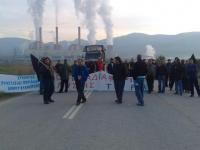
Residents clash with riot police (Kozani power plant, Greece, 2/6/2008)

5:00 in the dawn and brigades of riot-police­men attacked the occu­pa­tion of the ash and coal belt con­vey­ors of the Agios Dim­itrios pow­er plant by res­i­dents of Ria­ki and Agios Dim­itrios (Kozani), arrest­ing 6 per­sons, mem­bers of the local Asso­ci­a­tion on unem­ploy­ment and for the envi­ron­ment.

Kozani power plant demo5:00 in the dawn and brigades of riot-police­men attacked the occu­pa­tion of the ash and coal belt con­vey­ors of the Agios Dim­itrios pow­er plant by res­i­dents of Ria­ki and Agios Dim­itrios (Kozani), arrest­ing 6 per­sons, mem­bers of the local Asso­ci­a­tion on unem­ploy­ment and for the envi­ron­ment. Next thing, tech­ni­cians of the PPC (pub­lic pow­er com­pa­ny) set in charge the aux­il­iary belt con­vey­or, putting away the pos­si­bil­i­ty of a black-out and the polit­i­cal pres­sure it would bring. The police re-occu­pied the plant gate with riot police bus­es.

Same after­noon, res­i­dents of the area gath­ered out­side the cour­t­house of Kozani, where the 6 arrestees were pros­e­cut­ed, hav­ing their mobile phones tak­en away so as not to be able to com­mu­ni­cate with a lawyer or a fel­low fight­er. The res­i­dents clash­es face to face with the police­men out­side the cour­t­house, but were repelled with exces­sive tear gas use.

The same time, 8 riot police brigades attacked against res­i­dents gath­ered near the fac­to­ry, arrest­ing 3 per­sons, the one of them they had pre­vi­ous­ly injured and dri­ven to the hos­pi­tal.

These last mobi­liza­tions of the res­i­dents have start­ed 3 years ago, under their demand for employ­ment of local res­i­dents in the PPC plants and the imme­di­ate tak­ing of mea­sures against the pol­lu­tion caused by the plants. The area of Kozani has sev­er­al pow­er plants, because of its coal resources, pro­duc­ing the largest part of Greece’s elec­tric pow­er, with the cor­rel­a­tive effects on the res­i­dents health and life con­di­tions and on the envi­ron­ment and its wildlife.

Sources-Pho­tos:
http://athens.indymedia.org/front.php3?lang=el&article_id=874556
http://athens.indymedia.org/front.php3?lang=el&article_id=874093
http://athens.indymedia.org/front.php3?lang=el&article_id=874075
http://athens.indymedia.org/front.php3?lang=el&article_id=873959
—–

from libcom.org

After 23 days of blockad­ing the input and out­put con­va­y­or belts of one of the major pow­er-plants of Greece by the Union against Unem­ploy­ment, demand­ing re-employ­ment, envi­ron­men­tal reform and with­draw­al of charges against rebel work­ers, riot police evict­ed the Agios Dim­itrios Pow­er-Plant occu­pa­tion. Seri­ous clash­es have ensued in efforts to release the arrest­ed Union mem­bers.

In the morn­ing of the 10th of May 2008, the res­i­dents of Agios Dimitris,a town near the north-Greek city of Kozani, where the Nation­al Elec­tric Com­pa­ny (DEH) holds its majors units, employ­ing the vast major­i­ty of the work­ing pop­u­la­tion, hav­ing formed a local Union against Unem­ploy­ment occu­pied the north gate of the Agios Dim­itrios Pow­er-Plant, inter­rupt­ing the func­tion of the feed-belts car­ry­ing lig­nite, as well as the ash-belts from the fac­to­ry to the dis­pos­al area. The block­ade was manned in shifts by all the res­i­dents of the town­ship, includ­ing chil­dren, in sol­i­dar­i­ty with the indus­tri­al action.The Union demand­ed the reem­ploy­ment of sacked work­ers at DEH units in the region, mea­sures for the pro­tec­tion of the envi­ron­ment, and an imme­di­ate with­draw­al of charged pressed against 70 res­i­dents of the area for sim­i­lar mobil­i­sa­tions last year.

In response, on the 18th day of the occu­pa­tion, the Nation­al Elec­tric Com­pa­ny pressed charges against the Union argu­ing its action is caus­ing it enor­mous los­es, for which it claimed one mil­lion euros com­pen­sa­tion per day (the min­i­mum salary in Greece is 650E per month). Aim­ing to put pub­lic pres­sure on the squat­ters, DEH claimed the occu­pa­tion was threat­en­ing to put on hold all four units of the Agios Dim­itrios Plant, one of the biggest in the coun­try, thus putting the elec­tric sup­ply of the entire coun­try in dan­ger. In real­i­ty the indus­tri­al action was decreas­ing aver­all elec­tric pro­duc­tion capac­i­ty only by 500 megawatt. Nev­er­the­less, in the fol­low­ing days the DEH monop­oly waged a media cam­paign warn­ing of the neces­si­ty of black outs in response of the cri­sis.

Some days lat­er, the squat­ters refused to hold talks with the local author­i­ties and the min­is­ter of devel­op­ment when they demand­ed the unblock­ing of the con­vey­or belts as a guar­an­tee of the nego­ti­a­tions.

On Mon­day the 2nd of June 2008, 5 am, riot-police forces vio­lent­ly end­ed the 23 day long block­ade of the Elec­tric Pow­er-Plant at Agios Dim­itris. The police warned the squat­ters to clear the DEH premis­es, and when the lat­ter refused, the riot-police attacked arrest­ing 6 men: the pres­i­dent and four mem­bers of the Union. Dur­ing the con­se­quent protest march in the indus­tri­al city of Kozani three more peo­ple were arest­ed dur­ing major clash­es with the police, with one pro­tes­tor seri­ous­ly wound­ed. After the eco­nom­ic sec­re­tary of the Union warned the police to release the 6 arrest­ed or “face a gen­er­al upris­ing; we shall torch the pow­er-plant with crude oil and explo­sives, and get rid of this night­mare for ever”, the author­i­ties agreed to release the arrest­ed mem­bers of the Union who will stand tri­al next Sep­tem­ber.

The Union and the total­i­ty of Agios Dim­itris res­i­dents pledge to con­tin­ue their strug­gle.

London Critical Mass ride 30–5‑08

Quick report on the ride.

Video Short mp4 clip. — video/mp4 1.4M

Video Short wmv clip. — video/x‑ms-wmv 1.2M

London Critical Mass May 08Quick report on the ride.

Video Short mp4 clip. — video/mp4 1.4M

Video Short wmv clip. — video/x‑ms-wmv 1.2M

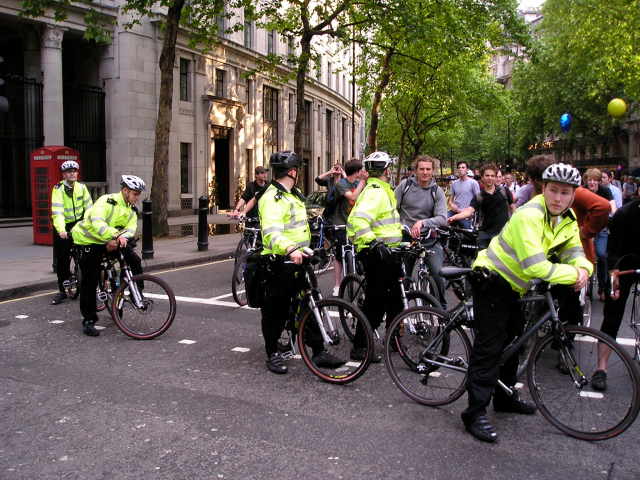
Sev­er­al hun­dred rid­ers, good weath­er, a very enjoy­able ride, apart from police slow­ing things down as usu­al by block­ing the front of the ride at inter­sec­tions. Lat­er they seemed to stop doing this and made a good job of cork­ing instead. This time a con­fronta­tion with police over sound sys­tems in the SOCPA zone was avoid­ed, by not going into the SOCPA zone. Instead a stop was made out­side Buck House, com­plete with full-on sounds.

Noise demo against imminent open cast coal mine 9th June

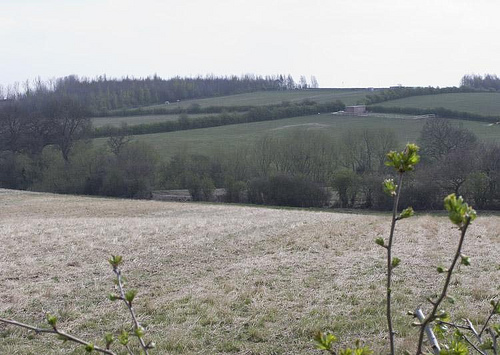
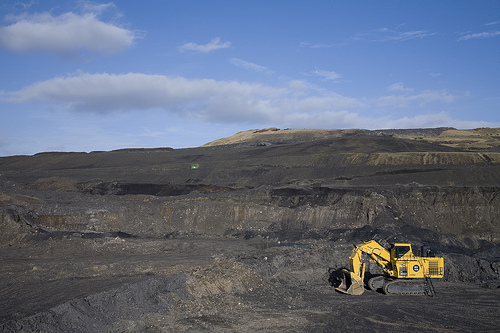
A new open-cast coal mine site is about to get under­way in beau­ti­ful Der­byshire, unless we stop it now.

Derbyshire open-cast - beforeDerbyshire open-cast - after?A new open-cast coal mine site is about to get under­way in beau­ti­ful Der­byshire, unless we stop it now. Help us send the mes­sage loud and clear to UK Coal to leave it in the ground!
Noise Demo at UK Coal, nr Don­cast­er
Mon­day 9th June
Meet 12 noon at Don­cast­er train sta­tion.
There will be lifts to UK Coal’s HQ — but bring trans­port if you can.

UK COAL, Har­worth Park, Blyth Road, Har­worth, Don­cast­er DN11 8DB

Bring: ban­ners, things to make noise with, food, peo­ple, tents, room to give peo­ple a lift.

For more info phone 07852 460871 or email derby@earthfirst.org.uk

Down­load leaflet (includes map of pro­posed open-cast) – please print and cir­cu­late

What’s going on?
Lodge House site, which is east of the vil­lage of the Der­byshire vil­lage of Smal­l­ey, is one of sev­en
sites that UK Coal is to open-cast. The area is rich with wildlife and backs onto Ship­ley Coun­try Park. It is about to be dev­as­tat­ed, despite objec­tions from local coun­cils, res­i­dents and local envi­ron­men­tal groups. The Sec­re­tary of State grant­ed plan­ning per­mis­sion in 2007 and work is to com­mence any day now.

More destruc­tion to come?
The 122 hectare site will have one mil­lion tonnes of coal ripped out over five years and ‘returned back to its nat­ur­al state’ accord­ing to UK Coal. How­ev­er, they will not be able to replace ancient edges and mature trees, and they will be able to expand beyond the 122 hectares with­out need­ing fur­ther per­mis­sion. Res­i­dents were exclud­ed from parts of the plan­ning meet­ing on grounds of com­mer­cial con­fi­den­tial­i­ty, which sug­gests that the plans may be big­ger than UK Coal is let­ting on.

A dirty fuel, a chang­ing cli­mate
Coal is not clean ener­gy, and with the new onslaught of pro­posed pow­er sta­tions, UK Coal are look­ing to cash in on cli­mate dev­as­ta­tion and destruc­tion unless we stop them. Burn­ing coal to pro­duce elec­tric­i­ty is threat­en­ing the glob­al envi­ron­ment and all our futures..

To com­bat open-cast min­ing, a new action group “Leave it in the Ground” has formed, sup­port­ed by Earth First! and oth­er envi­ron­men­tal groups.

If you can’t make the demo then you could con­tact UK Coal direct­ly to let them know what you think: UK Coal Tel: 01302 751751 Fax: 01302 752420.

Links

Leave it in the Ground
Home­page: http://www.leaveitintheground.org.uk

Report on pre­vi­ous action http://earthfirst.org.uk/actionreports/node/20727

For a bit of his­to­ry on protests against open cast min­ing see:
http://www.eco-action.org/dod/no7/23–32.html

More info on coal…
http://thecoalhole.org/

03/06/08.…..TAKE ACTION ON FOOD AND CLIMATE CHANGE

With­in the past year, glob­al food prices have risen by 75%. Prices of wheat, soya, oilseeds, maize and rice are now at record lev­els. The World Bank has warned that 100 mil­lion more peo­ple are fac­ing hunger and mal­nu­tri­tion because of ris­ing food prices.

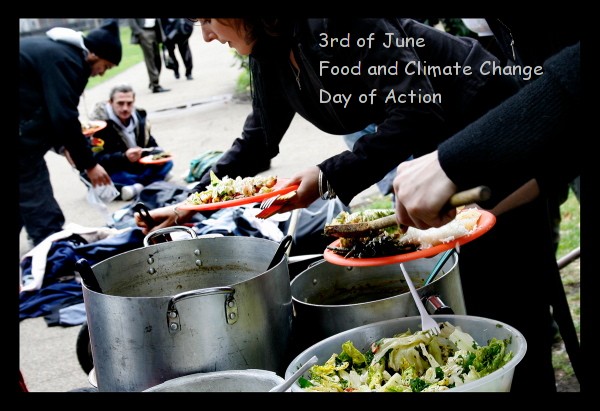
Food not Bombs for Food & Climate action dayWith­in the past year, glob­al food prices have risen by 75%. Prices of wheat, soya, oilseeds, maize and rice are now at record lev­els. The World Bank has warned that 100 mil­lion more peo­ple are fac­ing hunger and mal­nu­tri­tion because of ris­ing food prices.

The green­house gas emis­sions caused by live­stock and indus­tri­al fish­ing account for 18 per cent of glob­al warm­ing; more than the emis­sions from the world’s entire trans­port sys­tem, at 13.5 per cent. Tech­no fix­es such as GM crops and Bio­fu­els are not the answer to cli­mate chaos, we need to change our pat­terns of con­sump­tion and switch to a low impact, cru­el­ty free lifestyle!

With one week to go before the food and cli­mate change day of action; get cre­ative and get involved!

“Live­stock­’s con­tri­bu­tion to envi­ron­men­tal prob­lems is on a mas­sive scale. The impact is so sig­nif­i­cant that it needs to be addressed with urgency.”
— Unit­ed Nations Food and Agri­cul­ture Organ­i­sa­tion 2006

“The grain required to fill a 25-gal­lon SUV gas tank with ethanol will feed one per­son for a year.” (Lester Brown, Direc­tor of the Earth Pol­i­cy Insti­tute).

The UN Con­fer­ence on World Food Secu­ri­ty and Cli­mate Change runs from 3rd to 5th June 2008. The Net­work for Cli­mate Action is invit­ing you to take action on and around the 3rd of June 2008. There’s stuff hap­pen­ing all over the coun­try, and inter­na­tion­al­ly, on the day itself, and before and after it.

Cli­mate action starts on your din­ner plate, at the super­mar­ket, on your allot­ment and in your back yard, at the food pro­cess­ing and dis­tri­b­u­tion cen­tres, down on the farm, in your high street, at the air­port and at the lor­ry park. Use this day as a way to high­light the com­plex­i­ty of food relat­ed issues, and also to pro­mote spe­cif­ic cam­paigns..

It’s time to detox the plan­et and take action on food and cli­mate change! Groups all over the coun­try are plan­ning actions, demon­stra­tions, film nights, work­shops and free food events. For more ideas, and resources, vis­it the web­site: http://daysofclimateaction.org.uk; and let us know if you need any­thing else, or if you have resources that could be shared!

Remem­ber, the list below is only a list of pub­lic events, actions to fol­low when announced! If you want infor­ma­tion about whats going on in your area, please get in touch!

MANCHESTER 01/06 Veg­an pic­nic, demo and sur­prise activ­i­ty!
Free veg­an food
12–4, Pic­cadil­ly Gar­dens email: manchester@climatecamp.org.uk

BRISTOL 31/05–01/06 Bris­tol Veg­an Fayre
http://www.bristolveganfayre.co.uk/

SHEFFIELD 31/05 Free veg­an food stall
email:sheffieldanimalfriends@googlemail.com

LIVERPOOL 31/05 Free veg­an food event 12–4 Next to Nowhere, (this event kick starts the veg­an drop in which will hap­pen 1–5 every Sat­ur­day, Next to Nowhere). http://www.liverpoolsocialcentre.org/

LONDON
31/05 Protest against the pro­posed Com­bined Cycle Bio­fu­el Elec­tric­i­ty Gen­er­a­tion Plant. Stall on Myr­tle Road, East Ham from 10:30 to 6:30.
Ban­ner drop from 3:00 to 5:00pm out­side Newham Town Hall, East Ham. 04/06
Protest out­side the final con­sul­ta­tion meet­ing at Newham Town Hall 6:30 to 7:10pm , Bark­ing Road, East Ham.
http://www.biofuelwatch.org.uk/files/thames_gateway_biodiesel_project.pdf
As part of the nation­al day of action on food and cli­mate change called by the Net­work for Cli­mate Action, Food Not Bombs and Reclaim Your Food will be serv­ing *free veg­an food* at a *secret loca­tion* in South Lon­don!
* All the food will be skipped, reclaimed from the waste of an afflu­ent cap­i­tal­ist soci­ety.
* All the food will be veg­an, min­i­miz­ing the cli­mate-impact of the food. Meet on Tues­day the 3rd of June at Cam­ber­well Green (in the Green itself), 2PM sharp to move on to a *secret loca­tion*
Cam­ber­well Green — http://tinyurl.com/5h25yq
Lon­don Food Not Bombs — http://www.londonfnb.org

NOTTINGHAM 24/05–15/06 ‘Green­weeks’: allot­ment open days, organ­ic grow­ing cours­es and more!
http://www.greenweeks.org/

AMSTERDAM: Veg­an­ism and Cli­mate Change film night
http://www.aseed.net/

The food we eat con­tributes up to a third of the emis­sions that are poi­son­ing the plan­et. It’s time for a detox … Chang­ing our diet is one of the most effec­tive steps we can take!

Whether you’re work­ing on local organ­ic food, grow­ing your own, veg­an­ism, per­ma­cul­ture, food secu­ri­ty, human­i­tar­i­an issues, trans­port cam­paign­ing, agro­fu­els, anti — GM food … make the links on cli­mate change … take action on the 3rd of June toward a low-car­bon diet!

What­ev­er your tastes, there’s some­thing for every­one on this action menu! There are many pro­posed solu­tions — we think it’s time to start the debate. Get cre­ative and get involved!

Please let us know what you are plan­ning (if its appro­pri­ate!) or if not, tell us as soon as you’ve done it! Don’t for­get to send us your pho­tos too!

The media phone no for the day will be 07961917535; or you can email food@daysofclimateaction.org.uk.

This Day of Action on Cli­mate Change is called by the Net­work for Cli­mate Action in co-oper­a­tion with the Ris­ing Tide Net­work and the Camp for Cli­mate Action.

Leave it in the Ground’s Picnic in the Park trespass report

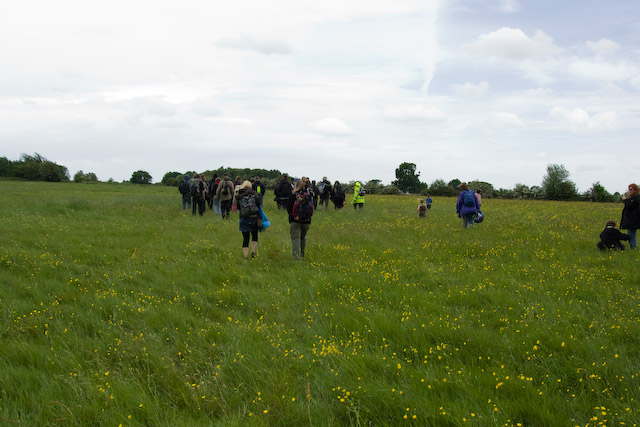
Around 70 peo­ple had set of to trav­el on a bank hol­i­day Mon­day which is no easy task as pub­lic trans­port has a nat­ur­al ten­den­cy not to run or has a lim­it­ed ser­vice on bank hol­i­days, for a pic­nic in a remote part of Der­byshire. The weath­er reports had all pre­dict­ed thun­dery show­ers for the day, which seems to be nor­mal for a bank hol­i­day out­ing, but this did not seem to deter the peo­ple who had gath­ered at the vis­i­tors cen­tre at Ship­ley Coun­try Park, Heanor, Der­byshire

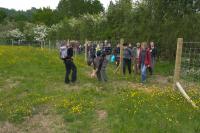
trespass1trespass2
Around 70 peo­ple had set of to trav­el on a bank hol­i­day Mon­day which is no easy task as pub­lic trans­port has a nat­ur­al ten­den­cy not to run or has a lim­it­ed ser­vice on bank hol­i­days, for a pic­nic in a remote part of Der­byshire. The weath­er reports had all pre­dict­ed thun­dery show­ers for the day, which seems to be nor­mal for a bank hol­i­day out­ing, but this did not seem to deter the peo­ple who had gath­ered at the vis­i­tors cen­tre at Ship­ley Coun­try Park, Heanor, Der­byshire

The event had been organ­ised by a new cam­paign group called Leave it in the Ground and Earth First! to oppose new and exist­ing open cast min­ing in the UK and sol­i­dar­i­ty to inter­na­tion­al groups who are hav­ing their lives and land trashed in places like Phul­bari, Bangladesh by British com­pa­ny GMC Resources PLC http://www.gcmplc.com

After every one had fin­ished social­is­ing at the vis­i­tors cen­tre with cups of tea, they head­ed of through the park to the area of plush green fields and ripped out hedgerows, which is to be the area of the new open cast mine called Lodge house owned by UK Coal as we were fol­lowed by an evi­dence gath­er­er and a few oth­er police offi­cers who were mak­ing notes on how friend­ly and socia­ble we were.

UK coal had erect­ed new fences with­in the bound­aries of the fields declar­ing the 122 hec­tor site of destruc­tion wait­ing to hap­pen and activists out for the day just walked through the gap that will even­tu­al­ly have huge earth mov­ing vehi­cles and plant machin­ery tear­ing up the fields. There was no attempt by the police to stop us or ask­ing us not to go in, it was already decid­ed we were going to tres­pass, and there was no way they could keep us out any­way.

After a short breach of the bound­ary we came across a farm, com­plete with tree house, dog ken­nel with its bed­ding still inside and the odd toy in the gar­den that looked as if it had been aban­doned in a hur­ry from some pend­ing dis­as­ter. We gath­ered in the gar­den of the farm to hear a local per­son explain what was hap­pen­ing in the area.

We heard how UK Coal owns the land and that the locals in the sur­round­ing vil­lages of Smal­l­ey, Map­per­ly and West Hallem had been fight­ing against the com­pa­ny for the last 5 years against the plan to turn the area into an open cast site. Despite it being against plan­ning reg­u­la­tions the sec­re­tary of state gave the plan the go ahead in 2007. The fields we had just walked across is going to have its soil stripped in July and August of this year and the field to the south of the farm is going to be stripped this July, so it was a last look to see it in its nat­ur­al state, even though UK Coal are tak­ing the unusu­al step of return­ing the site back to green fields, not that the grass grows well or the hedgerows are replant­ed and the fields lack the nat­ur­al diver­si­ty of species.

More alarm­ing is that this is not just unique to Der­byshire; open cast­ing or strip min­ing as it is some­times known is on the agen­da of the gov­ern­ment and a change in pol­i­cy 2 years ago forced by pow­er sta­tions and coal com­pa­nies through lob­by­ing has forced it as a legit­i­mate way for them to make mon­ey, despite the fact it is seri­ous­ly dam­ag­ing to the cli­mate and the UK is not going to be able to cut its agreed emis­sions by burn­ing coal and that the Lodge House site is going to have 1 mil­lion tonnes of car­bon removed which means when it is burnt that’s 3,666,666 tones of car­bon diox­ide.

There was also a bit of brief his­to­ry of open cast min­ing in Der­byshire and the resis­tance to it in 1997 at the Tib­shelf site near Alfre­ton and how 250 activists from Earth First! NUJ and min­ers sup­port group had bussed there way to the site and caused an esti­mat­ed £375,000 to £4 mil­lion of dam­age with vehi­cles need­ing to be repaired on site as they were inca­pac­i­tat­ed!

We all moved off back into the fields with the fence an omi­nous mark­er in the dis­tance to the size and scale of what is to be lost and sat down to enjoy some food. Veg­gies had gone mobile and sup­plied us with veg­an pasties and their famous cake, so we sat in the long grass, drank some excel­lent Elder­flower Cham­paign that was being passed around while the police hid at the farm with­out refresh­ment keep­ing an eye on our activ­i­ty and social refine­ment. A kite flew over head and the chil­dren played foot­ball with the adults, all the usu­al accom­pa­ni­ments for a pic­nic.

We head­ed off through the south field and saw a bun­ga­low with its win­dows and doors sheet­ed up in steel, anoth­er vic­tim of the site I thought. Both prop­er­ties are the place most peo­ple dream of own­ing with the scenic views.

After a stroll on this bot­tom field we head­ed on to Bell Lane which divides the Lodge House site and head­ed into Smal­l­ey with anoth­er tea stop at the local Vil­lage Hall and an oppor­tu­ni­ty to use the toi­lets and more of Veg­gies cake and pasties. Some local peo­ple were there wait­ing for us and the group broke out into a meet­ing, in which we assessed the sit­u­a­tion over open cast min­ing in the UK and what we could do about it. The ener­gy and enthu­si­asm of which was enor­mous and in a very short time action plans had been drawn up. Small­er meet­ings in regions ensued so they could organ­ise into affin­i­ty groups. Peo­ple had trav­elled from Oxford, Cam­bridge, Man­ches­ter, Leeds, Not­ting­ham, Lan­cast­er, Nor­wich, Crew, Sheffield and Der­by as well as oth­er areas that I prob­a­bly missed and showed how much con­cern there was over the mat­ter of open cast min­ing

After a quick tidy up in the hall some set of back the way we came for the long jour­ney home while oth­ers decid­ed to take a slight­ly longer route over the fields of the site, just to keep the tres­pass going. We went into the main entrance of the site still unop­posed by the police after a slight nav­i­ga­tion­al error this all changed.

The local farmer had object­ed about us to our yel­low jack­et­ed escorts and we were being told we had to go back or face being arrest­ed and after check­ing the map, or not being allowed to go to the few steps more to the near­est foot­path we went back the way we came to join the foot­path at the back of the farm, again to be blocked by the police, one of which had led the farmer around the back and out of sight. One of the group decid­ed to go and have a word with the farmer and next thing we were being shout­ed to come this way; the chat with the farmer was obvi­ous­ly a suc­cess and we head­ed for the foot­path with a hap­py farmer and some of his fam­i­ly wav­ing us on like we were cham­pi­ons. This how­ev­er made us ques­tion what the police had said to the farmer?

For the lat­est infor­ma­tion on the next actions check Leave it in the Grounds web­site http://leaveitintheground.org.uk or blog http://leaveitintheground.wordpress.com

Or to get involved go to the Cli­mate Camp 3rd — 11th August at Kingsnorth http://www.climatecamp.org.uk and the Earth First Gath­er­ing 27th August – 1st Sep­tem­ber in Nor­folk http://www.earthfirstgathering.org.uk or find your local Earth First! group http://earthfirst.org.uk

BBC report on the tres­pass http://news.bbc.co.uk/1/hi/england/derbyshire/7420634.stm
Do or Die http://www.eco-action.org/dod/no7/23–32.html
Phul­bari Resis­tance, Bangladesh http://phulbariresistance.blogspot.com

Why not organ­ise a protest against one of these?
UK Coal http://www.ukcoal.com/home
GMC Resources PLC http://www.gcmplc.com

—–
BBC report:

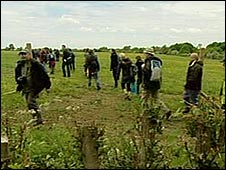
Tres­passers oppose coal mine planDerbyshire open-cast coal trespass 126th May 2008
Peo­ple who do not want a new open­cast coal mine on land adjoin­ing a coun­try park in Der­byshire have held a protest.

UK Coal wants to extract a mil­lion tonnes over four years from Lodge Hill in Smal­l­ey, near Heanor.

But cam­paign­ers said this would have a dev­as­tat­ing impact on the envi­ron­ment. About 50 pro­test­ers marched on the land in a mass tres­pass on Mon­day.

UK Coal said the mat­ter had gone through a pub­lic inquiry, and been prop­er­ly approved by the gov­ern­ment.

It said Britain need­ed ener­gy, and it was bet­ter to get it local­ly than to import it.

Cli­mate cam­paign­ers from the groups, Leave it in the Ground and Earth First! joined local res­i­dents opposed the plans for the mine on land adjoin­ing Ship­ley Coun­try Park.

Oppo­nents of the plans claimed near­ly 70 acres of green­belt land would be destroyed if the plans went through and were also wor­ried about noise and pol­lu­tion in the area.

http://news.bbc.co.uk/1/hi/england/derbyshire/7420634.stm (also go here for a bit of his­to­ry to the ini­tial refusal of plan­ning per­mis­sion, over­turned by the Sec­re­tary of State)

A report from peo­ple who went, plus pho­tos, to fol­low

Asheville Rising Tide builds green power plant in Duke CEO’s front yard (USA)

May 25, 2008 — Char­lotte, NC

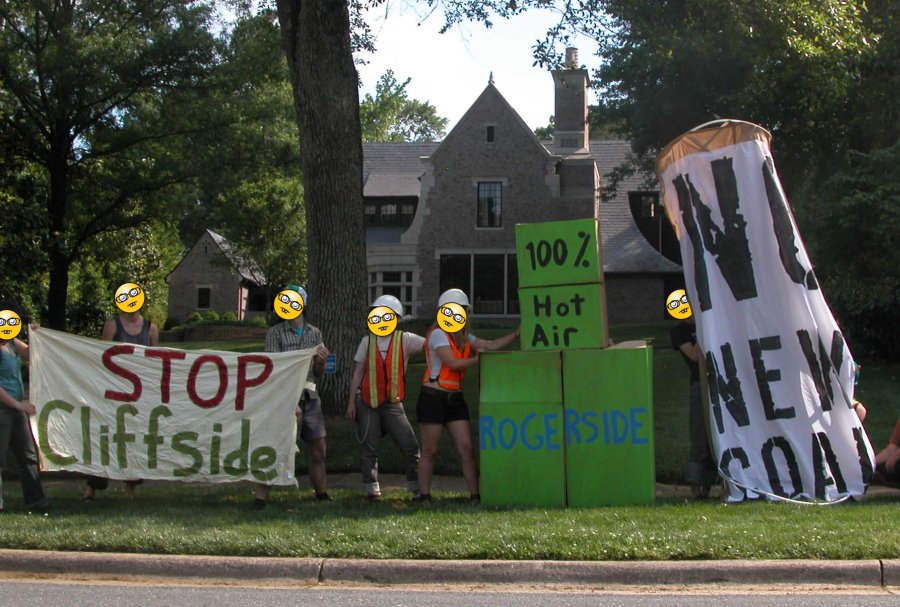
Front-yard power stationMay 25, 2008 — Char­lotte, NC
Today, activists with Asheville Ris­ing Tide broke ground on a new 800 Mw clean ener­gy pow­er plant in Duke Ener­gy CEO Jim Rogers front yard. The pow­er plant will tap into a pre­vi­ous­ly unex­plored ener­gy source known as hot air which has been found in large con­cen­tra­tions at Roger’s res­i­dence, 330 Eas­t­over Rd, Char­lotte, NC. “The hot air emit­ting from Jim Rogers mouth has been around for quite some time, but the last cou­ple of years has seen an expo­nen­tial growth of this untapped ener­gy source as Rogers parades around the coun­try call­ing for green­house gas reduc­tions while build­ing the dirty Cliff­side coal plant. This was sim­ply an oppor­tu­ni­ty we couldn’t pass up,” said Jill Rock­ing­ham, chief engi­neer for the project.

Asheville Ris­ing Tide believes that the con­struc­tion of the pow­er plant is a win-win sit­u­a­tion for the econ­o­my and the envi­ron­ment. “We are tak­ing a very dan­ger­ous and volatile gas and turn­ing it into a source for clean, car­bon free elec­tric­i­ty. The great thing about tap­ping into Roger’s hot air is that it is a tru­ly renew­able resource. At this point there appears to be an end­less sup­ply,” said, Rock­ing­ham. “Why build anoth­er dirty, expen­sive coal plant, when there are mil­lions of BTU’s of clean, cheap, ener­gy seep­ing out of their CEO’s mouth every day,” said Jake Tiller­man, Asheville Ris­ing Tide’s invest­ment rela­tions man­ag­er.

The plant has come under fire from some envi­ron­men­tal groups over con­cern of a lit­tle stud­ied ele­ment known as BS, a byprod­uct of burn­ing hot air. The hot air at the Roger’s res­i­dence has an unusu­al­ly high con­cen­tra­tion of BS and envi­ron­men­tal­ist are con­cerned over poten­tial health effects to near­by res­i­dents. “We are cur­rent­ly look­ing into ways in which to cap­ture and sequester the BS but the tech­nol­o­gy just isn’t avail­able at this moment,” said Rock­ing­ham. “We assure the envi­ron­men­tal com­mu­ni­ty that this is the last plant we build that does not have the capa­bil­i­ty of seques­ter­ing Roger’s BS. Besides, we paint­ed the plant green. That seems to be all that cor­po­ra­tions like Duke have to do to call a project sus­tain­able.”

Towards climate action in Copenhagen 2009

First inter­na­tion­al plan­ning meet­ing

We invite you to join the 1st inter­na­tion­al plan­ning meet­ing in Copen­hagen from the 13–14th of Sep­tem­ber 2008. The meet­ing aims at prepar­ing a large mobil­i­sa­tion for direct action against the root caus­es of cli­mate change in Copen­hagen and through­out the world dur­ing the UN Cli­mate Con­fer­ence (30 Nov-11 Dec 2009).

First inter­na­tion­al plan­ning meet­ing

We invite you to join the 1st inter­na­tion­al plan­ning meet­ing in Copen­hagen from the 13–14th of Sep­tem­ber 2008. The meet­ing aims at prepar­ing a large mobil­i­sa­tion for direct action against the root caus­es of cli­mate change in Copen­hagen and through­out the world dur­ing the UN Cli­mate Con­fer­ence (30 Nov-11 Dec 2009).

We stand at a cross­roads in his­to­ry. The facts are unde­ni­able. Glob­al cli­mate change, caused by human activ­i­ties, is hap­pen­ing. We all know that, world over, we’re fac­ing a man­i­fold and deep­en­ing cri­sis: of the cli­mate, ener­gy, food, liveli­hoods, and of polit­i­cal and human rights. Sci­en­tif­ic, envi­ron­men­tal, social and civ­il soci­ety move­ments from all over the world are call­ing for action against cli­mate change.

Mas­sive con­sump­tion of fos­sil fuel is one of the major caus­es of glob­al warm­ing, a prob­lem that threat­ens the lives of hun­dreds of mil­lions of peo­ple around the world. Instead of lead­ing the way, gov­ern­ments are pri­or­i­tiz­ing eco­nom­ic growth and cor­po­rate inter­ests while ignor­ing the speed­ing train of cli­mate change hurtling towards the abyss. The cor­po­rate exploita­tion of the plan­et’s resources can­not be allowed to con­tin­ue any longer. We have pre­cious lit­tle time to react to this threat. We need action NOW to stop cli­mate change, and if the so-called ‘lead­ers’ won’t lead the way, we must.

On the 30th Novem­ber 2009, world lead­ers will come to Copen­hagen for the UN Cli­mate Con­fer­ence (COP15). This will be the most impor­tant sum­mit on cli­mate change ever to have tak­en place, and it will deter­mine how the coun­tries of the world are going to respond to the cli­mate threat. The deci­sions tak­en there will define the future for all the peo­ple of the world. The pre­vi­ous meet­ings give no indi­ca­tion that this meet­ing will pro­duce any­thing more than emp­ty rhetoric and a green washed blue­print for busi­ness-as-usu­al.

There is an alter­na­tive to the cur­rent course and it’s not some far-off dream. If we put rea­son before prof­it, we can live amaz­ing lives with­out destroy­ing our plan­et. But this will not hap­pen by itself. We have to take direct action, both against the root caus­es of cli­mate change and to help cre­ate a new, just and joy­ous world in the shell of the old. And so, we call on all respon­si­ble peo­ple of the plan­et to take direct action against the root caus­es of cli­mate change dur­ing the COP15 sum­mit in Copen­hagen 2009.

The exact plans for our mobi­liza­tion are not yet final­ized. We have time to col­lec­tive­ly decide what our best course of action may be. We encour­age every­one to start mobi­liz­ing in your own coun­tries. It is time to take the pow­er back from the lead­ers not respon­si­ble enough to hold it. The pow­er is in our hands!

Prac­ti­cal infor­ma­tion

The meet­ing is free for every­one, accom­mo­da­tion and food will be pro­vid­ed by local activists. Note also that the meet­ing will be held the week­end pri­or to the Euro­pean Social Forum (ESF) in Malmö, Sep­tem­ber 17–21. Peo­ple are wel­come to stay in Copen­hagen in the inter­me­di­ate days.

Please announce your arrival to sept08@klimax2009.org. We’re hap­py to respond to any ques­tions you might have. You can also sub­scribe to the inter­na­tion­al mobi­liza­tion mail­ing list.

Please cir­cu­late, trans­late and dis­trib­ute this call wide­ly.

Cli­mate Net­work 09, klimax2009.org

Camps for Climate Action round the world…

2008 will see camps spring up around the world, inspired by the Camps for Cli­mate Action that have tak­en place in the UK, first near Drax, then Heathrow.

UK: near Kingsnorth coal-fired pow­er sta­tion and pro­posed site for new gen­er­a­tion — Cli­mate Car­a­van to the camp from Heathrow, 26th July-3rd August, Camp for Cli­mate Action 3rd-11th August 2008 — www.climatecamp.org.uk

2008 will see camps spring up around the world, inspired by the Camps for Cli­mate Action that have tak­en place in the UK, first near Drax, then Heathrow.

UK: near Kingsnorth coal-fired pow­er sta­tion and pro­posed site for new gen­er­a­tion — Cli­mate Car­a­van to the camp from Heathrow, 26th July-3rd August, Camp for Cli­mate Action 3rd-11th August 2008 — www.climatecamp.org.uk

Ger­many: Kli­macamp, Ham­burg, near a vari­ety of cli­mate crim­i­nals — 15th-28th August -
www.klimacamp08.net

Aus­tralia: Camp for Cli­mate Action, New­cas­tle coal port, north of Syd­ney — 10th-15th July — www.climatecamp.org.au

USA: West Coast Con­ver­gence for Cli­mate Action, near Eugene, Ore­gon (28th July-4th August); South East Con­ver­gence for Cli­mate Action, Louisa Coun­ty, Vir­ginia (5th-11th August); North­east Cli­mate Con­flu­ence, Epworth (27th July-3rd August) — www.climateconvergence.org

New Zealand: www.climatecamp.org.nz

Actions during the UN Biodiversity Summit in Bonn (MOP4/COP9)

Nature for peo­ple — not for busi­ness!

Nature for peo­ple — not for busi­ness!
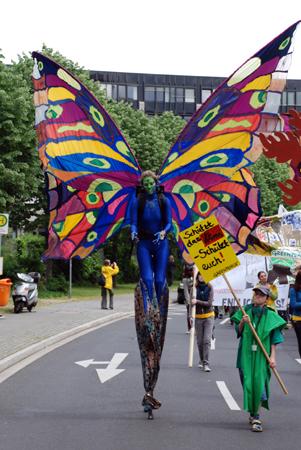
Bonn stilt-walkerBonn COP/CBD logo
The 4th Meet­ing of Par­ties to the Carta­ge­na Pro­to­col on Biosafe­ty (MOP 4) and the 9th Con­fer­ence of the Par­ties (COP 9) to the Con­ven­tion on Bio­log­i­cal Diver­si­ty (CBD) are tak­ing place in Bonn from the 12th to 30th May.

Behind the dis­guise of nature pro­tec­tion, transna­tion­al com­pa­nies use these nego­ti­a­tions to increase their con­trol over nat­ur­al resources. Many of the solu­tions they push for to tack­le cli­mate change and the loss of bio­di­ver­si­ty (agro­fu­el, GM crops and trees, Ter­mi­na­tor, pro­tect­ed areas,…) in fact lead to the pri­vati­sa­tion of bio­di­ver­si­ty, at the expense of rur­al and indige­nous com­mu­ni­ties.

A coali­tion of social move­ments and activists’ net­works calls to protests under the mot­to “Nature for peo­ple, not for busi­ness!” We believe that in front of mas­sive envi­ron­men­tal destruc­tion result­ing from the plun­der­ing of resources by cor­po­rate inter­ests, the pri­or­i­ties are an imme­di­ate end to pri­vati­sa­tion and a fair dis­tri­b­u­tion of nat­ur­al resources in the ben­e­fit of local com­mu­ni­ties.

Join the mobil­i­sa­tions, resis­tance is fer­tile!

More info at ASEED and Biotech Indy­media
——————

Protest reports:

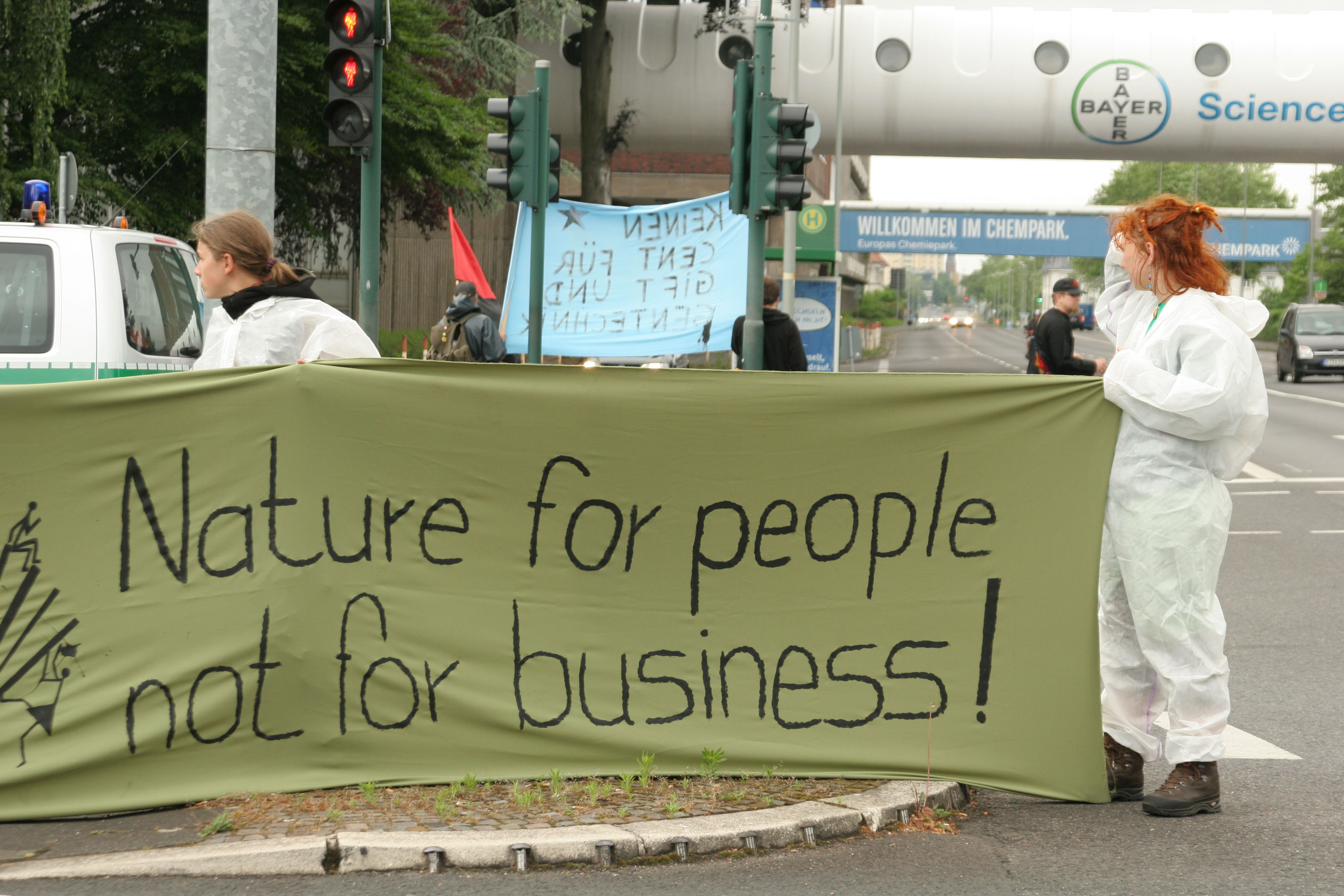
About 100 peo­ple protest­ed out­side Bay­er on 17th May & deliv­ered this -
Bayer at COP 2Bayer at COP 1
Open let­ter to the Bay­er Cor­po­ra­tion in Lev­erkusen
Bonn, 16 May 2008
Dear Board of Direc­tors of the Bay­er Cor­po­ra­tion,
Dear Bay­er Employ­ees,
Dur­ing inter­na­tion­al con­fer­ences the Bay­er Cor­po­ra­tion attempts to exert enor­mous influ­ence upon both, the process of nego­ti­a­tions as well as the results. This is now the case dur­ing the Con­ven­tion of the Par­ties of the UN Con­ven­tion on Bio­log­i­cal Diver­si­ty (COP 9), as well as the nego­ti­a­tions of the Biosafe­ty Pro­to­col (MOP 4), tak­ing place in Bonn. Thus, your com­pa­ny strives to main­tain a “green” image, as indi­cat­ed by the fact that your com­pa­ny was a spon­sor of the Unit­ed Nations Envi­ron­ment Pro­gramme (UNEP) last year.

How­ev­er, this is noth­ing more than a “green­wash­ing” cam­paign, since in oth­er instances your lob­by­ists are tak­ing every effort to fight attempts to pro­tect nature—from the Kyoto Pro­to­col, to the pro­hi­bi­tion of CFCs to the new EU laws on chem­i­cals known as REACH.

In addi­tion, Bay­er is a pro­duc­er of many high­ly dan­ger­ous prod­ucts; it emits large quan­ti­ties of dan­ger­ous gas­es and green­house gas­es; it pro­motes the plant­i­ng of genet­i­cal­ly mod­i­fied prod­ucts and thus belongs to one of the large destroy­ers of bio­log­i­cal diver­si­ty.

to name but a few exam­ples:

Bay­er is respon­si­ble for the insid­i­ous poi­son­ing of soils and sources of water; it is respon­si­ble for the erad­i­ca­tion of use­ful plant and ani­mal vari­eties, an increase of pes­ti­cide-resis­tant pests and the mas­sive dam­age of eco­log­i­cal valance through agro­chem­i­cals. Pes­ti­cides are known to be a main cause of the loss of plant and ani­mal vari­eties. The UN Food and Agri­cul­ture Orga­ni­za­tion (FAO) has termed this “an envi­ron­men­tal tragedy”. Bay­er is the sec­ond largest pro­duc­er of pes­ti­cides and is a world leader in the pro­duc­tion of high­ly poi­so­nous insec­ti­cides. Accord­ing to the World Health Orga­ni­za­tion (WHO), sev­er­al mil­lion peo­ple cur­rent­ly suf­fer from the effects of pes­ti­cide poi­son­ing every year. Of these, up to 200,000 result in deaths.

One of the most recent cas­es con­cern­ing dan­ger­ous chem­i­cals took place in the US Bay­er fac­to­ry in Insti­tute, West Vir­ginia. On Decem­ber 28, 2007, sev­er­al vats con­tain­ing Thiodi­carb, a pes­ti­cide, explod­ed. Dozens of cit­i­zens had to be treat­ed for headaches and breath­ing prob­lems, includ­ing at least one per­son who had to be hos­pi­tal­ized. Thiodi­carb is one amongst the most dan­ger­ous agri­cul­tur­al chem­i­cals that exist. It has been banned in Europe and dur­ing the past year there were 154 orga­ni­za­tions in 35 coun­tries which demand­ed from the Bay­er Cor­po­ra­tion to stop the sale of pes­ti­cides cat­a­logued as being among the most dan­ger­ous, includ­ing Thiodi­carb. The same fac­to­ry in West Vir­ginia con­tained extreme­ly poi­so­nous sub­stances, includ­ing Phos­gen, MIC and Phos­gen gas, the lat­ter of which was used as a weapon dur­ing the First World War.

Nature, con­sumers and users are also threat­ened by the Bay­er-made her­bi­cide, Glu­fos­i­nat. Accord­ing to a report by Swedish author­i­ties which was based on research by the Euro­pean Food Safe­ty Author­i­ty, Swe­den asked that Glu­fos­i­nat be banned. Almost all genet­i­cal­ly-mod­i­fied plants made by Bay­er are resis­tant against Glu­fos­i­nat. The Genet­ic manip­u­la­tion of plants is not aimed at fight­ing hunger, as is often claimed by Bay­er. It is aimed at secur­ing a mar­ket for her­bi­cides. For eco­log­i­cal rea­sons, con­tin­u­ing the sale of Glu­fos­i­nat can no longer be jus­ti­fied.

Bay­er is respon­si­ble for the mas­sive endan­ger­ment of bio­log­i­cal diver­si­ty and the envi­ron­ment through the use of genet­i­cal­ly mod­i­fied plants. The com­pa­ny belongs to one of the most impor­tant pro­tag­o­nists of “green” genet­ic tech­nol­o­gy. Cur­rent­ly we are threat­ened with the like­li­hood of the EU approval of a vari­ety of rice pro­duced by Bayer—the same vari­ety which was the cen­ter of the largest scan­dal con­cern­ing genet­ic tech­nol­o­gy to date, as rice which had not been approved for con­sump­tion reached trad­ing mar­kets world­wide. The mas­sive plant­i­ng of genet­i­cal­ly-mod­i­fied seed would inevitably be respon­si­ble for con­t­a­m­i­na­tion and dis­place­ment of tra­di­tion­al rice vari­eties. Thus, bio­log­i­cal diver­si­ty among crops would be harmed and the long-term food secu­ri­ty would be threat­ened.

Oth­er exam­ples include the con­t­a­m­i­na­tion of canola seeds through genet­i­cal­ly-mod­i­fied canola, which are ille­gal in Ger­many. This kind of pol­lu­tion can be traced back to a her­bi­cide-resis­tant prod­uct from Bay­er Crop­Science which was test­ed many times in the field.

But Bay­er refus­es to take legal respon­si­bil­i­ty for the dam­ages. This exam­ple goes to show once again that coex­is­tence with­out the con­t­a­m­i­na­tion of native seed vari­eties is impos­si­ble. Nev­er­the­less, Bay­er push­es for­ward to cap­ture new mar­kets: genet­i­cal­ly mod­i­fied canola is to be plant­ed in Aus­tralia. Bay­er has also request­ed per­mis­sion for import­ing genet­i­cal­ly-mod­i­fied rice and canola.

Bay­er is respon­si­ble for the pri­va­ti­za­tion and monop­o­liza­tion of genet­ic resources such as seeds and med­i­c­i­nal plants. Bay­er belongs to the largest transna­tion­al com­pa­nies in the area of phar­ma­ceu­ti­cals and agro­chem­i­cals which share the largest por­tion of patents grant­ed to date. The attempts to monop­o­lize them harm bio­log­i­cal diver­si­ty in the fields and rob indige­nous com­mu­ni­ties of their med­i­c­i­nal plants and tra­di­tion­al knowl­edge.

Years of inten­sive influ­ence on law­mak­ing on the part of transna­tion­al com­pa­nies result­ed in the TRIPS (Trade Relat­ed Aspects of Intel­lec­tu­al Prop­er­ty Rights) agree­ment of the WTO. This agree­ment results in the legal com­mit­ment to intel­lec­tu­al prop­er­ty rights such as patents on bio­log­i­cal and genet­ic mate­r­i­al – that is, prop­er­ty rights on life. Bay­er was involved in this.

A par­tic­u­lar­ly insid­i­ous mech­a­nism of con­trol and pow­er is so-called ter­mi­na­tor tech­nol­o­gy, offi­cial­ly known as Genet­ic Use Restric­tion Tech­nol­o­gy. This tech­nol­o­gy results in steril­i­ty of plants after their har­vest, such that they may not be reused for re-plant­i­ng.

A mora­to­ri­um was placed on ter­mi­na­tor tech­nol­o­gy in 2000 as part of the Con­ven­tion on Bio­log­i­cal Diver­si­ty, since it rep­re­sent­ed too great a risk to bio­log­i­cal diver­si­ty. The Bay­er cor­po­ra­tion is also involved in the devel­op­ment of ter­mi­na­tor technology—as is attest­ed to by cir­ca one-half dozen patent appli­ca­tions with titles such as “New Gene for the Coor­di­na­tion of Cell-Abla­tion” or “Process for the Pro­duc­tion of Ster­ile Female Plants”.

Accord­ing to Bay­er Crop­Science, how­ev­er, the cor­po­ra­tion only owns ter­mi­na­tor patents as a result of its acqui­si­tion of Aven­tis Crop­science. This is a false state­ment. Bay­er is own­er of at least five patents on seed ster­il­iza­tion tech­nolo­gies. This sug­gests that Bay­er con­tin­ues to be inter­est­ed in research and use of ter­mi­na­tor tech­nol­o­gy. Dur­ing the 2006 COP 6 meet­ings in Curiti­ba, Brazil, Bay­er lob­by­ists were involved in try­ing to reverse the mora­to­ri­um of these tech­nolo­gies.

Bay­er is also involved in the devel­op­ment of phar­ma­ceu­ti­cal plants, thus threat­en­ing bio­log­i­cal diver­si­ty.

A new devel­op­ment con­cerns large Agri­cul­tur­al Com­pa­nies’ appli­ca­tion for hun­dreds on few patents on plants that are genet­i­cal­ly mod­i­fied to with­stand droughts and oth­er cli­mac­tic stress fac­tors. This is part of the strug­gle to com­pete a lucra­tive mar­ket that is grow­ing due to glob­al warm­ing. The Bay­er Cor­po­ra­tion is a par­tic­i­pant in this process.

Bay­er is respon­si­ble for the warm­ing of the earth. Present­ly, the Bay­er fac­to­ry in Krefeld is involved in the build­ing plan of a giant coal-burn­ing pow­er plant which would be expect­ed to release 4.4 mil­lion tons of car­bon diox­ide and 4,000 tons of nitro­gen oxide into the air each year.

Bay­er is respon­si­ble for water con­t­a­m­i­na­tion with 700 tons of phos­pho­rous, 2,700 tons of nitro­gen, 1.5 mil­lion tons of inor­gan­ic salts, 73 tons of organ­ic chlo­rine and 28 tons of heavy met­als. Bay­er belongs to the ten largest water pol­luters in Ger­many. In addi­tion one must con­sid­er Bayer’s enor­mous use of water, amount­ing to 2 mil­lion cubic meters dai­ly. The Bay­er fac­to­ry in Lev­erkusen has a high­er con­sump­tion of water as the neigh­bor­ing city of Cologne, with rough­ly one mil­lion inhab­i­tants.

Bay­er is respon­si­ble for the plant­i­ng of ener­gy plants for Agro­fu­els, which com­pete with food crops. Bay­er plans to pro­duce agro­fu­els from canola oil as well as the trop­i­cal plant, Jat­ropa. In order to do so, it will rely on vast mono­cul­ture plan­ta­tions as well as the heavy use of fer­til­iz­ers and pes­ti­cides. The mas­sive plan­ta­tions of Jat­ropa will be respon­si­ble for the dev­as­ta­tion of nat­ur­al land­scapes and the dis­place­ment of small farm­ers, as well as of a high­er num­ber of deaths through hunger. In India, land­less peo­ple were already dis­placed from land which was pur­port­ed­ly “fal­low”. This is the same land on which Bay­er is plan­ning to pro­duce ener­gy plants for agro­fu­els.

Bay­er is also respon­si­ble for the death of mil­lions of hon­ey­bee colonies in south­ern Ger­many, as sug­gest­ed by the news of the last few days. The sud­den death of hon­ey­bees hap­pened imme­di­ate­ly fol­low­ing the plant­i­ng of corn. Many of the corn seeds were coat­ed with a neu­ro­tox­in, Cloth­i­an­i­din, of Bay­er Crop­Science. Bee­keep­ers sus­pect that this could be respon­si­ble for the death of the bees. The Asso­ci­a­tion of Bee­keep­ers reports that this is the worst case of the death of hon­ey­bees of the past 30 years. Vicepres­i­dent of the Asso­ci­a­tion, Man­fred Raff jus­ti­fies his sus­pi­cion of the Bay­er neu­ro­tox­in based on the expe­ri­ence of Ital­ian bee­keep­ers, since plant­i­ng in Italy hap­pened sev­er­al weeks ear­li­er. In the lat­ter case, Cloth­i­an­i­din was found in the dead bees. Accord­ing to the Asso­ci­a­tion, it is part of the agro­tox­in Pon­cho Pro which is used for the etch­ing of corn seed.

Bay­er is respon­si­ble for hunger on the plan­et. While riots have erupt­ed world­wide as a result of hunger, Bay­er cor­po­ra­tion states in its lat­est annu­al report, “we have been able to par­tic­i­pate in the pos­i­tive devel­op­ment of the world agrar­i­an mar­ket”. This is a cyn­i­cal for­mu­la­tion in the face of the dras­tic growth in prices of basic food prod­ucts and the rise of hunger across the globe. The World Food Coun­cil con­sid­ers that a sub­stan­tial cause of the cur­rent food cri­sis can be traced back to a reduc­tion in har­vests caused by agri­cul­tur­al land that has been dam­aged by agro­chem­i­cals. As the sec­ond largest pro­duc­er of pes­ti­cides, Bay­er is sig­nif­i­cant­ly respon­si­ble for this devel­op­ment.

On the occa­sion of the nego­ti­a­tion of the Biosafe­ty Pro­to­col (MOP 4) from the 12.–19. of May in Bonn and con­sid­er­ing the fact that lia­bil­i­ty in cas­es of genet­ic con­t­a­m­i­na­tion are being dis­cussed there, Bay­er Crop­Science —togeth­er with Mon­san­to, Syn­gen­ta, BASF, DowA­gro­Sciences and Dupont/Pioneer have pro­posed what they term a “com­pact”. They claim that they are will­ing to pay repa­ra­tions in cas­es in which their prod­ucts are respon­si­ble for the dam­age of bio­log­i­cal diver­si­ty.

On the face of the mat­ter, this seems pos­i­tive. How­ev­er, their com­pact per­tains only to dam­age to bio­log­i­cal diver­si­ty and human health. The envi­ron­ment as a whole or socioe­co­nom­ic or cul­tur­al dam­ages are not con­sid­ered.

Accord­ing to the pro­pos­al, dam­ages to bio­log­i­cal diver­si­ty are only to be con­sid­ered if enough doc­u­men­ta­tion on this bio­log­i­cal diver­si­ty exists. How­ev­er, no coun­try holds such exten­sive doc­u­men­ta­tion on bio­di­ver­si­ty in order to be able to ful­fill the require­ments as have been pre­sent­ed. There­fore, the promis­es to make repa­ra­tions remain emp­ty! More­over, con­t­a­m­i­na­tion through genet­ic mate­r­i­al has been said explic­it­ly not to count as dam­age.

In addi­tion, only states may be plain­tiffs in these cas­es, such that indi­vid­u­als who have been caused dam­ages remain with­out the pos­si­bil­i­ty of receiv­ing repa­ra­tions. All legal pro­ce­dures are to take place pri­vate­ly, leav­ing no trans­paren­cy in the com­pact as pro­posed.

What is thus pre­sent­ed as a step towards cor­po­rate respon­si­bil­i­ty is an adept strat­e­gy of the com­pa­ny in order to pro­tect itself against many instances of lia­bil­i­ty.

We high­ly crit­i­cize, there­fore, that Ger­man as well as Euro­pean poli­cies con­tin­u­ous­ly pro­vide a plat­form for Bay­er to car­ry out its “green­wash­ing pro­gram”, thus great­ly sup­port­ing the inter­ests of indus­tries despite loss­es suf­fered by pop­u­la­tions, bio­log­i­cal diver­si­ty and the envi­ron­ment.

World­wide, many indi­vid­u­als and orga­ni­za­tions are resist­ing the health and envi­ron­men­tal­ly dam­ag­ing poli­cies of the pol­i­tics of the Bay­er Cor­po­ra­tion. We declare our­selves in sol­i­dar­i­ty with them and demand that the Bay­er cor­po­ra­tion end its dead­ly and poi­so­nous pro­duc­tion.

We demand that Bay­er end imme­di­ate­ly its envi­ron­men­tal­ly harm­ful busi­ness, that it stop destroy­ing bio­log­i­cal diver­si­ty, and that it stop its pri­va­ti­za­tion and monop­o­liza­tion. We demand that it take respon­si­bil­i­ty for its cur­rent actions and that it accept respon­si­bil­i­ty for any dam­ages that may fol­low from these actions here­after. As long as the cor­po­ra­tion does not realign its prac­tices, its claims to con­tribute to the con­ser­va­tion of nature ring both hol­low and men­ac­ing.

Bayer—hands off from bio­log­i­cal diver­si­ty
Hands off from ‘nature pro­tec­tion’ dri­ven by prof­its and pow­er.
For eco­log­i­cal agri­cul­ture and forestry, free of genet­ic tech­nol­o­gy and pes­ti­cides!
For the end to patents and intel­lec­tu­al prop­er­ty rights on life!
For the free access to seeds world­wide!
For a final pro­hi­bi­tion of ter­mi­na­tor-tech­nol­o­gy and any sim­i­lar tech­nolo­gies caus­ing ster­il­iza­tion!

Nature for people—not for busi­ness!

Sig­na­to­ries:
Aktion­snet­zw­erk glob­ale Land­wirtschaft, BUKO-Kam­pagne gegen Biopi­ra­terie, La Via
Campesina, Coor­di­na­tion gegen BAY­ER-Gefahren, Bon­ner AK gegen Gen­tech­nolo­gie,
Aktions­bünd­nis COP 9, Vere­in fair-fish e.V., Indi­en­hil­fe e.V., Ret­tet den Regen­wald e. V.,
Arbeit­skreis Eine Welt Buchloe e.V., aut­ofrei leben! e.V.

======
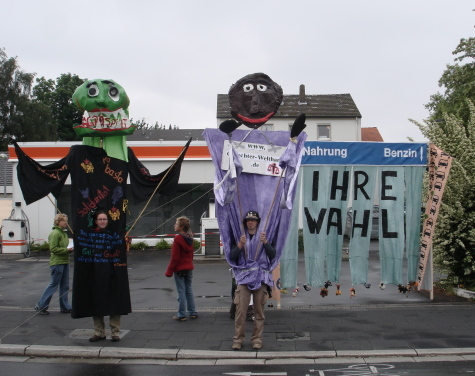
Bonn biofuel protest 1Bonn biofuel protest 2Bonn biofuel protest 3
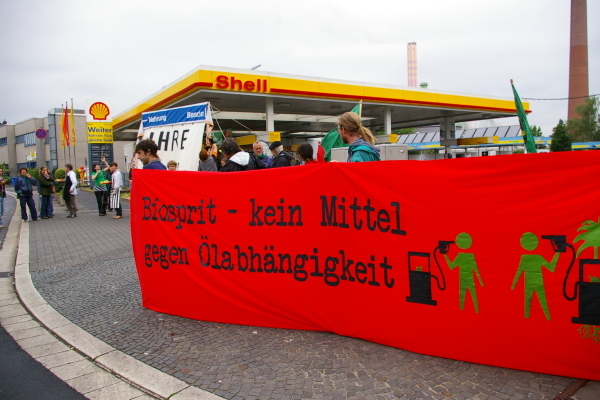
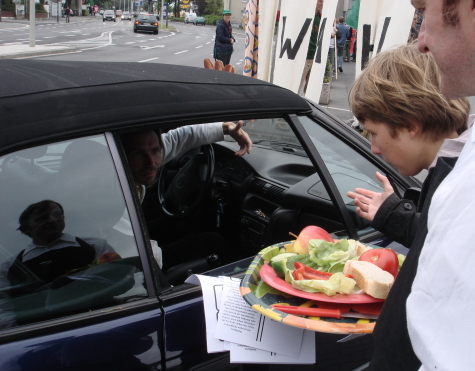
Bonn, Sun­day May 18 — Around 60 peo­ple have been protest­ing in Bonn against the large scale pro­duc­tion of agro­fu­els. At two petrol sta­tions car dri­vers had to make a choice: ‘petrol’ to the right, ‘food’ to the left. Ban­ners were stat­ing “agro­fu­els, no solu­tion for oil addic­tion.”

Nowa­days the media are fre­quent­ly report­ing about the neg­a­tive impacts of the use of crops for ener­gy pro­duc­tion. But so far the hon­est con­clu­sion that we have to change our lifestyle and over­con­sump­tion of resources and ener­gy is ignored by the same media and pol­i­cy mak­ers. In glob­al cap­i­tal­ism a small minor­i­ty exploits 80 per cent of the glob­al resources.
Most dri­vers had some sym­pa­thy for the action but want­ed to fill up petrol any­way this time. They had to for exam­ple to go to a foot­ball match. What can you do?

The work­er in the Shell sta­tion was furi­ous about the counter infor­ma­tion in front of her petrol sta­tion and called the police. After some dis­cus­sions the action was allowed, although dri­vers had to be giv­en more pos­si­bil­i­ties to go around the ‘gate of choice’.
At the BFT sta­tion every­thing stayed very relaxed.

Amongst the activists were many peo­ple from Via Campesina, the inter­na­tion­al net­work of small farm­ers. For them and the mil­lions they rep­re­sent, the large scale intro­duc­tion of agro­fu­els is a direct dan­ger for their liveli­hood and life. You can read more argu­ments against the over­con­sump­tion of ener­gy and agro­fu­els in the text of the brochure that has been dis­trib­uted to the passers-by.

After two hours the group start­ed to move again for a short demon­stra­tion end­ing on a field with a pic­nic with healthy and local food, as it is still pos­si­ble.

Fli­er text:

Agro­fu­els are no solu­tion for the cli­mate and ener­gy prob­lem!

Action against bio­fu­el and high ener­gy con­sump­tion!

Food — Petrol

Here­by we want to draw your atten­tion to the prob­lems and con­se­quences of the intro­duc­tion of agro­fu­els. The cul­ti­va­tion of bio­fu­els forms a direct com­peti­ton to food pro­duc­tion.

You, as a dri­ver, have to choose between food or petrol, as there is only 1,8 ha agri­cul­tur­al land avail­able for each human being on earth.

You have the choice between:

a) Petrol: You tank but you get a neg­a­tiv vouch­er which states how much less food you can con­sume the com­ing days.
b) Food: You receive some­thing to eat and your car leaves with­out petrol.

The rea­son for the action
This week COP 9 is tak­ing place in Bonn. The par­tic­i­pants will debate on issues relat­ed to bio­di­ver­si­ty and genet­ic resources. It con­cerns marine bio­di­ver­si­ty, agro­fu­els, genet­i­cal­ly moti­fied plants, pro­tect­ed areas and the rights of indige­nous peo­ple. How­ev­er, bio­di­ver­si­ty is also relat­ed to agri­cul­ture: ernor­mous areas are tak­en over by agri­cul­tur­al land, and large scale agri­cul­ture, as well as genet­i­cal­ly mod­i­fied mono­cul­tur­al plan­ta­tions, are increas­ing. This is prac­ti­cal­ly the oppo­site of bio­di­ver­si­ty.

The sit­u­a­tion regard­ing agro­fu­els in Gemany and the EU
In Ger­many reg­u­lar petrol is cur­rent­ly mixed with 3 % Biodiesel / Bioethanol. The Ger­man gov­ern­ment aims to reach a per­cent­age of 6,75, although the EU impos­es only 5,75%. Instead of pro­mot­ing ener­gy sav­ing cars, the Ger­man gov­ern­ment is sup­port­ing the pro­duc­tion of big ener­gy wast­ing cars. Unsupris­ing­ly ern­er­gy imports become a neces­si­ty. Recent­ly at a meet­ing with his Brasil­ian (now resigned) col­legue Mari­na Sil­va, the Min­is­ter of Envi­ron­ment Sig­mar Gabriel announced a bilat­er­al agree­ment to be signed in May 2008. This would enable Brasil to export ethanol to Ger­many, under the con­di­tion of sus­tain­abil­i­ty.

Social and eco­log­i­cal con­se­quences of agro­fu­els (three out of many)
1.Agrofuels are com­pet­ing with food: The cur­rent food cri­sis is telling. With­in a few month, the price of rice has increased with about 100 % and the price of grains by 130 % in 2007. One of the effects being food riots in many coun­tries.
2.Large scale pro­duc­tion of agro­fu­els is not envi­ron­men­tal­ly friend­ly at all: as it extends mono­cul­tur­al cul­ti­va­tion, the use of human and envi­ron­men­tal­ly pol­lut­ing pes­ti­cides, the over-use of the soil, the loss of bio­di­ver­si­ty and the use of genet­ic mod­i­fi­ca­tion.
3.Small scale farm­ers loose their land and resources: as large scale agri­cul­ture is led by a rel­a­tive­ly small num­ber of large scale farm­ers and for­eign com­pa­nies. With small scale agri­cul­ture 40 fam­i­lies could sus­tain their liveli­hoods on a sur­face of 200 hectares. Large scale soja pro­duc­tion, how­ev­er, only needs one labour­er for the same acreage.

The World Bank, the Inter­na­tion­al Moni­tary Fund and gov­ern­ments have been push­ing the lib­er­al­iza­tion of the agri­cul­tur­al sec­tor dur­ing the past decades. As a con­se­quence, food became a spec­u­la­tive good and prof­its of food com­pa­nies and investors have increased enor­mous­ly. Rich peo­ple can afford pay­ing high prices for dri­ving a car or fly­ing, where­as poor peo­ple can not even pay for their dai­ly bread any longer. This is uneth­i­cal!

We demand: Food sov­er­eigni­ty, as well as the right for local com­mu­ni­ties to pro­tect their food pro­duc­tion, and to decide on their land use.

Our request to you!
These prob­lems can not (only) be solved by the politi­cians at COP9. We have to change our ener­gy con­sump­tion. Espe­cial­ly in ‘west­ern indus­tri­alised’ coun­tries, as here the con­sump­tion lev­el has been high for decades. It’s time to face the mir­ror and reduce your own ener­gy con­sump­tion dras­ti­cal­ly.

======
Biopiracy at Bonn
On Mon­day, May 19, a demon­stra­tion against the Ger­man Plant Breed­ers Asso­ci­a­tion (BDP) and in front of the botan­i­cal gar­den at the Uni­ver­si­ty of Bonn took place.

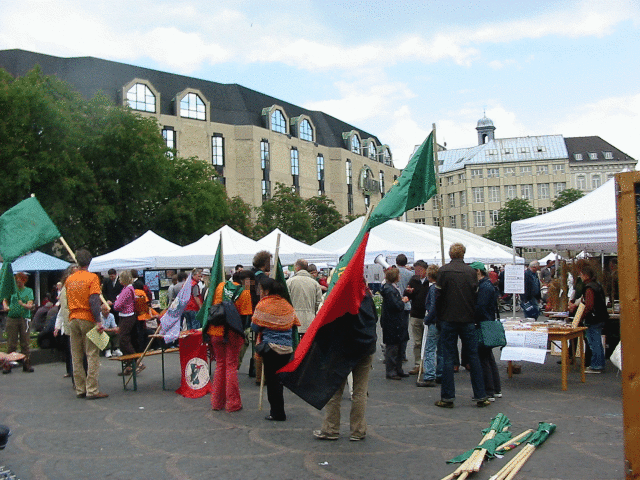
About 30 activists and peas­ants protest­ed against bio-pira­cy and patents on life. After­wards at the Inter­na­tion­al Diver­si­ty Mar­ket at the Mun­ster square in the cen­tre of Bonn, there was a street the­atre and col­o­nized seeds were giv­en back to peas­ants from Asia and Latin Amer­i­ca.

======
Bonn subvertising
We com­bined our Bonn sight­see­ing tour with some adbust­ing. The city of Bonn has placed 450 bill­boards around the town: “Bio­log­i­cal diver­si­ty needs our engage­ment” Nice, but oh so vague – they fail to say any­thing about how and why our lifestyles are destroy­ing bio­di­ver­si­ty, or how to pre­serve it. To pre­vent fur­ther loss of bio­di­ver­si­ty we have to chal­lenge not only our shop­ping habits, but also the cor­po­rate-gov­ern­men­tal elites who are dri­ving the destruc­tion.

We decid­ed to help the city and put forth­ward a clear­er mes­sage. So we print­ed hun­dreds of speech bub­bles to add to the bill­boards say­ing “Bio­log­i­cal diver­si­ty needs our engage­ment”, with the fol­low­ing mes­sages:

- …and our engage­ment needs action. Stop dri­ving, start bik­ing. -

- …and our engage­ment needs action. Boy­cott meat indus­try, go veg­an! -

- …and our engage­ment needs action. Sab­o­tage pol­lut­ing indus­try. -

- …and our engage­ment needs action. Sup­port small scale, instead of indus­tri­al farm­ing. -

- With­out you…nothing will hap­pen. -

We also had some oth­er posters that we put in suit­able places, such as “Biosprit macht hunger”

Armed with glue and self-made bill­board keys, we made our way through the cen­tre. It was messy, great fun!

======
Profitdiversity day launch 1Profitdiversity day launch 2
Hap­py Share­hold­ers sup­port Cor­po­ra­tions at Busi­ness Lunch dur­ing COP9

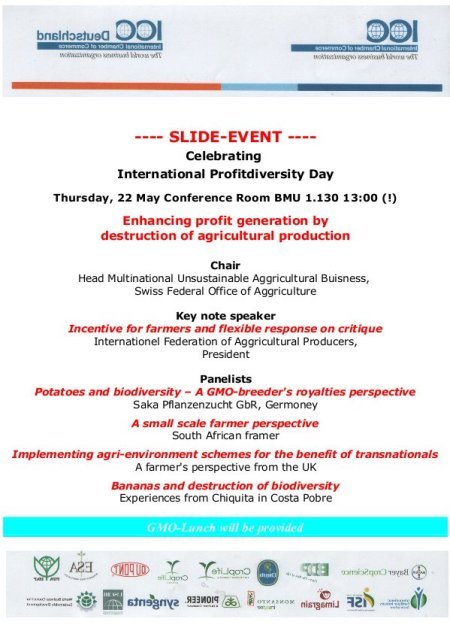
Thurs­day may 22 is the UN day for Bio­di­ver­si­ty. This was the occa­sion for a group of share­hold­ers to vis­it a lunch-meet­ing organ­ised by the Inter­na­tion­al Cham­ber of Com­merce, the lob­by organ­i­sa­tion of worlds largest cor­po­ra­tions.

“We, ‘The Small Share­hold­ers Ini­tia­tive’, TSSI are very glad about the impor­tant issues we have to report on behalf of the Inter­na­tion­al Prof­it­di­ver­si­ty Day today:

Busi­ness gets 220.000 US $ to sup­port com­pa­nies in their work at the CBD. This means that we can give our prof­its to the share­hold­ers and still make peo­ple believe that we work for bio­di­ver­si­ty.

Dur­ing the high lev­el meet­ing Thurs­day May 29, busi­ness right­ly gets a full hour to present its ideas. All oth­er stake­hold­ers togeth­er have to share the oth­er hour. After­wards all del­e­gates are invit­ed, as part of the offi­cial pro­gramme, by busi­ness for a lunch. Anoth­er pos­si­bil­i­ty to make the del­e­ga­tions do what we want.

Hear hear!”

The rest of the speech­es of the hap­py share­hold­ers you can read in the fly­er they hand­ed out to dur­ing the par­ty: http://www.aseed.net/pdfs/SlideEvent_versionA5.pdf

======

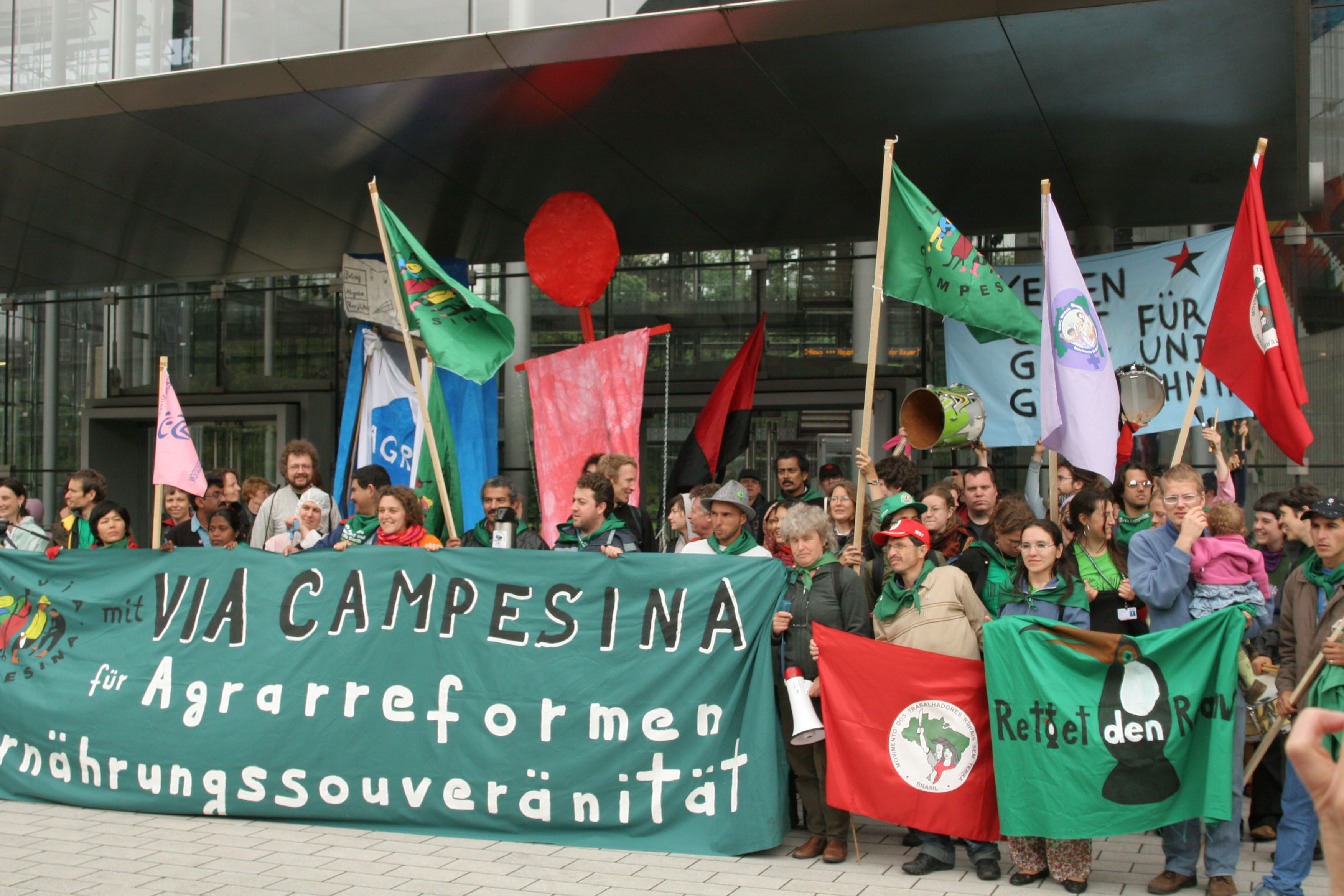
Via Campesina Dis­rupts CBD
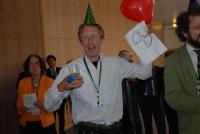
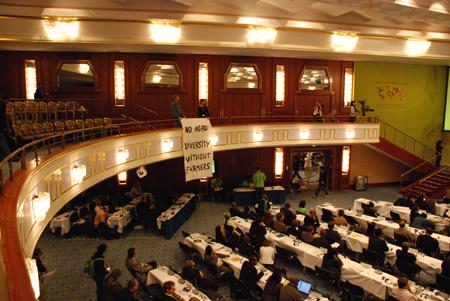
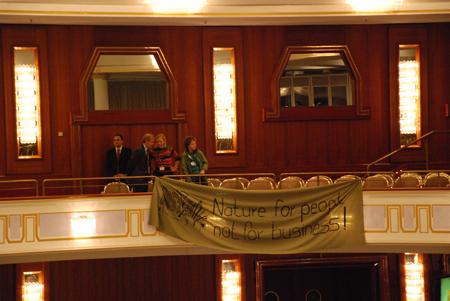
Bonn banner 1Bonn banner 2
23.05.2008

VIA CAMPESINA JOINS BIODIVERSITY DAY CELEBRATIONS

This after­noon activists from all over the world have hung a ban­ner, banged on teacups and hand­ed out mes­sages by Via Campesina dur­ing the offi­cial cel­e­bra­tions of Bio­di­ver­si­ty Day at the 9th Con­fer­ence of Par­ties (COP‑9) of the UN con­ven­tion on Bio­di­ver­si­ty. They did so at the end of a mes­sage by UN sec­re­tary gen­er­al Ban Ki Moon read by the Pro­gramme Offi­cer of the Sec­re­tari­at of the CBD to the dis­tin­guished del­e­gates of the Con­ven­tion.

The ban­ners read “No Agro­di­ver­si­ty With­out Farm­ers” and “Nature for Peo­ple Not for Busi­ness”. The writ­ten mes­sage was brought to the atten­tion of the del­e­gates by farm­ers’ group Via Campesina, who were refused to be part of the cel­e­bra­tion cer­e­mo­ny just before bio­di­ver­si­ty day.

Accord­ing to Via Campesina as well as many oth­er present at the con­ven­tion small farm­ers are the key to both the solu­tion to world hunger and the safe­guard­ing of the world’s bio­di­ver­si­ty.

Via Campesina also warns against cor­po­rate inter­ests advo­cat­ing for a new Green Rev­o­lu­tion in Africa as a strat­e­gy to increase pro­duc­tiv­i­ty. Although they use con­cepts such as “sus­tain­abil­i­ty”, “par­tic­i­pa­tion”, and “bio­di­ver­si­ty man­age­ment”, the pro­duc­tion mod­el is the same as that which has cre­at­ed the present cri­sis and grow­ing loss of bio­di­ver­si­ty

Small farm­ers, though, have the abil­i­ty to feed the world. Peas­ant agri­cul­ture pro­motes food diver­si­ty, sus­tains tra­di­tion­al cul­tures and does not bur­den the envi­ron­ment. More­over, small-scale, local and eco­log­i­cal pro­duc­tion is an effec­tive and imme­di­ate way of reduc­ing car­bon emis­sions and cool­ing down the plan­et.

After a few min­utes the ban­ners were tak­en away by UN police offi­cers and offi­cials and the peo­ple hold­ing them were escort­ed out of the Mar­itim Hotel, and lost their accred­i­ta­tion badges, which are required to par­tic­i­pate in the meet­ings.

Mem­bers of Via Campesina were giv­en a round of applause from the del­e­gates when they chant­ed “nature for peo­ple, not for busi­ness”.

Pri­or to the ban­ner hang­ing action, mem­bers of Aktions­bünd­nis COP9, Via Campesina and sup­port­ers dis­rupt­ed an indus­try lunch where agro-indus­tri­al­ists were con­grat­u­lat­ing each oth­er for their excel­lent work at monop­o­liz­ing the seed sup­ply and destroy­ing agri­cul­tur­al bio­di­ver­si­ty. CBD Exec­u­tive Sec­re­tary Ahmed Djogh­laf, who has been crit­i­cized for his pro-indus­try actions, pre­sent­ed at the side event fol­low­ing the lunch.

Grassroots Gathering 2008, 30th May-1st June, Ireland

Call-out for GG 2008, June Bank Hol­i­day week­end 30/05/08 to 01/06/08, Dublin

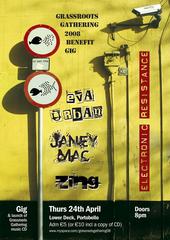
Grassroots Gathering 2008 benefit flierCall-out for GG 2008, June Bank Hol­i­day week­end 30/05/08 to 01/06/08, Dublin

The Grass­roots Gath­er­ings – an insti­tu­tion of the move­ment-build­ing seen in Ire­land post-2000 – are com­ing out of hiber­na­tion this June Bank Hol­i­day week­end in Dublin. But it won’t be quite like before…

The sto­ry so far

The upsurge in social move­ment strug­gles around the turn of the cen­tu­ry, from the streets of Seat­tle to the bar­rios of Argenti­na, from the town­ships of South Africa to the docks of South Korea, set the tone for much of the oppo­si­tion­al pol­i­tics seen in the 2000s. Draw­ing clear lines around such moments is always dif­fi­cult: estab­lish­ing when some­thing has peaked, when some­thing has hit a plateau, and when some­thing is in decline. But UK-based col­lec­tive The Free Asso­ci­a­tion cap­tured a wide­spread sense of unease regard­ing this his­tor­i­cal con­tin­u­um in sum­mer 2007 when they observed that “the ‘we are win­ning’ sen­ti­ment of the cou­ple of years fol­low­ing Seat­tle has dis­ap­peared and been replaced by, at best, head-scratch­ing and soul-search­ing. More a case of WTF than WTO…”

The social move­ments land­scape of Ire­land did not go untouched by this chain of glob­al events: we’ve had our WTO moments and more recent­ly our WTFs. From 2001 – a high­point of the inter­na­tion­al wave of strug­gle – a key local sym­bol of glob­al devel­op­ments was the Grass­roots Gath­er­ings, open get-togeth­ers for any­one who want­ed to trans­form Irish soci­ety and the world in rad­i­cal ways – ‘grass­roots’ ways, in their focus on real democ­ra­cy, and bot­tom-up meth­ods, in keep­ing with the ethos of glob­al net­work­ing bod­ies born in the turn of the cen­tu­ry moment such as Peo­ple’s Glob­al Action (PGA). Though nev­er real­ly intend­ed as organ­is­ing plat­forms, the Gath­er­ings made up a key hub of Irish move­ment-build­ing and action: reclaim­ing the streets, build­ing social cen­tres, resist­ing war, envi­ron­men­tal destruc­tion and EU neolib­er­al­ism, the net­works formed around the Grass­roots Gath­er­ings took their place in the glob­al upris­ing against cap­i­tal­ism.

But reflect­ing the col­lapse of that ‘we are win­ning’ sen­ti­ment inter­na­tion­al­ly, the Gath­er­ings them­selves had stalled by the end of 2005. It’s not as if this marked the death of Irish anti-cap­i­tal­ism – far too many good things have hap­pened in the mean­time, and too many great peo­ple have got on board for this to be true – but the sense of dis­tance from the heady days of the ear­ly part of the decade has become stronger. Lots has changed since Seat­tle.

So why res­ur­rect the Grass­roots Gath­er­ing in 2008? Falling back on forms that have already bro­ken down, until they break down again, is a self-defeat­ing strat­e­gy. It’s what you might do when you have no strat­e­gy at all. We need a time cap­sule back to 2003 or 2004 – to a hap­py-clap­py lucky dip of the same old work­shops on the same old cam­paigns, skill-shares and alter­na­tive lifestyle ideas – like we need a hole in the col­lec­tive head.

But unless we want to wal­low in cyn­i­cism, and bail out of his­to­ry like so many bro­ken, bit­ter ex-rad­i­cals before us, what we do need — and what is more chal­leng­ing — is to cre­ate a space in which to be crit­i­cal about our mis­takes and hand­i­caps, rather than just look back on them with a bale­ful eye; to learn from them, and to start to look for­wards and out­wards.

Maybe this means admit­ting that the forces set in motion at the turn of the decade have run their course. Maybe it does­n’t. Maybe it means we can’t speak of a ‘move­ment of move­ments’ any­more. Or maybe we can. Maybe it means that the idea of a ‘Grass­roots Gath­er­ing’ is obso­lete.

But one thing it def­i­nite­ly means is this: amid the lega­cy of the turn of the cen­tu­ry moment, a polit­i­cal sen­si­bil­i­ty (and maybe even a crit­i­cal mass of peo­ple) now exists here that did­n’t exist ten years ago: one that’s com­mit­ted to rad­i­cal social change, but not trapped in the dis­mal cul de sacs of Lenin­ist, Stal­in­ist and oth­er dog­mas. What­ev­er else has hap­pened, we have bro­ken through the ‘end of his­to­ry’ of the 1990s. Our local expe­ri­ence of post-2000 anti-cap­i­tal­ism has been idio­syn­crat­ic (com­pared to wider trends, the course of Irish his­to­ry often is); with­out the same move­ment tra­di­tions to draw upon as else­where, we reached our high-points lat­er, and while some oth­er nodes in the glob­al net­work have even col­lapsed, ours has­n’t. Activists from over­seas some­times remark that the move­ment in Ire­land seems fresh and out­ward-look­ing, unbur­dened by much of the bag­gage found else­where.

It may be that our sit­u­a­tion is marked as much by oppor­tu­ni­ty as by defeat. So what are we going to do about it?

What’s hap­pen­ing?

While this Grass­roots Gath­er­ing, like past ones, retains a vital ele­ment of straight ahead ‘pop­u­lar edu­ca­tion’ – with work­shops on themes as diverse as Mil­i­tant Research and Biotech­nol­o­gy – run­ning through it are also some more focused work­shop streams.

One of those ‘streams’ looks out­wards: ‘Rad­i­cal civ­il soci­ety and the state: hopes, fears and expe­ri­ences’ is geared not so much towards the con­cerns of a typ­i­cal Grass­roots Gath­er­ing activist milieu, but towards those of com­mu­ni­ty work­ers and activists, who will join us at this Gath­er­ing, and whose strug­gles against the vicis­si­tudes of Irish soci­ety par­al­lel the goals of the Grass­roots Gath­er­ings.

Anoth­er stream looks for­wards and, to some extent, inwards: ‘Think­ing about the Grass­roots Move­ment’ takes in ses­sions on strat­e­gy; on how to cre­ate move­ment cul­tures of respect and sol­i­dar­i­ty; and on the ques­tion: across our uneven efforts to build net­works region­al­ly, nation­al­ly and glob­al­ly, who are we, any­way, and what is it that unites us?

While some work­shops are yet to be finalised, a list of con­firmed ses­sions is below. Fol­low the links for more infor­ma­tion and blurbs on work­shops and streams. Watch this space for the final timetable, com­ing soon. Fun and games through­out the week­end pro­vid­ed with help from Elec­tron­ic Resis­tance, Seom­ra Spraoi and friends.

Where?

Ground zero for GG 2008 is in the heart of Dublin’s Lib­er­ties: the build­ing’s called Casadh, and it’s at 13, New­mar­ket Square, D8. A map will be post­ed below.

Oth­er stuff

Take a look at our wish-list if you’d like to help out. We might even have a few open­ings for last minute work­shop pro­pos­als, so don’t be shy about drop­ping us a line. We hope to make Grass­roots Gath­er­ing 2008 a child-friend­ly space. We also hope to accom­mo­date any­one with spe­cial needs, so if there’s any­thing we need to know, get in touch as soon as you can.

Con­tact

grassrootsgathering08@gmail.com for all cor­re­spon­dence; or

Tel: +353 85 724 3832

Links

http://www.myspace.com/grassrootsgathering08

http://grassrootsgathering.baywords.com/

Infor­ma­tion on ses­sions and streams at:

http://blog.myspace.com/index.cfm?fuseaction=blog&pop=1…ate=1

Texts on the his­to­ry of the Grass­roots Gath­er­ings:

Lau­rence Cox, “The Grass­roots Gath­er­ings: Net­work­ing a ‘move­ment of move­ments’ ”.
http://www.wsm.ie/story/2799

Ter­ry, “A short his­to­ry of the Grass­roots Gath­er­ing”
http://www.indymedia.ie/article/73804

Ses­sions

Stream A: Rad­i­cal civ­il soci­ety and the state: hopes, fears and expe­ri­ences

(1) Rad­i­cal civ­il soci­ety and the state: hopes, fears and expe­ri­ences
(2a) What do we know?
(2b) Is what we’re doing work­ing?
(3) Ple­nary

Stream B: Think­ing about the Grass­roots move­ment (big ‘G’)

(1) Catch­ing up on who and what we are
(2) Going places: strat­e­gy and the Grass­roots move­ment
(3) Sol­i­dar­i­ty? Build­ing a healthy move­ment cul­ture

Stream C: Learn­ing about grass­roots move­ments (small ‘g’) – and every­thing else
(1) Time­line of the ‘Move­ment of move­ments’
(2) ABCs of social change
(3) Mil­i­tant Research
(4) What would it mean to win?
(5) Biotech­nolo­gies, food sov­er­eign­ty and cli­mate cri­sis
(6) Migrants in the move­ment
(7) The war against war
(8) Com­mu­ni­ty gar­den wan­der
(9) Social cen­tres net­work update
(10) The ‘gath­er­ing of gath­er­ings’: round-up from a sea­son of meets

More details and read­er at http://www.indymedia.ie/article/87693