
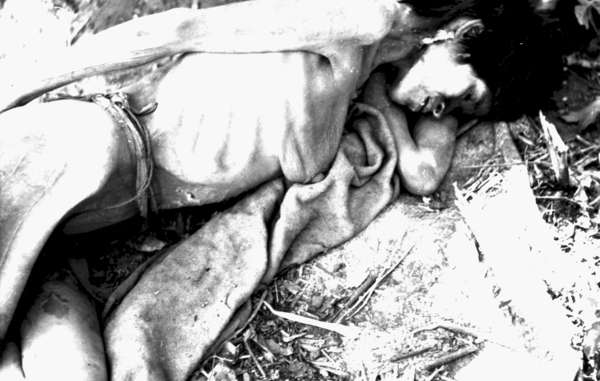
 1st July The survivors of a South American tribe which was decimated during the 1950s and 60s are taking Paraguay’s government to court over the genocide they suffered.
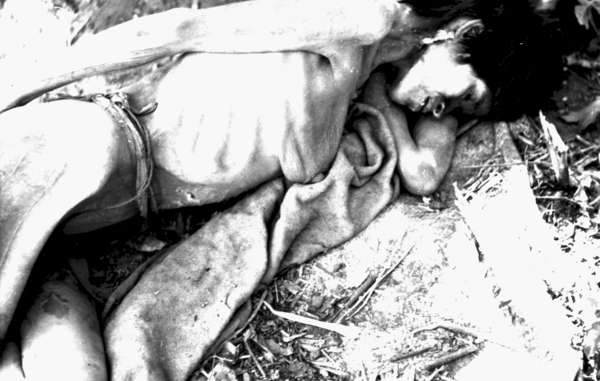 1st July The survivors of a South American tribe which was decimated during the 1950s and 60s are taking Paraguay’s government to court over the genocide they suffered.
The case of the hunter-gatherer Aché tribe, who roamed the hilly forests of eastern Paraguay until being brutally forced out, became notorious in the 1970s.
As the agricultural expansion into eastern Paraguay gathered pace from the 1950s, the Aché found themselves forced to defend their land from an ever-increasing colonist population. These colonists soon started to mount raiding parties to kill the male Aché: women and children were usually captured and sold as slaves.
One of the most notorious hunters of the Aché was Manuel Jesús Pereira, a local landowner. He was an employee of Paraguay’s Native Affairs Department, and his farm was turned into an Aché “reservation”, to which captured Aché were transported. Beatings and rape were common. Countless others died of respiratory diseases. The Director of the Native Affairs Department was a frequent visitor, and also sold Aché slaves himself.
This situation was denounced by several anthropologists in Paraguay, many of whom were deported, or lost their jobs, as a result. It was brought to international attention by German anthropologist Mark Münzel. His 1973 report Genocide in Paraguay, published by the Danish organization IWGIA, documented many of the atrocities committed against the Aché.
Survival International publicized Münzel’s account, and sponsored an investigation by leading international lawyer Professor Richard Arens, who found the situation as bad as others had reported. Many other international organizations, academics and activists denounced the atrocities and called for Paraguay’s government to be held to account, which curbed some of the worst excesses.
However, Paraguay’s then-President, General Alfredo Stroessner, was viewed as a key Western ally in the region. The British, US and West German governments denied that genocide was taking place, and the US authorities sponsored the Harvard-based organization Cultural Survival (CS) to “review the status of indigenous peoples in Paraguay”. Their report to the government was confidential, but a copy was obtained under the Freedom of Information Act. CS then published an amended version.
Relying partly on the testimony of Peace Corps volunteer, Kim Hill, it denied that genocide had taken place, and criticized many of those, such as Münzel and Arens, who had brought the Aché’s plight to global attention. US aid to Stroessner’s brutal regime continued.
Now, the survivors of the genocide and their descendants are seeking redress. An Aché organization, the National Aché Federation, has launched a court case in Argentina, with advice from leading human rights lawyer Baltasar Garzón. The Aché are using the legal principle of “universal jurisdiction”, under which the most serious crimes such as genocide and crimes against humanity can be tried and punished in a different country to that in which they occurred, if the victims cannot secure justice in their own country.
Ceferino Kreigi, an Aché representative, said, “We’re asking for justice – there was torture, rape, beatings. We can no longer bear the pain we have suffered.”
The Aché’s lawyer, Juan Maira, said, “[The Aché] were hunted as though they were animals, because they wanted to confine them to a ghetto. Once in the reserve, they weren’t allowed to leave. They sold not only the children, but sometimes the women too, as slaves. Perhaps 60% of the population could have been wiped out.”
The Aché’s population is now increasing once more, though their forests have been stolen for cattle ranching and farming, and almost totally destroyed.